How Hershey’s swapped symbol for behavior and created a new territory
The debate around the price of Easter eggs versus chocolate bars has itself become a Brazilian tradition. But for a brand to openly embrace this reality in such an authentic, light-hearted way, while genuinely engaging consumers, is rare.
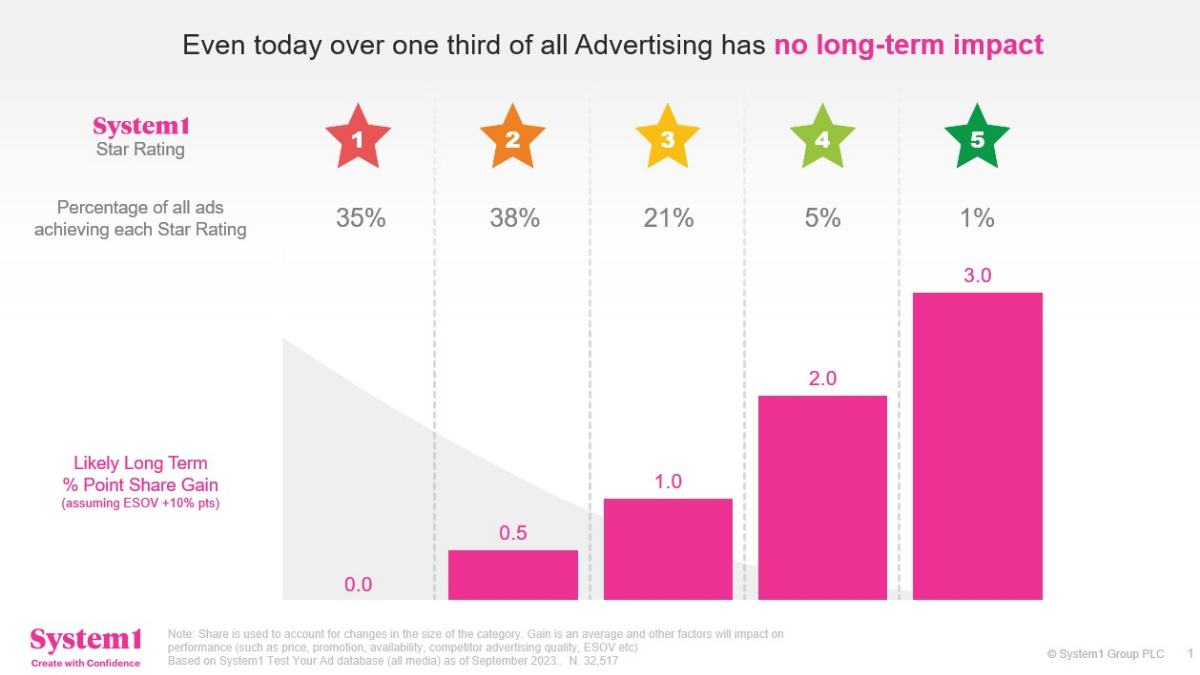
March’s Ad of the Month goes to Capi-barra, by Publicis for Hershey’s. The campaign achieved a 4-Star rating on System1’s scale, indicating strong potential for long-term market share growth, placing it among the top 6% of most effective ads.
For decades, the category has been defined by a remarkably stable set of codes: the rabbit as narrator, the egg as the object of desire, and a small group of brands as custodians of collective memory. Within this context, the industry’s default response has been predictable: spend more, amplify presence, and compete for relevance within the same rules and the same old territory.
This is precisely where Hershey’s makes a strategic, creative, and very bold move.
Not only does the brand remove the Easter egg from the equation, it also removes the rabbit and replaces it with a capybara. More importantly, it shifts the narrative away from eggs altogether, repositioning the chocolate bar at the center of the story. And it does so using one of the most powerful vehicles of creative effectiveness: humor.
Les Binet and Peter Field have shown that sustainable growth does not come from tactical activation, but from consistent, emotionally driven brand building. In this context, emotion is not a creative embellishment, it is the mechanism through which memory, association, and mental availability are formed. And it is these structures that ultimately drive market share.
Anyone familiar with Orlando Wood (in Lemonor Look Out) will recognize that the industry has increasingly drifted away from this principle. Advertising has become functional, explanatory, product-led, and more often than not, dull. It has abandoned characters, storytelling, and, crucially, enjoyment. And in doing so, it has lost its ability to generate high-quality attention and emotional connection.
Price pressure and value-for-money logic are now a reality for most Brazilian consumers. We consistently see a gradual shift toward more accessible formats, in this case chocolate bars. And let’s be honest, this could easily be a rather dull conversation.
But Hershey’s resolves this tension not by trying to reposition the Easter egg, but by simply stepping away from it. It then goes further, introducing the capybara, an animal deeply rooted in Brazilian culture, yet inherently light, relatable, and humorous. In doing so, the brand creates a new emotional asset. By linking this asset directly to the chocolate bar, Hershey’s not only reinforces its core business, but also establishes a new mental pathway for the occasion.
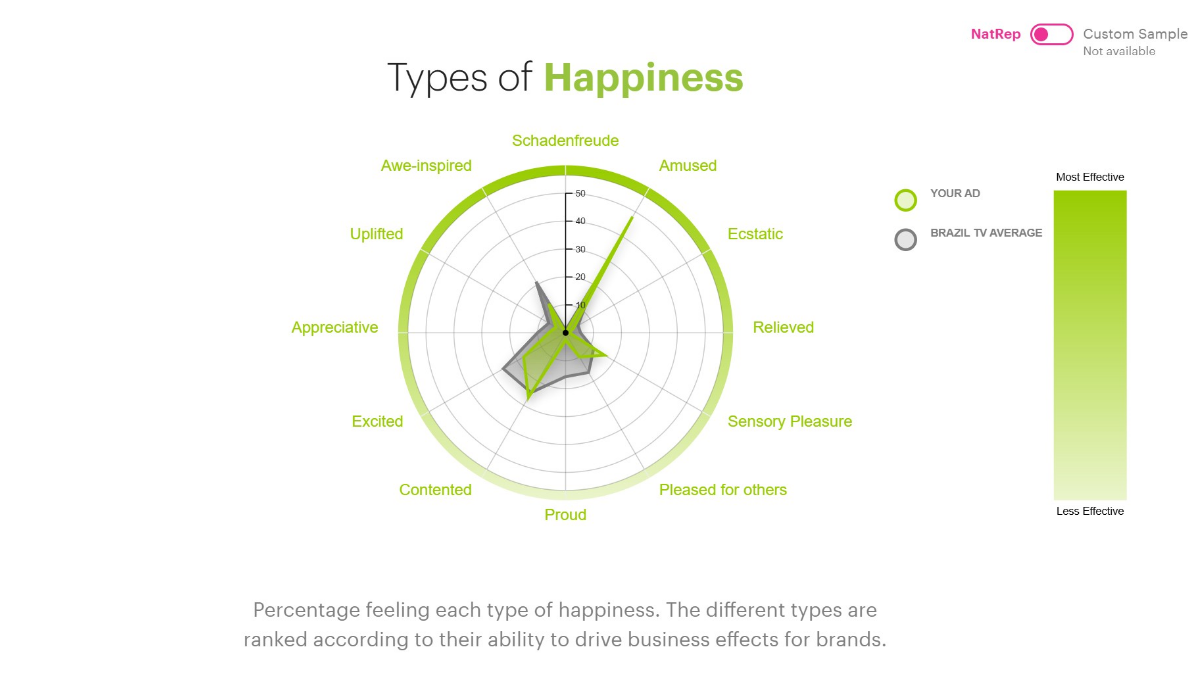
What we see here is a rare example: Capi-barra reaches exceptionally high levels of “amused,” one of the most effective types of happiness in advertising.
System1’s database consistently shows that the most effective ads are those people genuinely enjoy watching. Humor works because it reduces resistance, increases retention, and transfers positive feelings directly to the brand.
Capi-barra ultimately represents a re-engineering of the category entry point, creating new mental triggers that expand or redirect purchasing behavior. Traditionally, the Easter mental pathway is simple: rabbit leads to egg, which leads to dominant players. By introducing the capybara, Hershey’s disrupts this flow. The association is no longer automatic; it is reconfigured. Capybara leads to (chocolate) bars, which leads to brand.
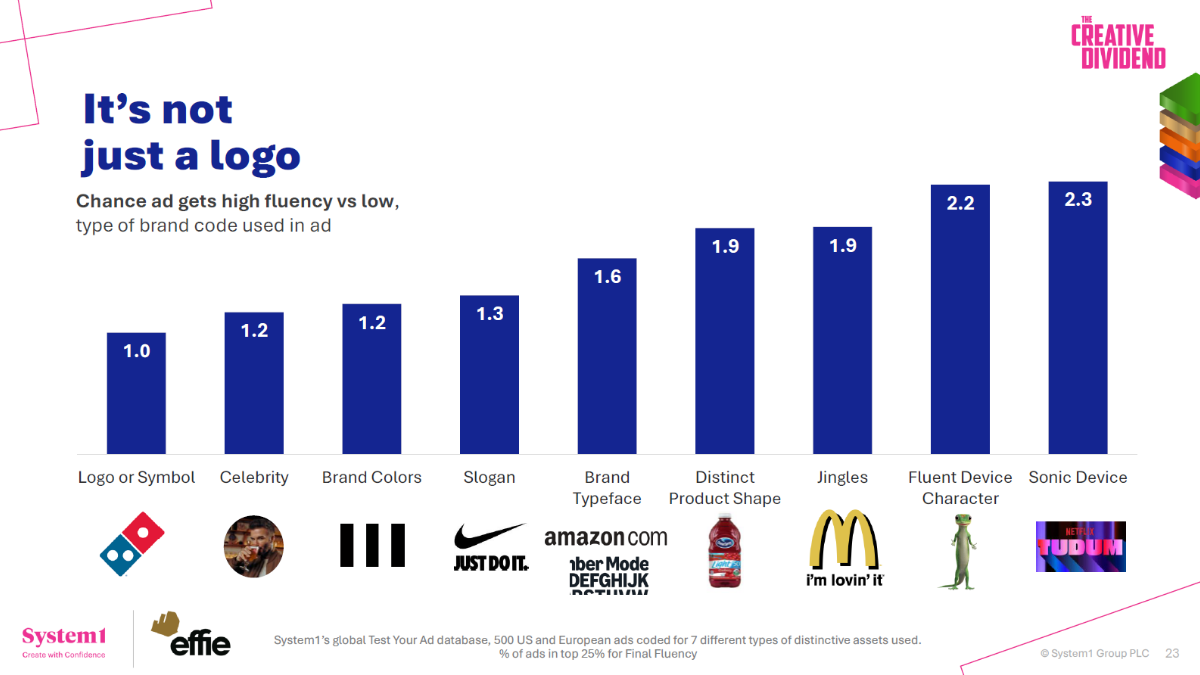
At this stage, one key factor to monitor is brand fluency, the speed and accuracy with which the brand is recognized, something often challenged when introducing a new character. It is crucial that the character is clearly linked to the brand from the outset. If the capybara continues to appear in future campaigns,this recognition will naturally strengthen over time.
The capybara has already proven highly popular, driving strong levels of surprise and happiness in testing. The critical question for Hershey’s now is whether this will remain a one-off Easter execution or evolve into a long-term brand asset. After all, these charismatic animals already enjoy global appeal, particularly in Asian markets, where capybaras are widely adored. It has made a strong debut in its home market and could easily scale across Latin America and beyond.
"Easter is globally shaped by the same symbols and narratives, which creates a clear opportunity for differentiation through innovation. In Brazil, rather than replicating established category codes, we chose to reinterpret them in a way that is true to Hershey’s and rooted in local culture. As a brand built on chocolate bars, our strategy wasn’t to compete in the egg space, but to reframe it, transforming one egg into many bars and positioning sharing as the core of the occasion. The Capibarra plays a key role in this approach, giving us an instantly recognizable and culturally relevant symbol that is uniquely ownable for the brand.”
José Antonio Lie
Marketing Director LATAM, Hershey's
“We identified a clear opportunity to reframe the occasion through a lens that is more connected to our culture and our consumption habits. Chocolate bars offer greater versatility, multiplying opportunities for exchange between people, which directly reflects the Brazilian way of celebrating. The capybara, an animal widely present across the region and much loved by the local population, emerged as a natural choice — taking the place of the rabbit and symbolizing this collective spirit, aligned with the idea of transforming Easter into a more shareable moment.”
Ana Carolina Guazelli Cosin
Head of Marketing and Innovation Brazil , Hershey's
“Not everyone has the courage to mess with one of Easter’s biggest icons. Hershey’s did. By making room for a Brazilian mascot, the brand also makes room for a new way to celebrate. Because let’s be honest, Easter eggs are already feeling a bit ‘last Easter.’ The new tradition is gifting chocolate bars. And the first results are already coming in, with strong community engagement around the idea,” the creative jokes.
Mauro Ramalho
CCO, Publicis Brazil
Create 5-star ads
The more people feel, the more they buy
The most effective ads boost sales and drive long-term growth. They do it by making people feel more - building positive associations with a recognisable brand. We predict sales and growth impacts by measuring emotion, letting you make ads that entertain for commercial gain.