
The Best Branding Lessons from Super Bowl LX Ads
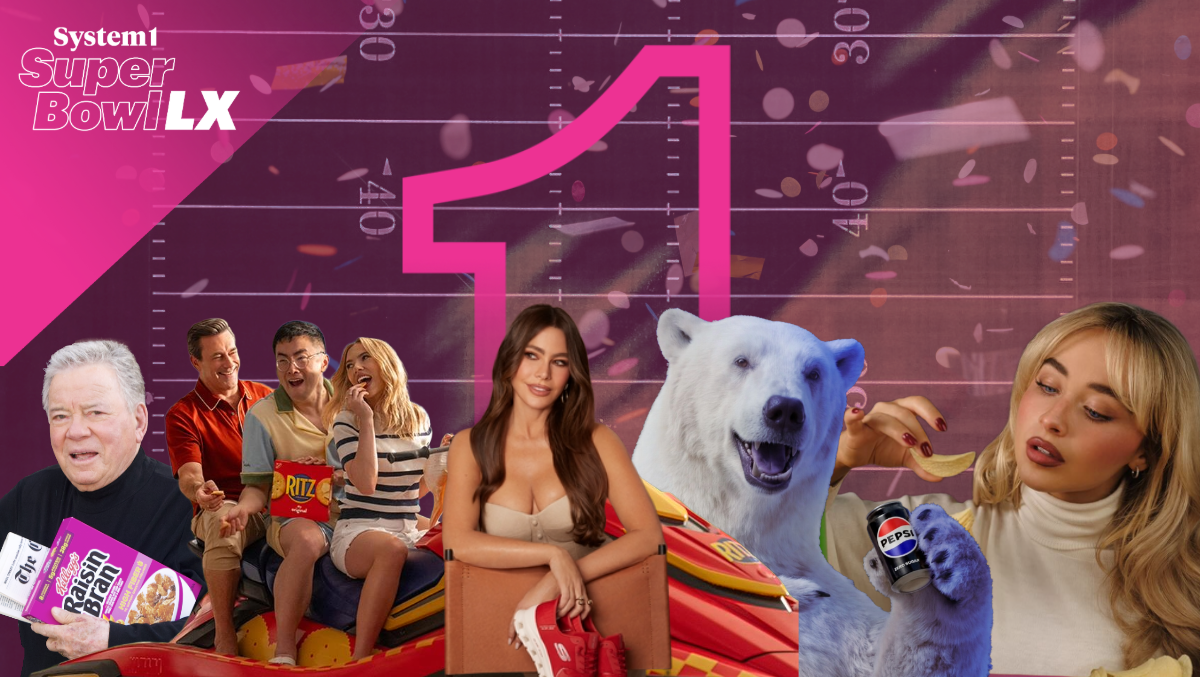
With dozens of brands facing off on Super Bowl Sunday, the ones that truly win are those that are remembered. With millions of dollars on the line, being distinctive and making your mark with audiences is paramount, especially in an age where the Big Game on the big screen is also competing with second and third screens, like phones and tablets.
Yet too often, Big Game commercials aren’t as memorable as their pricetag (up to $10 million!) would suggest. On average, about 20% of viewers who watch Super Bowl ads can’t correctly identify the brand after watching the ad in its entirety. And with C-suites putting pressure on marketing teams to deliver ads that drive short-term sales as well as long-term market share growth, creative needs to be easily recalled by consumers when they are ready to buy.
Based on System1 testing with real consumers, we’re highlighting the most distinctive ads of Super Bowl 2026 and offering up strategies to help marketers ensure that they aren’t a forgotten Big Game ad.
How System1 Measures Creative Effectiveness
First, a brief timeout to review how System1 tests ads with consumers and the key metrics to know.
Our Test Your Ad Competitive Edge platform measures consumers’ emotional responses as they watch an ad, including happiness, surprise, neutrality, sadness, fear, disgust, anger and contempt. Understanding the type of emotion elicited allows us to predict long-term market share growth. Understanding how intensely viewers feel these emotions and how quickly they process which brand the ad is for allows us to predict short-term sales effects (Spike Rating).
Assessing brand recognition is crucial because brands can’t fully realize the short- and long-term effects associated with their creative if people don’t remember who an ad was for. The Fluency Rating is based on the percentage of consumers who recognize the brand by the end of the ad.
The Fluency performance scale is:
72 & below = Low
73 – 82 = Modest
83 – 90 = Good
91 – 94 = Strong
95 & above = Exceptional
Read our blog on America’s favorite ads (based on our Star Rating that measures the type of emotional response and predicts long-term brand-building potential).
Read our blog on the ‘best seller’ ads (based on our Spike Rating that measures emotional intensity and speed of brand recognition, and predicts short-term sales potential).
The Most Distinctive Super Bowl Ads
Were this year’s Super Bowl ads truly memorable? Let’s break down the metrics. The average Fluency Rating for this year’s ads was 78, predicting modest growth potential. This means that, on average, 22% of viewers couldn’t correctly identify the brand.
In our rankings, where Fluency is equal, we use the Star Rating (long-term brand-building potential) as the tie breaker.
1. Lay’s (Highdive), The Lay’s Challenge — 99
2. Ritz (The Martin Agency), Ritz Island — 95
3. Skechers (Siltanen & Partners), Sofía Vergara Kicks Off Big Game in Skechers — 95
4. Pringles (BBDO NY), Pringleleo — 95
5. Levi’s (TBWA\Chiat\Day LA), Backstory — 95
6. Raisin Bran (VaynerMedia), Will Shat — 94
7. Red Bull (Kastner), Dog Date — 93
8. Google (Google Creative Lab), New Home — 93
9. T. Mobile (Panay Films), Tell Me Why — 93
10. State Farm (The Marketing Arm), Stop Livin’ on a Prayer — 92
How To Ensure Your Brand Stands Out
There’s an increasing amount of ad noise around the Super Bowl. Not only is January a busy time for new campaigns launching after the holiday season, there are brands that sit out on purchasing an in-game spot but leverage the hype around the game to activate alongside it. And of course as a Super Bowl advertiser you also have to compete with the 60 or so brands that are also airing a spot on game night, some of which may be direct competitors and category leaders.
Standing out and being remembered as your brand is crucial. Here’s what we can learn from the most well-branded Super Bowl ads of 2026.
- Make the Product the Hero: Nearly all of this year’s Fluency leaders centered their storytelling around their products, positioning them as the ‘solution’ or source of enjoyment. Ritz was the cure for saltiness, Google helped ease a child’s fears over moving house, Pringles solved Sabrina Carpenter’s boyfriend woes and Skechers was the only comfortable option in Sofía Vergara’s closet.
- Lean into Color: From T. Mobile’s magenta to Ritz’s red and yellow, brands weren’t shy on showing their true colors to make themselves known. Your brand color is a distinctive asset that reinforces who you are to ensure viewers aren’t confused, and is paired especially well with other DBAs like recurring characters, sonic devices and logos.
- Packaging Plays Well: Perhaps it’s not surprising that many of the top Spike ads came from CPG brands. Their packaging is recognizable and can be easily inserted into storylines. William Shatner carried his box of Raisin Bran from the bar to the living room to the stadium, Ritz Island had plenty of boxes to keep the party going and Sabrina’s tube of Pringles spoke to her, inspiring a boyfriend made from the chips.
- Fluent Devices Do the Heavy Lifting: Fluent devices, recurring characters and scenarios, are exceptional at signaling the brand. State Farm’s Jake appeared on a billboard and in a car in the final seconds of the ad and landed 92% brand recognition in part thanks to his tenure (as well as multiple references to the brand). Pringles’ mustachio-ed Julius Pringle character inspired a reliable (albeit fragile) boyfriend for Sabrina Carpenter. While they’re increasingly rare in ads, fluent devices are a reliable tactic for boosting both emotional response and brand recognition.
Create with Confidence®
Want the full list of Super Bowl rankings? Access them and download the full Test Your Ad reports in our Test Your Ad Competitive Edge database. Featuring 100,000+ ads, it’s your resource for comparing and benchmarking your creative against the wider category so you can Create with Confidence®.