
Super Bowl Advertisers Are Overthinking Gen Z

As Super Bowl LX dominates the attention of marketers, media buyers, and creatives alike, one audience continues to loom larger than its actual footprint: Gen Z.
They are treated as the most disruptive, most demanding, most different generation advertising has ever faced, and as a result, one of the most overthought.
From creator culture to AI, social responsibility to social media, Gen Z is once again at the center of marketing conversations. Despite representing just 25% of the U.S. population and having less spending power than Millennials or Gen X, Gen Z now appears in 93% of U.S. advertising. Increasingly, they are shaping how brands show up on advertising’s biggest stage.
The Uncomfortable Truth About Gen Z
Here is the uncomfortable truth. The more brands try to advertise to Gen Z, the worse the ads perform. System1 data shows that ads featuring Gen Z generate significantly lower long-term effectiveness, with Star Ratings dropping by 0.6 among Gen Z women and an astounding 1.5 among Gen Z men compared to a nationally representative audience. In other words, the very group advertisers are chasing hardest is responding least positively, and that is a costly miscalculation during the Super Bowl.
The problem is not Gen Z. It is how brands think about them. Too often, advertising relies on shorthand instead of insight. Mental health clichés, phone-obsessed isolation, celebrity over relatability, and relevance over resonance dominate creativity. Add in a confidence gap driven by the belief that Gen Z grew up so differently that marketers no longer understand them, and the result is advertising that feels targeted but not true.
Winning with Gen Z during the Super Bowl will not come from creator cameos or digital cutdowns alone. It requires something far less trendy and far more effective: human understanding that works across generations. Drawing on System1’s Seeing Gen Z research and Super Bowl performance data, here is how brands can connect with Gen Z without alienating everyone else watching.
Connection Versus Creators
Being represented on screen is a proven way to win over audiences across ages, genders, and ethnicities. Our Feeling Seen research confirms that when people recognize themselves in advertising, they respond more positively. But Gen Z break this pattern.
Rather than wanting to see themselves directly reflected on screen, Gen Z show a stronger preference for older generations and intergenerational relationships. Stories built around connection across ages, family narratives, and friendships consistently outperform ads that rely on a creator, celebrity, or simply putting Gen Z characters on screen. While creators can be effective within the platforms and environments where they are native, their presence on the biggest stage only works when it feels intentional, not superficial.
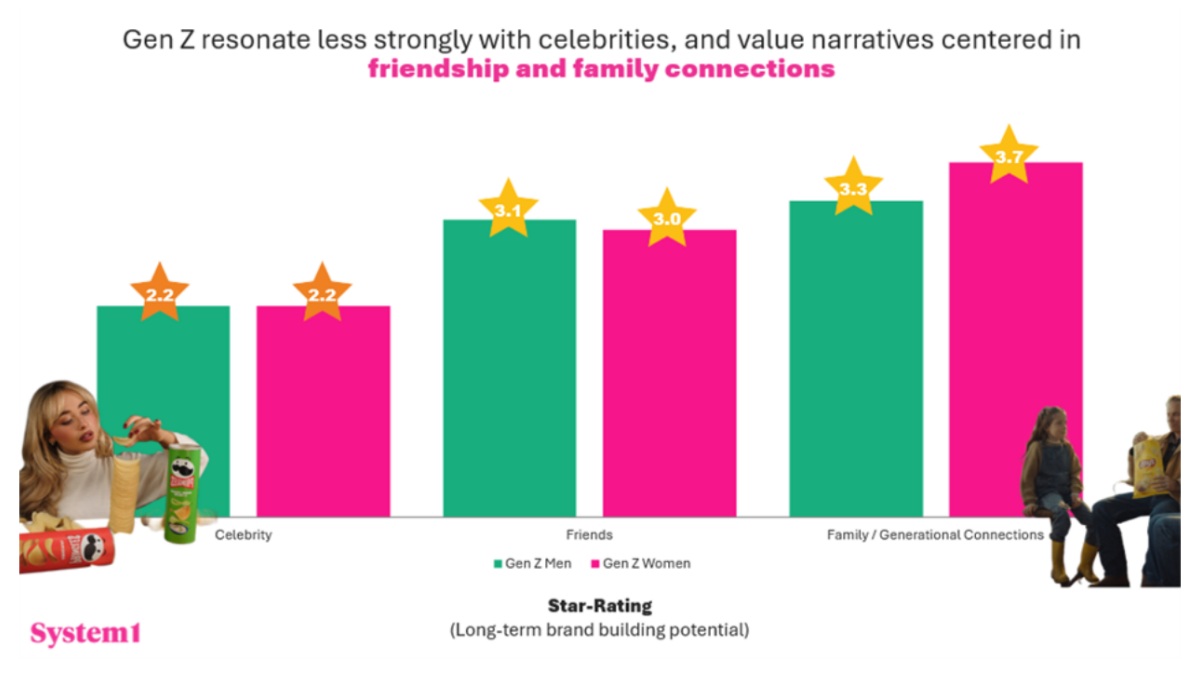
A strong example from last year’s Super Bowl is Lay’s The Little Farmer. The spot performed exceptionally well on TV and translated into a highly effective social ad. Importantly, the positive response was not driven simply by the presence of a young character. It came from the emotional connection between generations, the girl’s desire to support her family business, and the shared family moment at the end.
As the highest-scoring campaign of Super Bowl LIX, The Little Farmer shows that for Gen Z and beyond, connection beats star power.
Don’t Take Gen Z Too Seriously
One of the most persistent myths in Gen Z advertising is that humor is risky or even inappropriate. Because this generation is often associated with cancel culture, social purpose, and challenging the status quo, many brands assume comedy is off-limits. The result is ads that feel earnest, heavy, and oddly joyless.
But this assumption doesn’t hold up.
Yes, Gen Z care deeply about big issues such as the environment, financial pressure, the cost of living, AI and job security, and mental health. But humor isn’t the opposite of these concerns. It is often the bridge into them. Behavioral science consistently shows that humor lowers cognitive resistance, making complex or serious topics easier to process and more engaging. Caring about the world doesn’t make Gen Z humorless.
In fact, research tells us the opposite. Ads that use humor deliver stronger long-term commercial impact than those that avoid it, and Gen Z respond especially well to lightness when it feels authentic. Simple, playful moments, positivity, and even a sense of comedic innocence are powerful drivers of engagement and were among the most cited contributors to happiness in our Seeing Gen Z research.
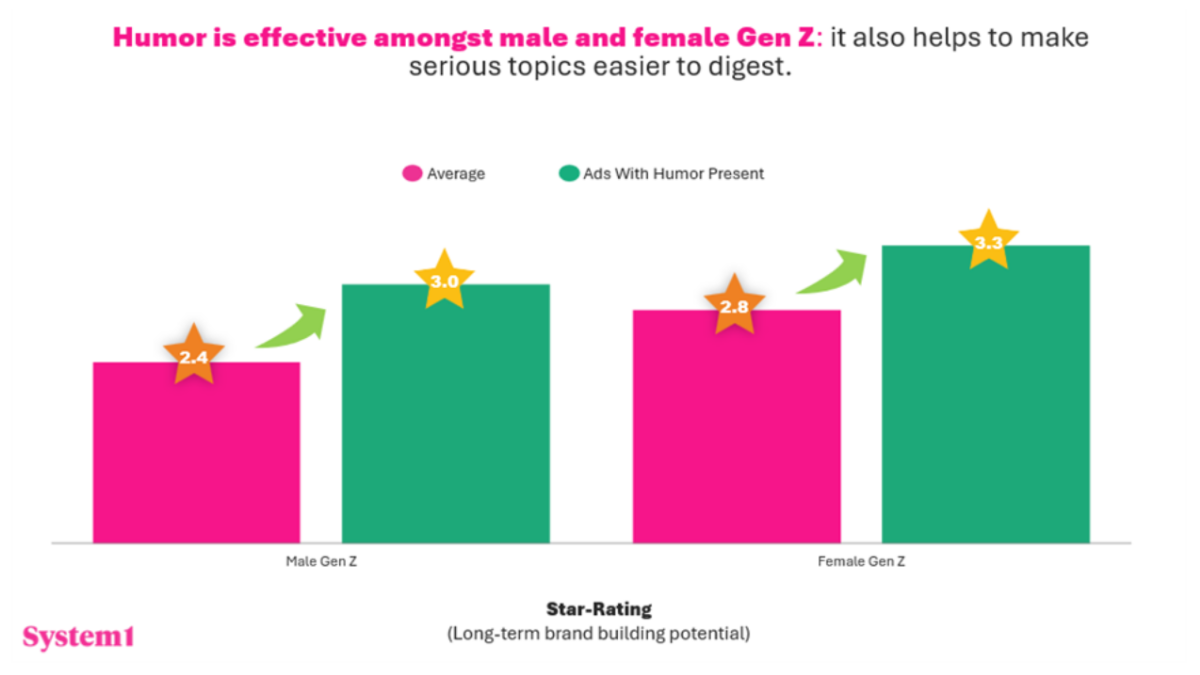
For Super Bowl advertisers, the takeaway is clear. Gen Z don’t need to be spoken to with solemnity. They want to laugh, to feel something, and to see brands that understand that humor isn’t trivial. It is human.
A great Super Bowl example comes from Uber Eats, whose A Century of Cravings spot saw the strongest positive response among younger audiences. The ad also performed well with broader audiences, proving that humor remains a universal creativity currency.
Gen Z Aren’t What They Eat
As brands like Svedka spark conversation around their use of Gen AI, and as AI becomes increasingly prominent in advertising, it’s tempting to assume that Gen Z will naturally respond to it. After all, this is a generation that has grown up alongside rapid technological change. But emotional data tells a very different story.
While Gen Z attitudes toward AI have been widely debated in the run-up to the Super Bowl, our testing shows that familiarity does not equal affinity. When we evaluated ads that featured AI or were created using AI alongside ads that heavily showcased technology such as mobile phones, a clear pattern emerged. Gen Z simply aren’t resonating.
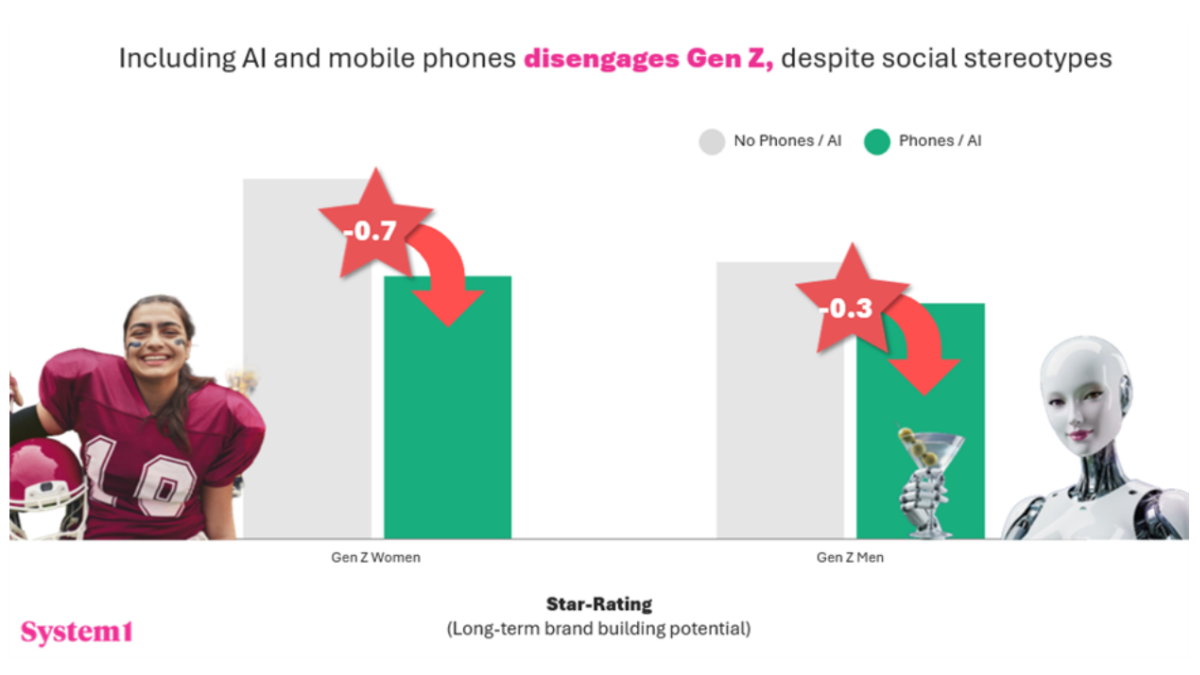
This may come as a surprise to many marketers, but it becomes far less surprising when viewed through our earlier findings. What Gen Z respond to most is human connection. Against that backdrop, technology-led storytelling struggles to land emotionally.
For Super Bowl advertisers, the takeaway is simple. Just because you can, doesn’t mean you should. AI-driven advertising will almost certainly be more visible this year, often in pursuit of staying current, appearing innovative, or signaling relevance to younger audiences. But the data is clear. Relevance is not the same as resonance.
In a world where screen time, AI, and social media are constant, Gen Z are craving something else entirely. Authenticity, humor, and human connection matter more than ever.
Brands like Dove show how to navigate this shift effectively. By consistently challenging evolving definitions of authenticity, from social media and body image to AI and the idea of “real beauty,” Dove continues to have an overwhelmingly positive impact on Gen Z audiences.
Create for Gen Z with Confidence
Gen Z is not as complex or hard to reach as many marketers assume. With emotional response data, brands can make clearer, more confident decisions about what truly resonates, tailoring strategies to meet Gen Z where it matters most and understanding how creative performs across the full channel mix.
System1’s Test Your Ad platform helps brands see how audiences really feel about their advertising, from tentpole moments like the Super Bowl to everyday touchpoints. Get in touch with our team to discover how testing can help you Create with Confidence®.
Looking for more insight into Super Bowl creative effectiveness? Join our webinar on Monday, February 9, where we’ll reveal the top-performing ads and the reasons behind their success, alongside a meta-analysis of seven years of Super Bowl advertising.