
Don’t Forget to Brand: Why Codification is the Key to Super Bowl Advertising Success
From celebrity appearances to over-the-top humor, storylines and stunts to beloved brand characters, there is a lot to love about Super Bowl advertising. With millions invested in producing Big Game ads and millions of people watching, there is immense pressure on the line for campaigns to drive not just buzz but long-term brand-building.
Marketers shouldn’t be leaving anything to chance on advertising’s biggest stage. Especially whether audiences will recognize and remember their brand.
Yet Super Bowl ads don’t always ace the brand recognition test with consumers. In 2025, System1’s Test Your Ad Competitive Edge platform found that the strength of branding (Fluency Rating) in Super Bowl ads fell to a six-year low, dropping from 85% brand recognition in 2020 to 79%. In short, 21% of viewers couldn’t correctly name the brand immediately after watching the entire ad.
At best, this could mean the work is confusing, unengaging, forgettable or requires repeated viewing to land the brand. At worst, it can result in creative being misattributed to a competitor, perhaps one that didn’t even invest in a Super Bowl spot. This branding issue, which can persist well beyond game night, translates to millions of media dollars wasted.
With so many advertisers competing for attention, codification is the key to both short-term and long-term commercial success.
Bold Branding Matters
It seems obvious that ads need to be well-branded, but the reality is that Super Bowl advertising has room for improvement in the area of distinctiveness.
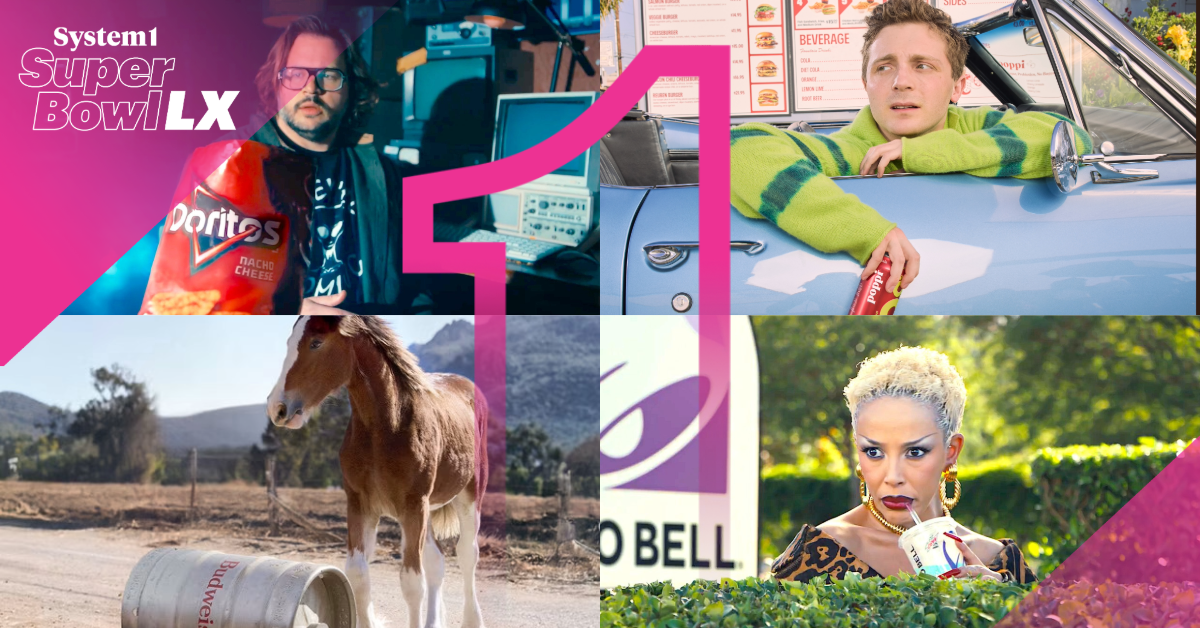
During the 2024 Super Bowl, only 8% of ads reached 95%+ brand recognition (‘Exceptional’ in System1’s testing), whereas half sat in the ‘Low’ to ‘Modest’ range. While 2025’s overall Fluency Rating average did dip below 2024, Super Bowl LIX saw the percentage of ads securing 95%+ brand recognition double to 16%. This group included Budweiser (100%), Poppi (100%), Taco Bell (99%), Red Bull (98%), Doritos (98%) and more.
Great creative is a delicate balance of emotion, entertainment (i.e., showmanship), distinctiveness and consistency. It’s understandable that the majority of Super Bowl ads don’t brand boldly enough:
- Big Game advertisers may want to slowly build suspense and let a story fully unfold before a big reveal near the conclusion.
- Perhaps there are concerns that introducing logos or product imagery at the outset might interfere with emotional engagement among the audience.
- Or brands may underestimate the frequency at which codification needs to occur, embedding some codes but not nearly enough to maximize brand recognition.
Whatever the reasons for holding back on big, bold branding, it’s time to refresh what distinctiveness looks like and how it is applied. Thankfully, there are ways to turn the problem around and a magic number to keep in mind, rooted in extensive research.
Unlock Commercial Impact with Seven Codes
When creative elicits an emotional response in audiences, it supports mental availability. While it’s true that eliciting any emotion is better than a complete lack of emotion (neutrality), it is positive emotion that is the most effective at driving brand and business effects. This has been further reinforced by System and Effie’s recent book The Creative Dividend.
To help marketers improve ad quality, defend investment and unlock profit, the research linked reported commercial outcomes for 1,265 campaigns in Effie Insights’ database to consumers’ emotional responses to the creative, derived from System1’s Test Your Ad Competitive Edge database.
For brands to realize the short- and long-term commercial outcomes tied to this emotional equity, consumers must be able to correctly link emotional creative to the brand. The research found that seven brand codes across a 30-second ad is the optimal number for driving max Fluency. This can be a mix of various distinctive brand assets (DBAs) or codes, like logos, brand colors and shapes, typeface, recurring character or celebrity spokesperson and more.
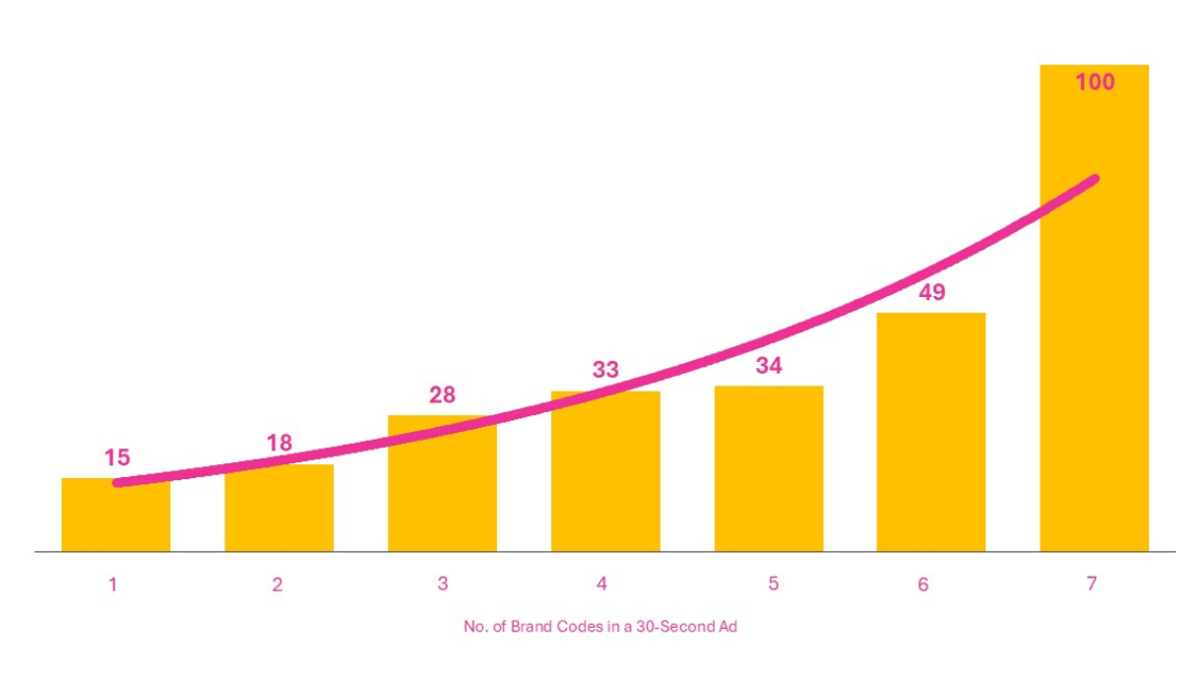
Seven may feel like a lot, but System1 has seen time and time again that repeatedly applying codes yields high levels of Fluency. And that correct attribution helps advertisers turn predicted commercial outcomes into market share and profit gain…if media investment is a consideration.
Keep the Cake in the Oven Longer
The impact of codification continues to compound when marketers pair creative quality with media support. This is a core recommendation of The Creative Dividend.
Too often, Super Bowl ads are a one-off, with little to no investment beyond game night. Just as high-spend campaigns with weak creative quality underperform in the research from System1 and Effie, so too does creative excellence without broad reach. The greatest commercial impact is achieved by recognizing the value of both creative effectiveness and long-term investment.
As marketing professor Mark Ritson notes:
“You’re taking your cakes out of the oven too early. Leave them in. Let the emotion work, let the codes work.”
Some of the most successful Super Bowl ads are those that have legs beyond Super Bowl Sunday’s advertising catwalk. Take Lay’s “Little Farmer” as an example. The ad topped the charts in System1’s 2025 Big Game rankings thanks to a heartfelt story that embedded the brand brilliantly, a catchy soundtrack and emotional build up. And importantly, it’s still airing as of January 2026. Lay’s recognized the creative quality and continued to back it for a year.
Consumers don’t tire of ads as easily as marketers do. Follow Ritson’s advice and keep investing in your best work and keep using your codes again and again. Letting your most emotional and distinctive ads wear in supports long-term profit gain.
Cracking the Code
Looking for even more codification inspiration? Our very own Gen Norris covered four routes to effective codification in her blog “Why are Super Bowl Advertisers So Shy on Branding?” ahead of last year’s game. The principles still hold true:
- Craft Campaigns around Cultural Codes: Lean into the ways in which your brand is rooted in culture, like the ritual of twisting an Oreo to lick the filling.
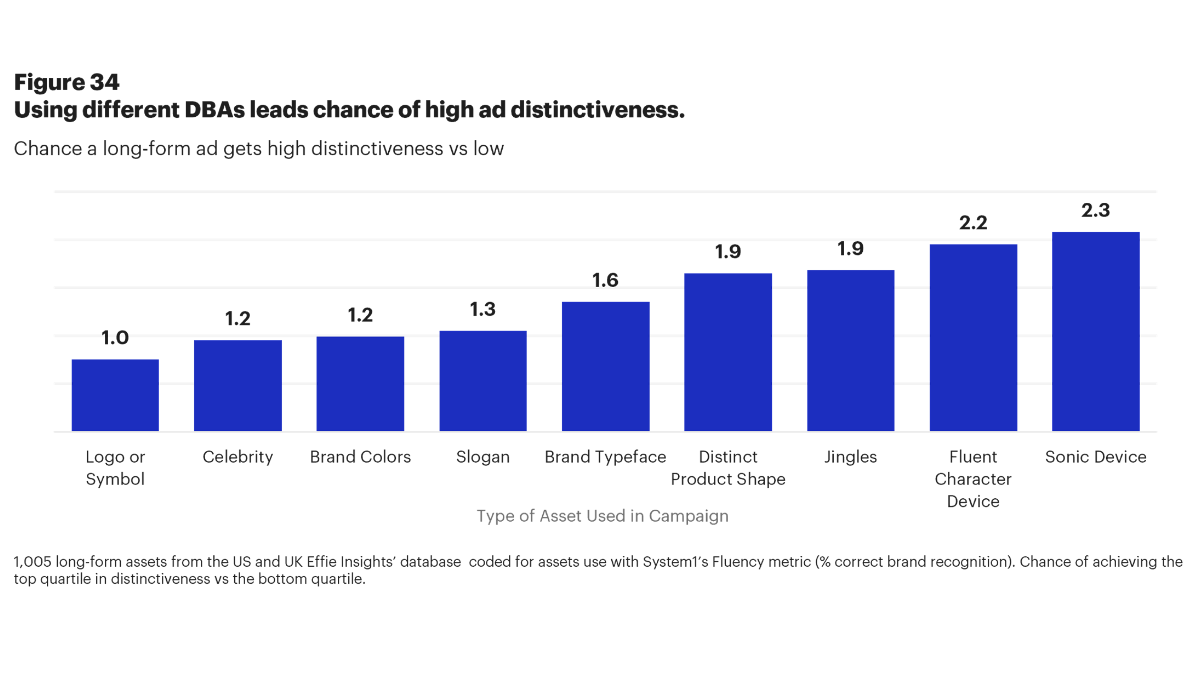
- Don’t Underestimate Sonic Cues: System1 and Effie’s book showcases how different DBAs impact distinctiveness. Sonic devices are the most effective and jingles aren’t far behind.
- Characters Cue Brand Recognition: Ownable brand characters that can be continuously used year after year and leveraged across the media mix drive a positive emotional response, are immediately recognizable and compound in effectiveness over the long term. Everyone knows who the M&M’s spokescandies and Budweiser Clydesdales are.
- Consistency is Key: The more audiences are exposed to your brand codes over time, the stronger the connections they’ll form with them. Think KitKat’s “Have a Break” tagline paired with their iconic red, distinctive product shape, and logo. Distinctiveness doesn’t happen overnight, but that’s no excuse to abandon the codes that have the power to set your brand apart.
Create with Confidence®
Want to better diagnose brand recognition before the Big Game? System1’s Test Your Ad platform helps marketers Create with Confidence® by predicting short-term sales potential and long-term growth potential, with a clear measure of brand recognition. Contact our team today so you can further optimize your creative and land a spot in our distinctiveness ‘Hall of Fame.’
Want even more Super Bowl advertising insights? Register for System1’s post-game webinar, during which we’ll break down America’s favorite ads and why they worked, the most commonly used codes and the latest Fluency figures, and what every marketer can learn from the best Big Game ads.