
Creators vs Celebrities at the Super Bowl

The Super Bowl has long been an A-listers’ playground, with roughly 60 percent of ads featuring a well-known Hollywood name. But that dominance is beginning to face real competition. Social-first creators are increasingly sharing the spotlight, bringing built-in audiences and cultural relevance that extend well beyond game day.
The question for brands is not whether creators belong on the Super Bowl stage. It is whether they are reshaping how attention, impact, and fandom are built, and what that means for the next generation of Super Bowl audiences.
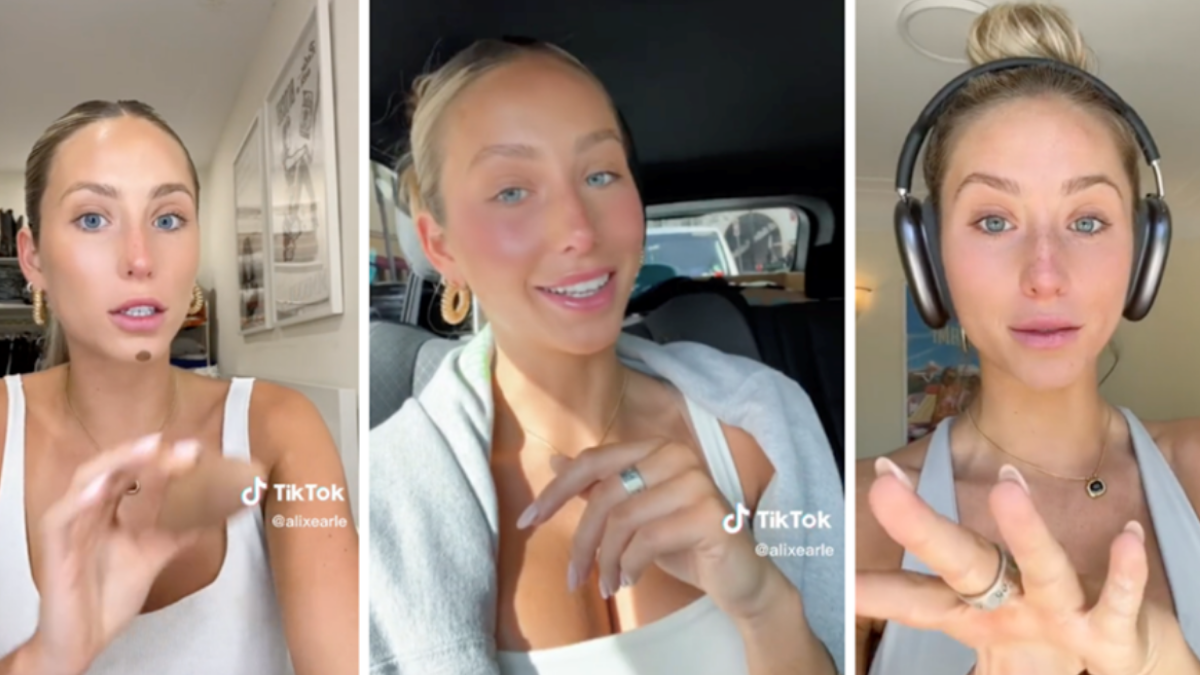
In recent years, creators have become a visible fixture on Super Bowl screens. Names like Alix Earle and Jake Shane appeared in campaigns for Carl’s Jr. and Poppi, sending ripples through adland. And for good reason. Creators are not simply a more cost-effective alternative. They are proven drivers of attention and, when used strategically, can enhance brand awareness and brand image.
However, the real question remains whether creators can deliver the same emotional resonance as traditional household names.
While creators may not yet carry the multi-generational pull of figures like David Beckham, George Clooney, or Beyoncé, their growing mainstream presence beyond digital platforms is beginning to shift the balance. For both challenger brands and category leaders, creators offer new routes to relevance, reach, and cultural connection.
But there is a catch.
Creators were not built on TV.
The Creator Catch
In the work of Orlando Wood, including Lemon and Look out, traditional celebrities are shown to unlock greater long-term growth potential for brands when used in familiar settings. Many Hollywood actors, sports personalities, and comedians were effectively built on screen. Recognized through television and film, seeing them appear in a 30-second Super Bowl commercial feels entirely natural.
Recent Super Bowl campaigns illustrate this well. Meg Ryan and Billy Crystal’s appearance for Hellmann’s recreated their iconic When Harry Met Sally scene at Katz’s Delicatessen. Bill Murray’s 2020 Jeep ad revisited Groundhog Day. In both cases, the creative worked because it drew on deeply embedded cultural memories formed through long-form viewing.
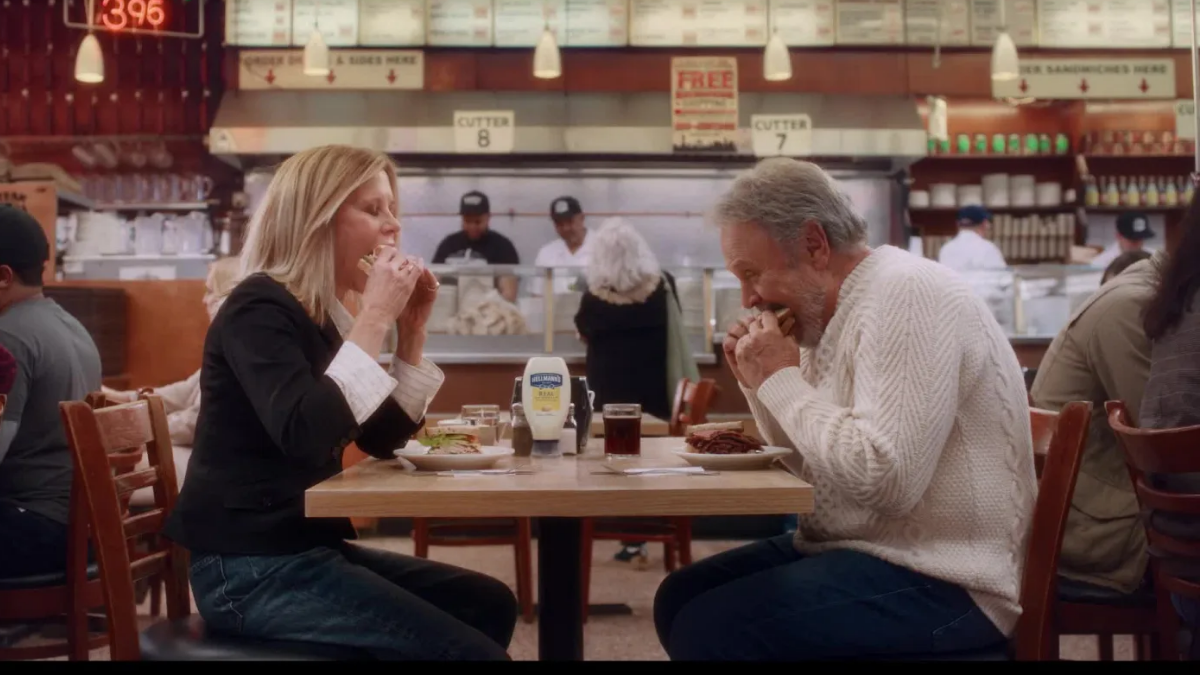
As audiences, we are accustomed to experiencing celebrities in extended formats, and television advertising supports that mode of storytelling. When an ad feels closer to watching television than being sold to, it becomes more engaging. In simple terms, the TV environment favors stars we already associate with the screen.
Creators, by contrast, are typically built in shorter-form environments such as TikTok, Instagram, and YouTube. Translating that content style to television is not straightforward. Formats like “get ready with me”, story times, or ASMR do not naturally map onto traditional TV advertising because that is not how audiences organically consume that content.
As a result, the effective use of creators at the Super Bowl requires a different approach. One that allows creators to work within the conventions of television advertising, rather than attempting to force digital behaviors onto a TV-first canvas.
What Does Creator Success Look Like at The Super Bowl?
Many of the brands using creators successfully at the Super Bowl have creators embedded into their DNA. Brands such as e.l.f. Beauty and Poppi are pioneers in community-building, investing in creator-led content long before considering traditional TV media, let alone the Super Bowl. Having historically used creators to drive buzz, awareness, and brand equity, these brands are a natural fit for creator-led Super Bowl appearances.
Even so, they understand that the Super Bowl is a very different arena from the digital-first environments where creators typically thrive.
Take Poppi as an example. Despite its grassroots beginnings in farmers markets and its breakout moment on Shark Tank, the acceleration of e-commerce during COVID-19 fueled rapid growth in DTC, creator content, and social-led brand building. Founder Allison Ellsworth became widely recognized for her founder story long before the brand partnered with creators such as Alix Earle and Jake Shane.
Poppi’s trajectory from launch to its sale to Pepsi highlights the importance of duration, consistency, and strategic sequencing. Years of investment in creators and community building preceded its creator-led Super Bowl appearance in 2025.
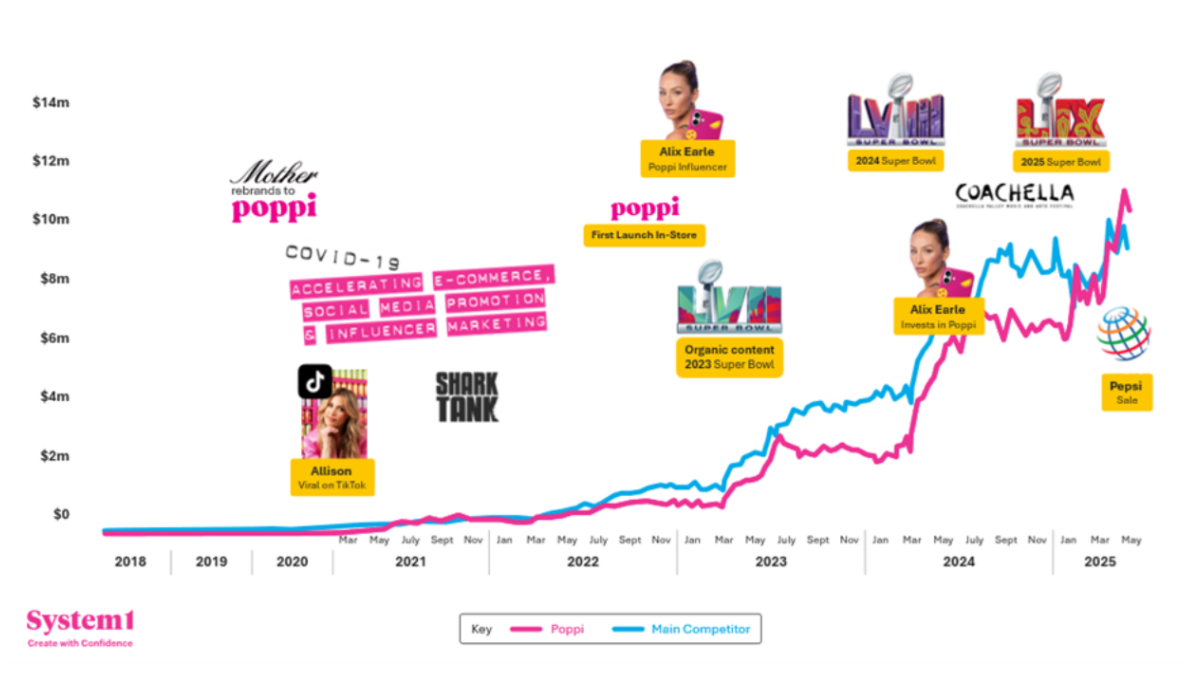
In 2024, Poppi’s campaign The Future of Soda Is Now focused on establishing the brand before elevating the creators behind it. The campaign featured in-feed videos, strong product visuals, distinctive brand codes, and a clear articulation of how Poppi differs from traditional sodas. At its core, it was a statement of “who we are” and “where you can find us”, designed to build awareness and drive trial among a wider audience.
This distinction matters. Leading with creators at this stage would have been premature. If audiences do not recognize the creator, they are unlikely to understand the digital context that gives that creator relevance, or where to engage with the brand next. In 2024, Poppi introduced itself through the channel, not through the creator.
By 2025, having delivered visible brand growth, Poppi was ready to take the creator leap. But instead of making a social ad for television, the brand made a television ad embedded with subtle social Easter eggs. The product remained front and center. The visual language stayed consistent with the year before. Brand differentiation was reinforced. Multiple usage occasions were shown. Retail and restaurant availability were clearly signposted. Creators were present, but never dominant.
The result was an ad that worked even if viewers had no familiarity with the creators involved. For those who did, their presence added an additional layer of recognition, enjoyment, and payoff.
Had Poppi not spent years investing in creator content beforehand, the impact would likely have been far weaker. Alix Earle, for example, is a long-standing brand ambassador and investor, making her appearance feel earned and coherent. A brand with no prior association to a creator risks confusing unfamiliar audiences and diluting meaning for those who do recognize the talent.
The Strategic Takeaway
Creators can work at the Super Bowl, but they must work within ads built for television. Subtlety matters. Context matters. And prior brand association matters.
Before investing in a creator-led Super Bowl strategy, brands should ask themselves two questions:
- Is this creator already meaningfully associated with our brand?
- Does the ad achieve our objectives whether the viewer recognizes the creator or not?
If the answer to either is no, then creators are unlikely to be the right strategic lever, at least not yet.
Used thoughtfully, creators can serve digital-first brands exceptionally well on the Super Bowl stage. But success does not come from importing social content into TV. It comes from respecting the medium, earning the moment, and letting creators enhance the story rather than lead it.
Create with Confidence®
Eager to understand whether the creator route is right for your brand? Or to assess whether your ad content delivers against key objectives regardless of talent? Get in touch with our team today.
System1’s Test Your Ad platform helps brands understand how advertising performs against commercial outcomes such as short-term sales and long-term brand growth. It evaluates whether talent is resonant and clearly understood, and whether branding is consistently identifiable throughout the ad. Our expert consultants then support optimization, drawing on past campaign performance, cross-channel creative analysis, and second-by-second audience response.
Looking for more insight into Super Bowl creative effectiveness? Join our webinar on Monday, February 9, where we’ll reveal the top-performing ads and the reasons behind their success, alongside a meta-analysis of seven years of Super Bowl advertising.