5 Tips from Super Bowl Legends to Level Up Your Ad Game
Super Bowl season is here. Anticipation is rising, speculation is everywhere, and expectations are already sky-high for the biggest advertising moment of the year. It is a rare opportunity with a massive price tag, and even brands that return year after year feel the pressure to prove it was worth it.
Attention is guaranteed. Effectiveness is not.
Over the past six years, we have tested Super Bowl ads through System1’s Test Your Ad Competitive Edge platform and spoken directly with the marketers who consistently win where it matters: long-term brand growth. The data is sobering. Most Super Bowl ads average 2 Stars out of 5.9 on System1’s measure of long-term effectiveness. Last year this average reached 3.0. In most categories that is a strong result. In the Super Bowl, given the cost of creative and media, it is a middling return.
On Uncensored CMO, I have spoken first-hand with the advertisers who refuse to settle for that outcome. They build emotional equity, design for longevity, and use the Super Bowl as a growth accelerator rather than a vanity moment.
If you are going to play on the biggest stage in advertising, you need to outperform the average.
Here are five tips from the brands that do.
1. Play the Long-Game
The Super Bowl’s position at the start of the year makes it a rare opportunity to launch creative that can generate returns for months, not days. Yet many brands still produce work designed only for the lead-up and immediate aftermath of the game, giving it a far shorter lifespan than advertising that runs across the rest of the year.
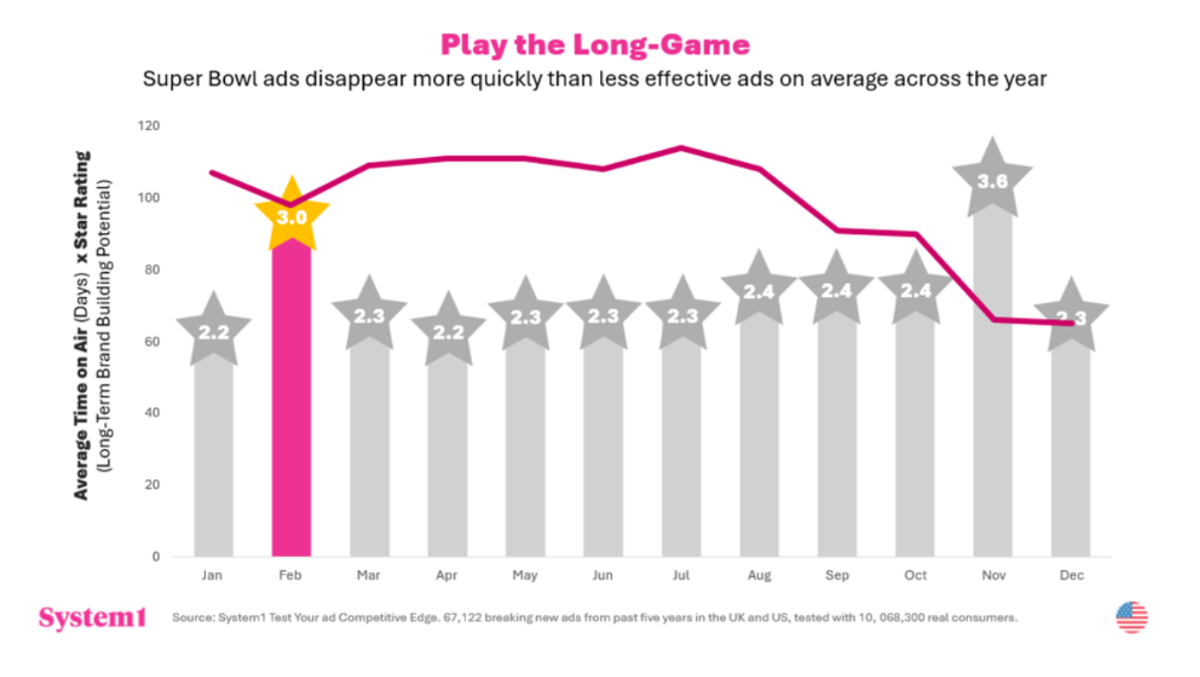
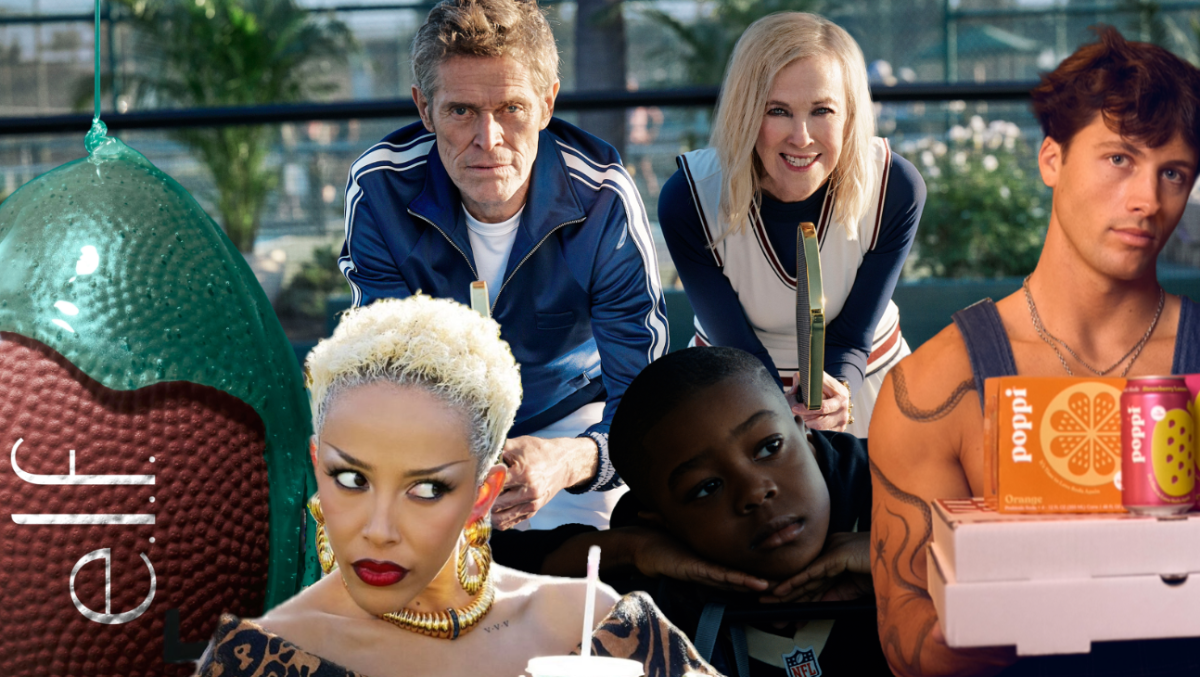
Michelob ULTRA is a brand that consistently cuts through by thinking beyond the game itself. Its Super Bowl ads often focus on sport, but not American football. “Superior Beach” featured Lionel Messi and was built to remain relevant through the soccer season. More recently, “ULTRA Hustle” with Willem Dafoe and Catherine O’Hara leaned into the rapid rise of pickleball. Both campaigns scored strongly on System1’s Star Rating and were designed to work long after Super Bowl Sunday.
When Ricardo Marques joined me on the podcast, he explained how the brand unlocks year-round impact through the Super Bowl, and his point was clear. Their marketing plan is not built around the Super Bowl. The Super Bowl simply fuels the rest of the year.
“The Super Bowl is conveniently placed at the start of the year. It’s an amazing opportunity to really supercharge your plan.”
Ricardo Marques, SVP Marketing at Michelob ULTRA
Watch the full episode:
2. Make Space for Optimization
Creative pre-testing has evolved. Emotion-led methodologies, including System1, are now replacing blunt rational measures because they tell you what actually matters: how people feel. Pre-testing is not a nice-to-have. It is your earliest and clearest read on emotional response, long before the game.
Tim Ellis, CMO at the NFL, one of the most consistently effective advertisers on the Super Bowl stage, credits that success to research. As he told me candidly, they “spend much more time in development than they do in execution.”
That discipline matters. When the stakes are this high, leaving optimization to the last minute is reckless. The smartest brands plan early, test hard, refine relentlessly, and only then go live with confidence.
For more, watch the full interview:
3. Take Risks. Swing Big.
One of the quietest killers of creative effectiveness is neutrality. Making people feel nothing is lethal. When audiences feel nothing, they do nothing.
In The Extraordinary Cost of Dull, Adam Morgan, Peter Field, and I found that 50% of audiences feel nothing toward advertising. The Super Bowl performs better than average at 36%, but that is still a dangerous amount of indifference on the biggest stage in marketing. If you want to stand out and drive action, playing it safe is not an option.
Ken Muench, CMO of Yum! Brands, is explicit about what it takes. When they show up at the Super Bowl, they go big. As he told me, “Your job is to get the crowd to go crazy. If you’re not comfortable doing that, you shouldn’t be in the world of marketing.”
Emotion is a commercial driver. Positive emotion builds brands over the long term. Negative emotion fuels tension, storytelling, and short-term action. The mistake is not choosing one over the other. The mistake is choosing nothing at all.
On the world’s biggest advertising stage, you must be deliberate about the emotion you want to provoke. If you cannot name it, your audience will not feel it.
The full episode with Ken is available below:
4. Know Your Target Audience
The Super Bowl has become far more than a sporting final. It is a global cultural moment that attracts music fans, pop culture obsessives, Swifties, and viewers across ages, genders, and geographies. That scale can be intoxicating, but it also creates a trap. When brands try to speak to everyone, they often end up meaning nothing to anyone.
On game night, your audience needs to feel seen.
Kory Marchisotto, CMO of e.l.f. Beauty, went into the Super Bowl with exactly that conviction. Women represented a massive share of the Super Bowl audience, yet they were largely invisible on screen. So e.l.f. chose to spotlight the fans no one else was acknowledging. As Kory told me, “we showed up in a place where women were being underrepresented, and the entire floor of our business just raised.”
That focus paid off. Now a regular Super Bowl advertiser, e.l.f. continues to compound emotional effectiveness year after year. They demonstrate a simple truth: scale does not excuse dilution. The biggest stage in advertising is still no place to lose sight of who you are actually talking to.
Kory unpacks their Super Bowl strategy:
5. Is the Super Bowl the Right Next Step?
Advertising at the Super Bowl is not a casual decision. For the biggest brands, returning year after year is often baked into the plan. For smaller or challenger brands, the question is more fundamental: not can you do it, but should you, and when.
There is no universal rulebook. But there is a clear signal to look for. The Super Bowl only works when a brand is ready to convert attention into growth.
Allison Ellsworth, Co-Founder and Chief Brand Officer of prebiotic soda brand Poppi, walked me through their leap from DTC and influencer-led growth to the Super Bowl, and ultimately to their sale to Pepsi. It was not a vanity play. It was a deliberate escalation.
The results speak for themselves. As Allison told me, “Our household penetration tripled overnight. It was just such a breakthrough moment for the brand.”
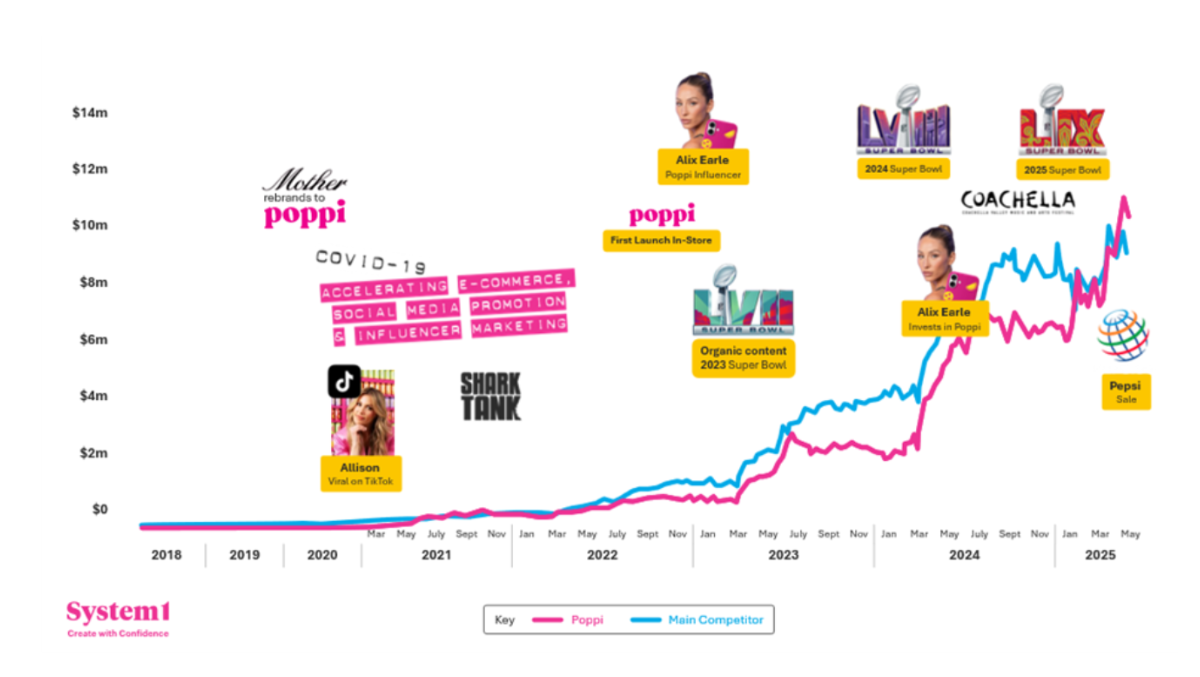
The lesson is simple. The Super Bowl works best when a brand is ready to scale. With strong foundations in place, the platform can accelerate growth and elevate a brand’s trajectory faster than almost anything else.
Hear how Poppi scaled their business:
Ready to Level Up?
Big stages do not forgive small thinking. Uncensored CMO goes behind the headlines with the leaders who know how to turn attention into growth.
Listen to the full episodes and hear exactly how they do it.
Curious about the winning ads of Super Bowl LX? Register for System1’s post-game webinar, breaking down the best brand-building moments, the greatest celebrity appearances, the most distinctive ads and more.