
We Need to Talk About Premium Advent Calendars

Every December, something small but meaningful happens in households across the UK. Before the rush of emails or school runs or morning chaos, someone pauses to open a tiny door, unwrap a miniature surprise, and give themselves a moment of delight. It’s a ritual rooted in childhood yet increasingly embraced by adults and often in far more luxurious forms.
Premium advent calendars have become a modern holiday phenomenon. They’re photographed, unboxed, gifted, debated, and sometimes even criticized in the press. One shopper told The Sun she spent £260 on her Space NK calendar and was “not impressed,” while commentators in The Guardian and The Independent question whether adults need “24 tiny gin bottles” or “scaled-down candles” at all. And yet, as YouGov reports, younger adults, especially Gen Z, are more drawn to these calendars than ever.
That tension is what makes this category fascinating: we’re not just looking at products. We’re looking at traditions, and traditions evoke emotion.
Measuring the Emotional Core
At System1, we wanted to understand the emotional core of these calendars, so we tested several premium examples using Test Your Innovation, our platform that measures how ideas truly make people feel. And what we found wasn’t just packaging or price; it was the deeper sentiment that draws people into this seasonal ritual.
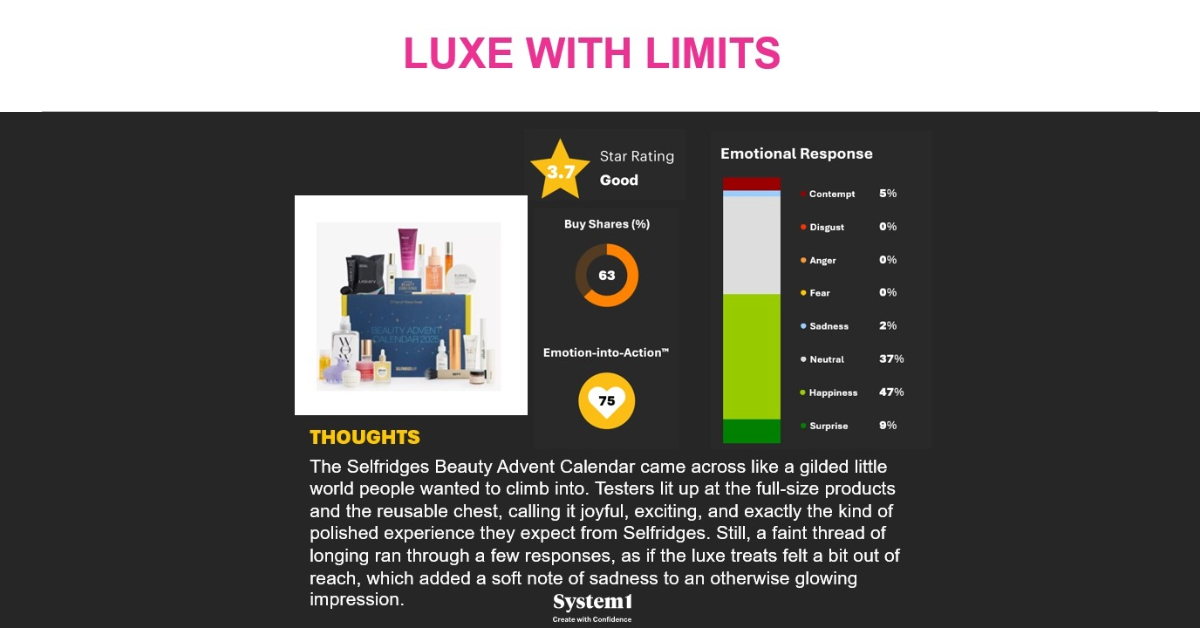
When consumers responded to the Selfridges Beauty Calendar, which scored a standout 3.7-Star Rating, their words reflected more than appreciation for a luxury gift set. They described something that felt festive, generous, and special. “It was very well presented and made me feel good,” one person said. Another noted that the full-size products and reusable chest created a sense of value and intentionality, something “they’d expect Selfridges to do.”
Tradition Meets Discovery
In these responses, you can sense the role tradition plays. Opening each drawer or door isn’t just an action; it’s an emotional moment. It brings back the anticipation of childhood but elevated with adult sensibilities: craftsmanship, design, quality, self-gifting, and a bit of indulgence that feels earned.
We saw this again with the whisky calendar. Even people who aren’t whisky fans acknowledged its festive charm, while enthusiasts lit up at the idea of discovering new single malts each morning. “I feel surprised… it’s interesting and valuable,” one respondent said, capturing the sense of discovery that makes these calendars feel like a journey rather than a purchase.
Emotional Payoff, Design, and Brand Trust
What emerged across all the calendars tested was the unmistakable importance of emotional payoff. A premium advent calendar works when it feels like it belongs in the rhythm of December, when it brings a spark of joy into the everyday, when the presentation feels thoughtful, and when the brand itself carries a sense of comfort or familiarity. It’s why names like Liberty, The White Company, and L’Occitane hold such sway. As one consumer put it, “Great range of products from a popular and trusted brand.” Even before opening the first door, the brand becomes part of the ritual.
Design, too, becomes part of the emotional experience. People frequently described calendars as “beautiful,” “elegant,” or “unique,” and these details shaped their expectations for the entire month. A L’Occitane fan captured it well: “Favorite scents all in one beautiful place… looks elegant.”
What’s striking is that many consumers talked about calendars in the same way they talk about ornaments, cherished recipes, or annual family traditions. They become part of the season’s emotional landscape, an anchor amid the frenzy.
Creating Moments That Matter
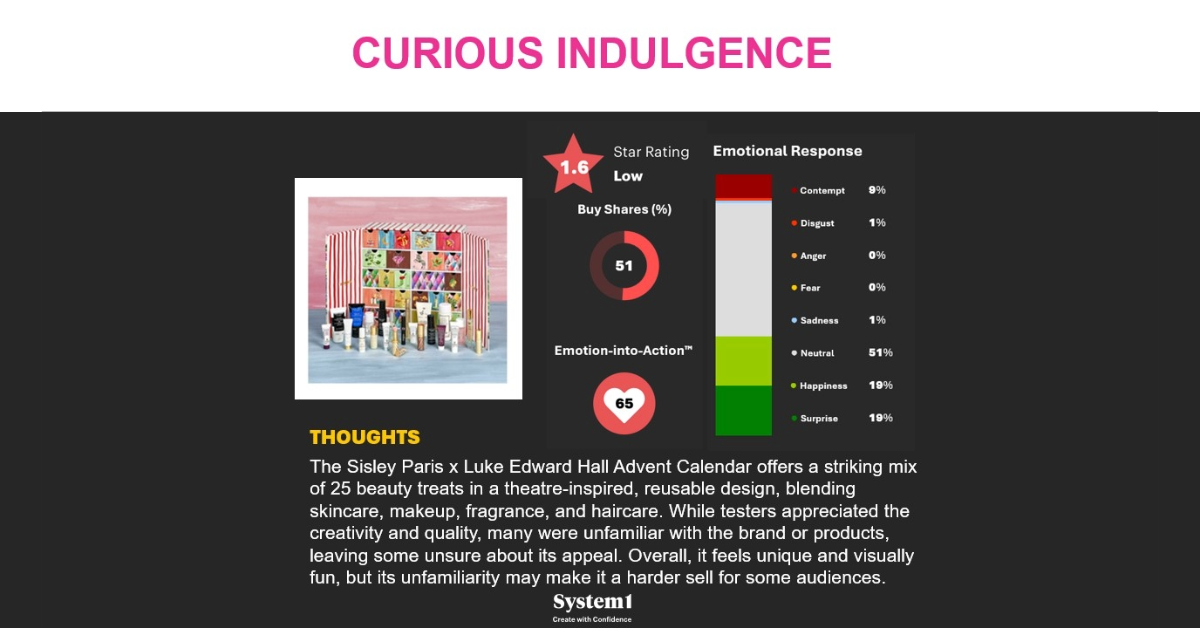
And that’s why the conversation surrounding them feels so charged. Yes, some people worry about waste or price. Yes, the media debates necessity. But at the heart of it, consumers aren’t evaluating these calendars as everyday products. They’re evaluating them as moments, as memories in the making, as small rituals that add texture and joy to the holidays.
This is where Test Your Innovation becomes so valuable for brands. When you’re building something that sits inside a tradition, not just a category, you have to understand the emotional reaction long before launch. Our testing reveals where joy is sparked, where anticipation builds, and where the sentiment falls flat. It shows whether a calendar feels generous or stingy, magical or mundane, distinctive or forgettable. And because everything is benchmarked against 61,000+ ideas, brands can see instantly whether their concept will truly elevate someone’s December or simply blend into the noise.
In a season defined by sentiment, the brands that succeed are the ones that design for emotion first. They understand that an advent calendar isn’t a box of samples or miniatures. It’s a daily ritual, a nostalgic thread, a small act of self-kindness or shared joy. It’s a tradition modernized, yes, but still deeply rooted in the meaning of the season.
And when brands tap into that emotional magic, consumers invite them into one of the most intimate, sentimental stretches of the year: the countdown to Christmas.
See Emotion in Action
If you’re building next year’s calendar or simply exploring whether your idea has the emotional potential to become part of someone’s holiday tradition, Test Your Innovation can help you see exactly how your concept lands and how to make it shine.