
Creativity and the Confidence Gap
Marketers don’t lack ambition. They lack confidence.
Across 1,265 campaigns, spanning the UK, US, Europe and APAC, only half of marketers say they’re confident that advertising can reliably deliver effectiveness. Dig a little deeper and the picture gets even shakier: four in ten are uncertain their own teams can achieve it.
That gap between belief and delivery is what we call the confidence gap and it’s reshaping how creativity is being used, measured and funded.
And not in a good way.
The Confidence Gap Is Driving Short-Termism
When confidence falls, risk aversion rises.
Our data shows that marketers with lower confidence are 49% more likely to rely on short-term results. Not because they want to, but because short term is easier to justify, easier to track and easier to defend internally.
Creativity, meanwhile, is perceived as risky:
- 41% believe creative ideas are too risky
- 40% cite unclear strategy
- One third admit to a lack of customer understanding
The result is predictable. Media budgets shift toward channels optimized for immediate response. Campaigns are judged on the wrong metrics. Effectiveness quietly erodes.
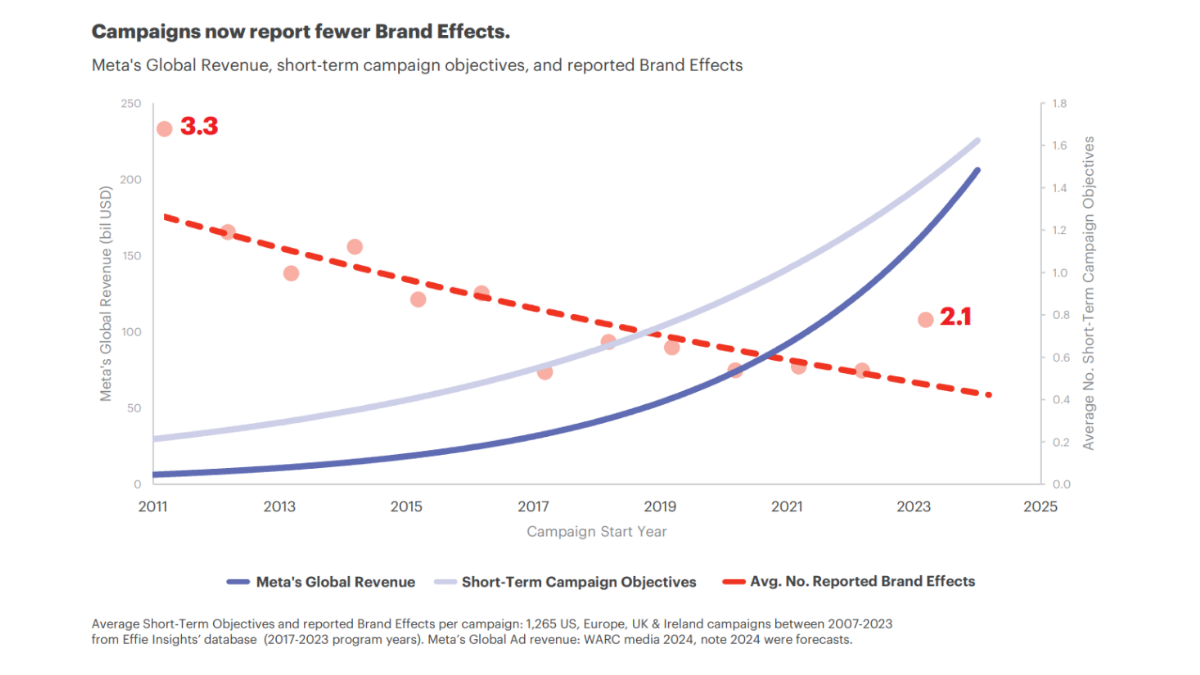
Campaigns today are reporting fewer business effects than they used to, despite more data, more dashboards and more “optimization”.
We’ve said it before and we’ll say it again.
Creativity is in a commercial crisis. It doesn’t need a tweak. It needs a revolution.
Why Effie Insights’ Database Matters
This is where Effie comes in.
Effie remains one of the most complete records of commercial outcomes our industry has. These aren’t vanity metrics or proxy KPIs. They’re real business results.
Effie winners consistently report:
- Higher profit
- Stronger revenue growth
- More brand effects
- Better long-term business outcomes
The message is clear. Creativity contributes directly to commercial success.
But not all creativity.
Introducing the Creativity Stack
From our analysis, creativity that drives growth tends to share four characteristics. Together, they form what we call the Creativity Stack:
- Emotion
- Distinctiveness
- Showmanship
- Consistency
This is what commercial creativity looks like in practice, and how it pays back.
Importantly, creativity sits after strategy. It’s not decoration. It’s a lever that amplifies strategic choices.
And here’s the kicker. Creativity is the strongest driver of advertising profitability that marketers actually control. Which is why measuring it properly matters.
Let’s take a closer look at the four layers of the Creativity Stack and how they intersect and compound impact.
Emotion: The Global Creativity Currency
The more we feel, the more we buy.
This isn’t opinion. It’s psychology. Decades of neuroscience show emotional response is far more predictive of in-market behavior than rational recall or message takeout. That’s why modern testing methodologies, including System1, prioritize emotional response rather than what people say they think.
The biggest enemy of creativity isn’t negativity. It’s neutrality.
Neutral ads don’t support memory formation. Brands running emotionally neutral campaigns have to spend more just to earn the same attention. Our data shows that campaigns with higher neutrality and lower emotional intensity, as measured by System1’s Test Your Ad platform, deliver 40% lower returns on campaign spend.
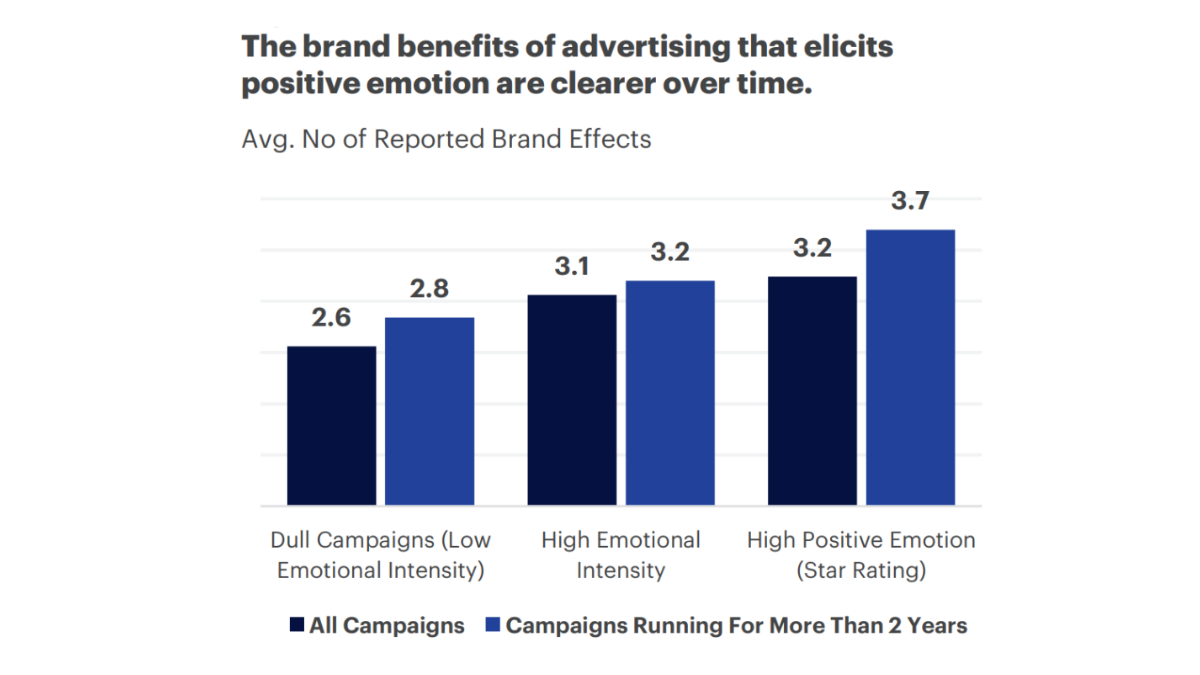
Positive emotions matter even more. They feel safe. Trustworthy. Easy to choose. That’s why System1’s Star Rating is weighted toward positive emotion, because positivity lowers cognitive barriers to choice. Run emotionally positive ads consistently for more than two years and the payoff is clear. Significantly stronger brand effects than campaigns dominated by neutrality.
And this holds true globally, in the UK, the US and across Europe.
Positive emotion is a global creativity currency.
There is no Distinctiveness Shortcut
Emotion builds memory, but only if people remember the brand.
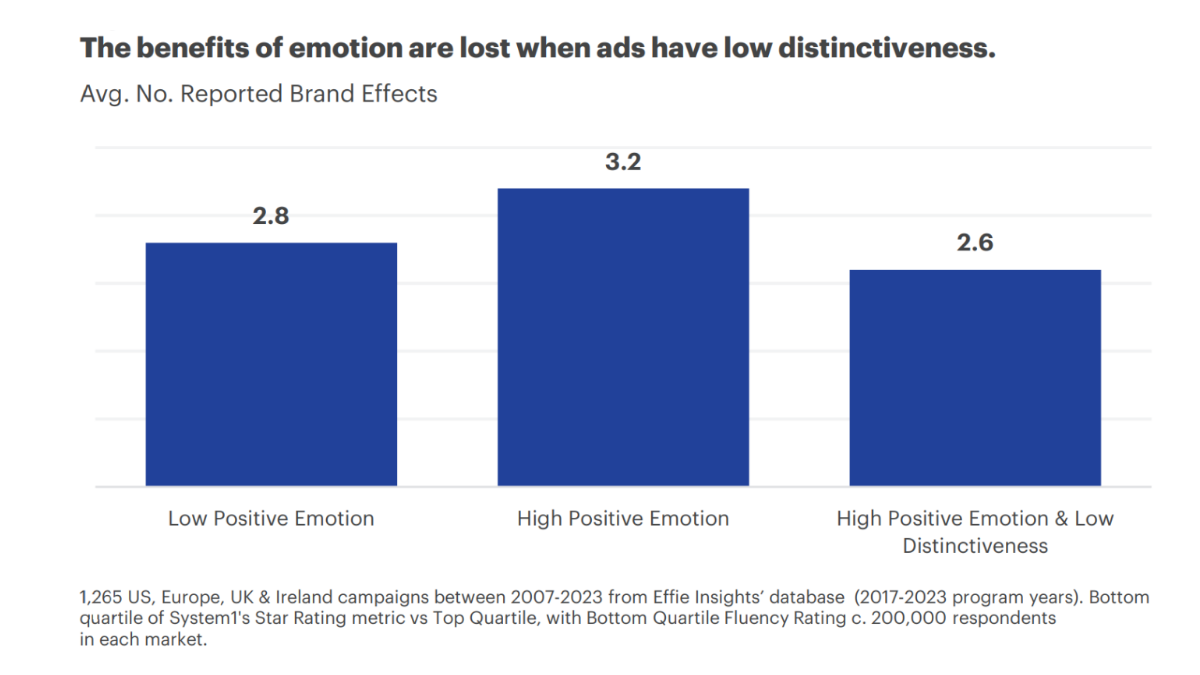
System1 measures distinctiveness using Fluency, the percentage of viewers who can correctly identify the brand by the end of the ad.
Distinctive assets matter. Sonic branding, including jingles and soundtracks, dramatically increase recall. We’ve seen this not just in TV, but in digital environments like TikTok, where jingles emerge as the least skippable format, driving high recall within the first two seconds.
Characters matter too.
Fluent character devices, think the M&M’s spokescandies or Aldi’s Kevin the Carrot, don’t just boost distinctiveness. They drive stronger emotional response and greater attention. Brands using a fluent character report:
- Three times the gains in brand distinctiveness
- Twice the likelihood of fame
But here’s the rule that never changes.
There is no shortcut to distinctiveness.
Memory structures strengthen over time. Brand effects compound through consistency. Profitability follows patience.
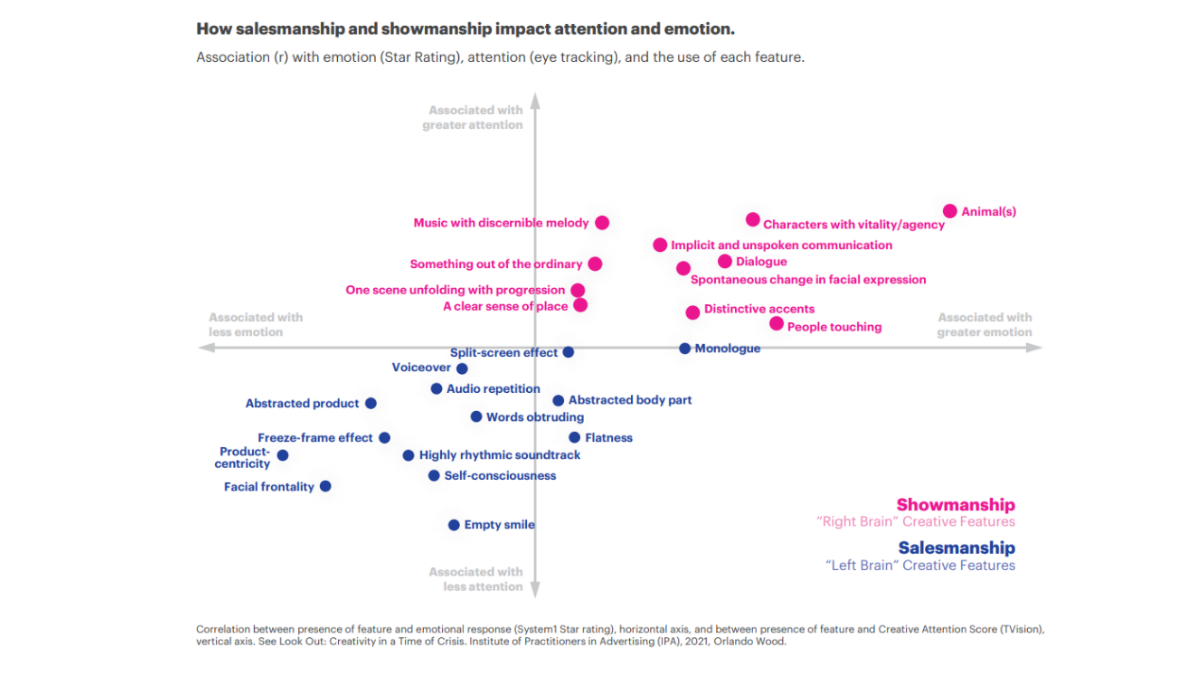
Humor. Storytelling. Culture. Character. Visual depth. Surprise.
Rational persuasion, by contrast, leans on voiceovers, on-screen text, flat product shots and monologues. These ads don’t aim to entertain. They aim to sell.
They may work when people are already in buying mode. But their impact rarely extends beyond that moment.
Showmanship does more:
- It attracts attention
- It drives emotion
- It makes media work harder
- It is less likely to be skipped in digital environments
Showmanship doesn’t replace media spend. It multiplies it.
Consistency Compounds Creativity
Consistency isn’t just about running the same ad again.
It starts upstream, with agency tenure, creative foundations, cross-channel coherence and a sustained commitment to showmanship.
Consistency works because familiarity reduces cognitive effort. We process it faster. Remember it more easily. Feel more from it.
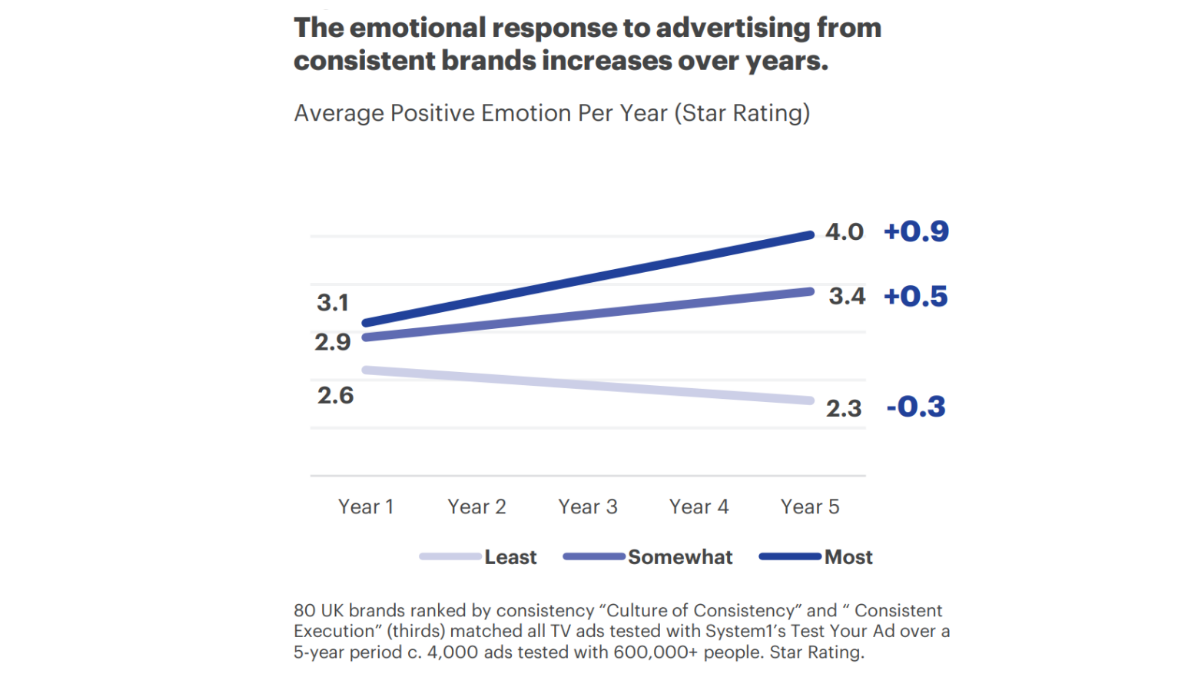
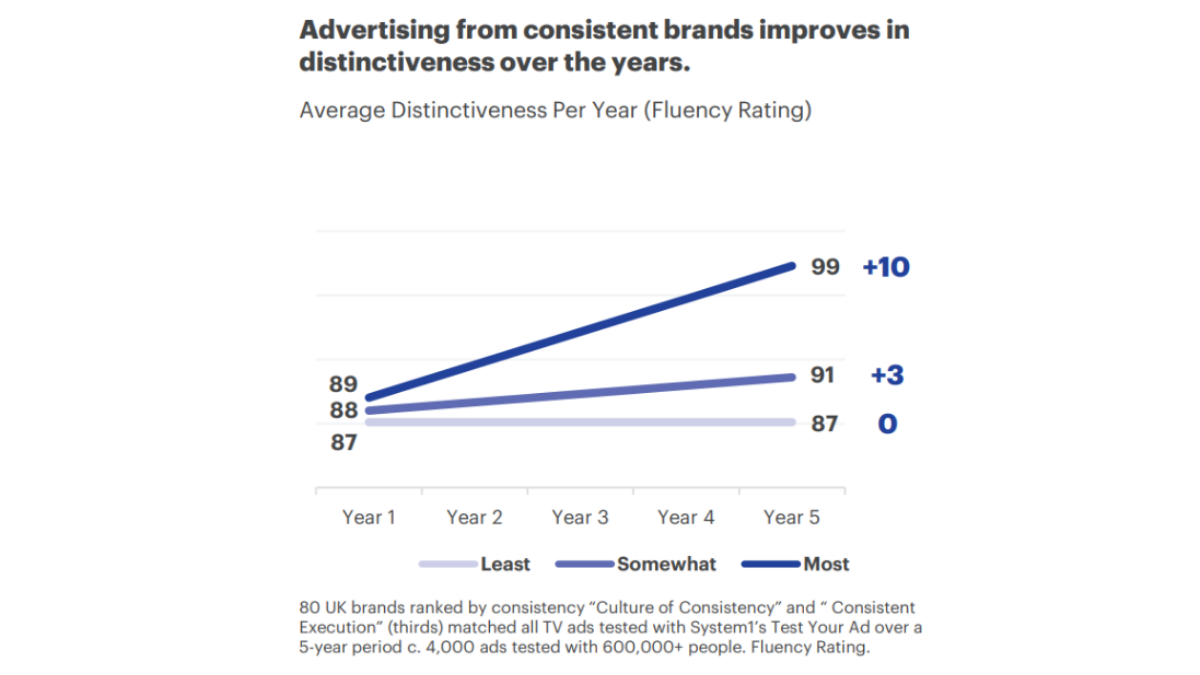
And yet, consistency is declining year on year. Change has become the default. Familiarity is treated as fatigue. And brands pay the price.
Closing the Confidence Gap for Good
The confidence gap won’t be closed with more dashboards or faster optimization.
It will be closed by understanding how creativity actually drives growth, and by measuring it properly.
Our full book in partnership with Effie, The Creative Dividend, explores how the Creativity Stack applies to:
- Creative measurement
- Media spend and ESOV
- Creative efficiency
- Targeting and category dynamics
- The differences between large brands and challengers
If you want to understand how creativity pays back, and how to invest in it with confidence, download the book.