Every Brazilian knows Bis. The wafer chocolates have been part of the country’s snacking culture for nearly 80 years. And that familiarity goes beyond the product itself: we also know the little rituals and behaviors that are part of the Bis experience, including some of the less well-behaved ones, like taking the last one or refusing to share.
These “crimes” form the basis of Bis’ latest campaign, created by agency DAVID. It’s a series of entertaining ads that bring behaviors that already exist to life. And our July Ad of the Month Brazil goes to the spot in which we see two employees leaving little notes and Bis chocolates to thank their coworkers, only to give in to temptation and eat the chocolates themselves. But don’t worry: Bis is so delicious that these “crimes” are always “A-BIS-solved.” The notes stay, but the chocolates disappear.
With a 4.3-Star Rating in Test Your Ad, the film ranks among the top 10% of TV ads ever tested in Brazil, with the potential to build lasting brand effects. It also performs above the Brazilian average on Spike Rating, our measure of short-term impact potential, as well as on Fluency and Fast Fluency. This result is helped by strong brand presence from the very first seconds of the film, when we clearly see an employee carrying a pack of Bis.
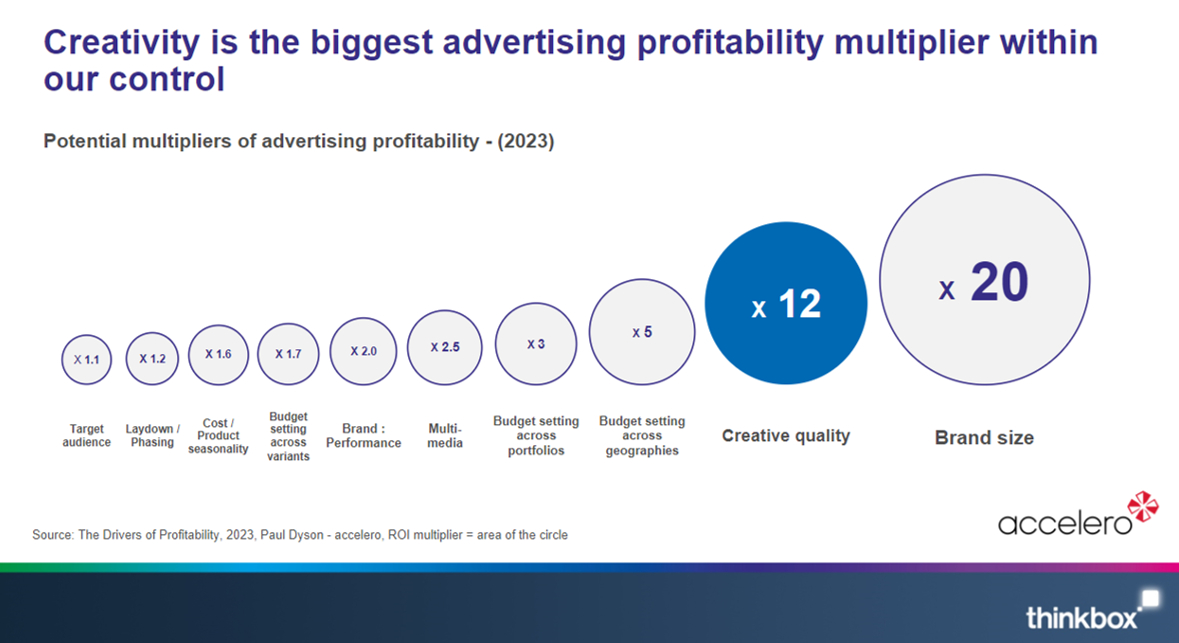
Despite similar sensory experiences, why are some brands able to be more effective than others? We know brand size plays a major role, but creative quality is the only factor marketers can control.
We know brand size plays a major role, but creative quality is the only factor marketers can control.
At first glance, the answer might seem simple: it’s a funny, well-acted ad with a clever piece of wordplay in “A-BIS-solved.” But since we’re talking about crime, here are a few clues.
Clue 1) How the brain processes humor
Humor lowers our guard. Laughter reduces resistance to persuasion. And what matters most isn’t the joke itself, but the incongruity. It’s the “puzzle” the brain has to solve, activating the same hemisphere responsible for long-term brand memory.
The performances also play a major role in the film’s humor. In our Test Your Ad Pro, “Amused” stands out as one of the dimensions of happiness most strongly associated with the ad. By showing these behaviors rather than simply talking about them, the classic “show, don’t tell” approach allows audiences to recognize and connect with situations that are part of everyday life.
“Humor can get in under the door while seriousness is still fumbling at the handle.” — G. K. Chesterton
Clue 2) A territory that might seem to have nothing to do with creativity: consistency
Humor has been part of Bis’ creative repertoire for decades. Not with this specific film, but with this type of story. So why does it continue to work instead of becoming tiresome?
In the study The Magic of Compound Creativity, we analyzed more than 4,000 ads from 56 brands over five years, combining data from our testing with business results recorded in the IPA effectiveness database. The central conclusion is counterintuitive for an industry that always wants to reinvent everything with every campaign: brands that stick with the same creative idea, the same territory and, believe it or not, the same agency for longer produce work of increasing creative quality year after year. And they achieve up to 27% more “very large” brand effects than inconsistent brands.
The study shows that creativity isn’t depleted through repetition. It compounds like interest. Or, in other words, it’s what Sarah Carter calls “disguised repetition.”
Bis didn’t invent the wordplay around its own name with this campaign. Agency DAVID took over the account in July 2020, and the use of the three letters “BIS” within another word has appeared since January 2022, with “a-BIS-tinência” (“a-BIS-tinence”), a film about the desperation of running out of the biscuit. Then came “A Origem do MorumBis” in 2024, which combined the brand name with that of São Paulo’s stadium, followed by “BIS. O Nome Já Diz.” (“BIS. The Name Says It All.”) in 2025. “A-BIS-solved” isn’t the first chapter in this story. It’s simply the latest.
The film stands out for its irreverent approach and the way it builds its narrative, particularly through the acting and facial expressions of its two protagonists. At System1, we see non-verbal communication playing a fundamental role in building great stories in advertising. It’s through this that we establish what we call “between-ness”: what happens between what is said, helping capture the audience’s attention and making the ad more engaging and effective.
Clue 3) Distinctiveness and differentiation
And here’s a myth our industry loves to repeat: that a brand needs to be different in order to grow.
Distinctiveness and differentiation may look similar, but they serve opposite functions. Distinctiveness is about being recognized: a color, a font, a jingle, a gesture that the brain instantly associates with a brand without conscious effort. Differentiation is about being perceived as genuinely different within the category: a promise, an attribute, a real reason to choose you rather than a competitor.
The problem is that the industry has treated the first as though it were enough to guarantee the second. Having a grid of distinctive brand assets won’t save an ad that doesn’t move, entertain or persuade people. DBAs are essential, but it’s emotion that converts recognition into profit.
A-BIS-solved
Together, the three clues point to a single idea: campaign after campaign, Bis is building the right to be the brand that absolves us of our little chocolate-related “failings.” It uses recurring humor to own a universal human behavior. It isn’t a product promise. It’s a cultural claim.
These are different expressions of the same idea: what began as wordplay entered the language, was adopted as a brand code and became distinctiveness powered by emotion.
And distinctiveness alone wouldn’t be enough. Test Your Ad Pro now includes gender and demographic breakdowns, allowing us to identify, approximately, which groups respond most strongly to a piece of creative. In Bis’ case, however, the appeal is broad: it achieves 4 Stars across all target groups, which is ideal for a high-penetration brand. And among the main associations generated by the ad, one stands out in a simple and direct way: “Delicious.”
A strong brand gives people emotional licenses, social permission to do, guilt-free, what we already do anyway, whether secretly or not. And laughter becomes almost a social seal of approval, transforming private guilt into public connection.
At every advertising agency I’ve worked at, both in Brazil and abroad, I’ve often heard the questions, “How can we appear more distinctive?” or “What is our product differentiation?” But the best challenges came when a third question was added: “What universal human behavior, however small, can my brand own in a way that people connect with repeatedly, until it feels like it belongs to the brand alone?”
In the end, every category has a “crime” waiting for someone to claim responsibility for it. And I think this is the kind of crime that pays.
People are overstimulated and increasingly rushed. In this context, capturing attention and emotion has become more difficult and, at the same time, more valuable. BIS has always tapped into people’s emotions, so the starting point for the current campaign was to find a fresh, entertaining insight that people could relate to and that felt true to a product everyone asks for Bis.
Curious to learn more? Get in touch with Renata Buess
Create 5-star ads
The more people feel, the more they buy
The most effective ads boost sales and drive long-term growth. They do it by making people feel more - building positive associations with a recognisable brand. We predict sales and growth impacts by measuring emotion, letting you make ads that entertain for commercial gain.