
The Products that Launched the Brands We Love
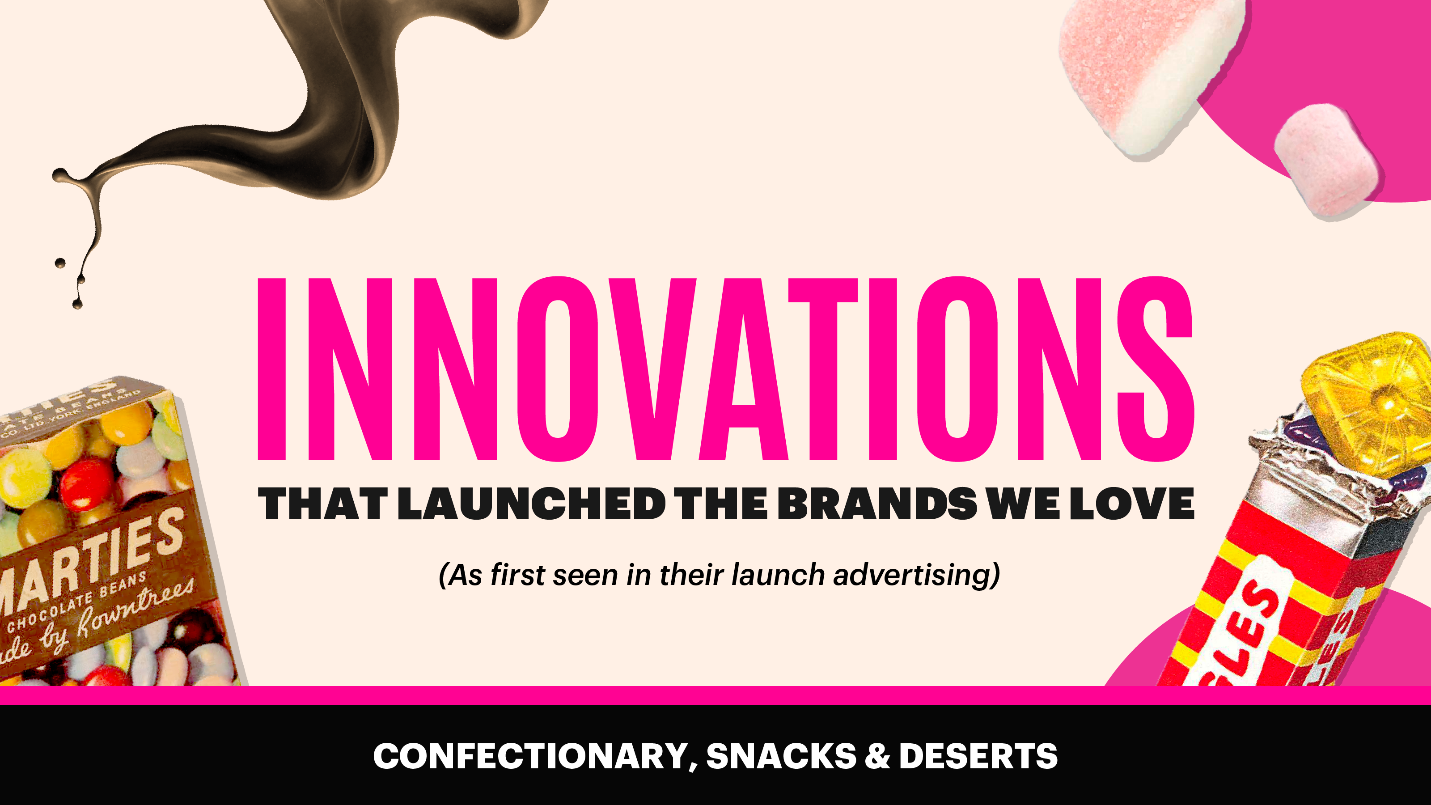
Product innovation and advertising have always been partners in crime. A great product needs a great launch to build awareness, spark desire and drive trial. And a great launch needs a great product to keep consumers coming back for more.
Get that partnership right and the result is bigger than either one alone: a brand. Brands alone aren’t really owned by the companies that make them; they live as memories in people’s heads. Innovation gives people something new and distinctive to remember, and advertising builds the stories and emotions that make it stick.
Together with the History of Advertising Trust, System1 is taking a trip down memory lane to explore how product innovation and advertising have evolved side by side. Spanning five categories, from confectionery and coffee to household goods, technology and entertainment, we’ll revisit the products that launched the brands we love, and the iconic campaigns that made them famous from the 1930s through to the early 2000s.
From the launch of the KitKat Crisp in 1938 to the iconic advertising that brought Cadbury’s Wispa to the nation in the 1980s, this series celebrates the brands, the agencies behind the work and the cultural shifts that shaped how brands connected with consumers. It’s a look back at the innovations that changed our shopping baskets, the campaigns that captured our imaginations and the creative thinking that helped make both unforgettable.
The 1930s: The Golden Age of Chocolate and the Birth of Iconic Brands
It might surprise you to learn that the 1930s saw a chocolate boom, with 23 iconic confectionery products launching during the decade, including KitKat, Aero, Mars and Smarties. Even Roald Dahl considered the 1930s the golden age of chocolate, a fascination that would eventually inspire Charlie and the Chocolate Factory in 1964.
But against a backdrop of economic collapse and widespread unemployment, chocolate wasn’t an everyday indulgence for everyone. It was a treat to savour, a gift to give or, in some cases, even a meal in itself. And that context was reflected in the advertising of the time.
Long before KitKat told us to “Have a Break” or Mars promised to help us “work, rest and play”, these brands were still finding their groove. With so many new products entering the market, brands needed to stand out. The focus was on taste, nourishment, texture and occasion, with advertising making a compelling case for why each chocolate deserved a place in the consumer’s life. At this stage, the product was the hero. The brand personalities we know and love today would come later.
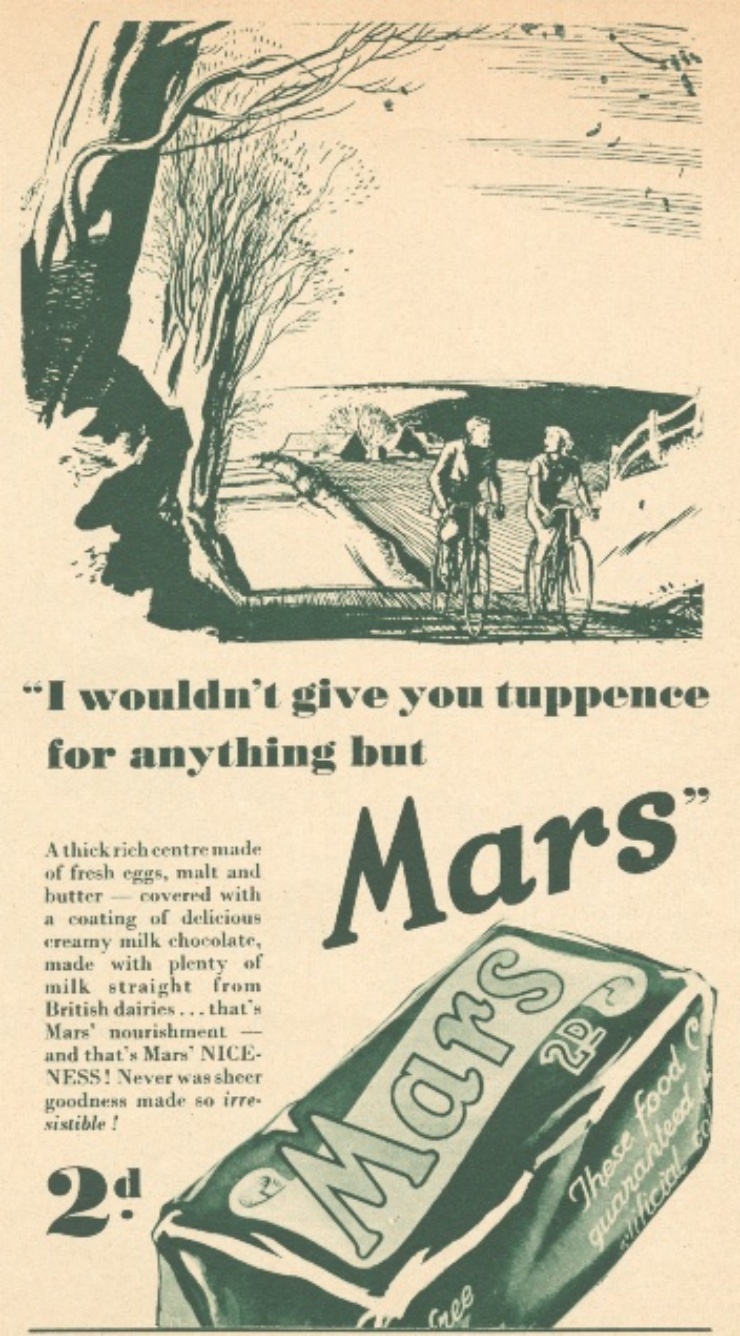
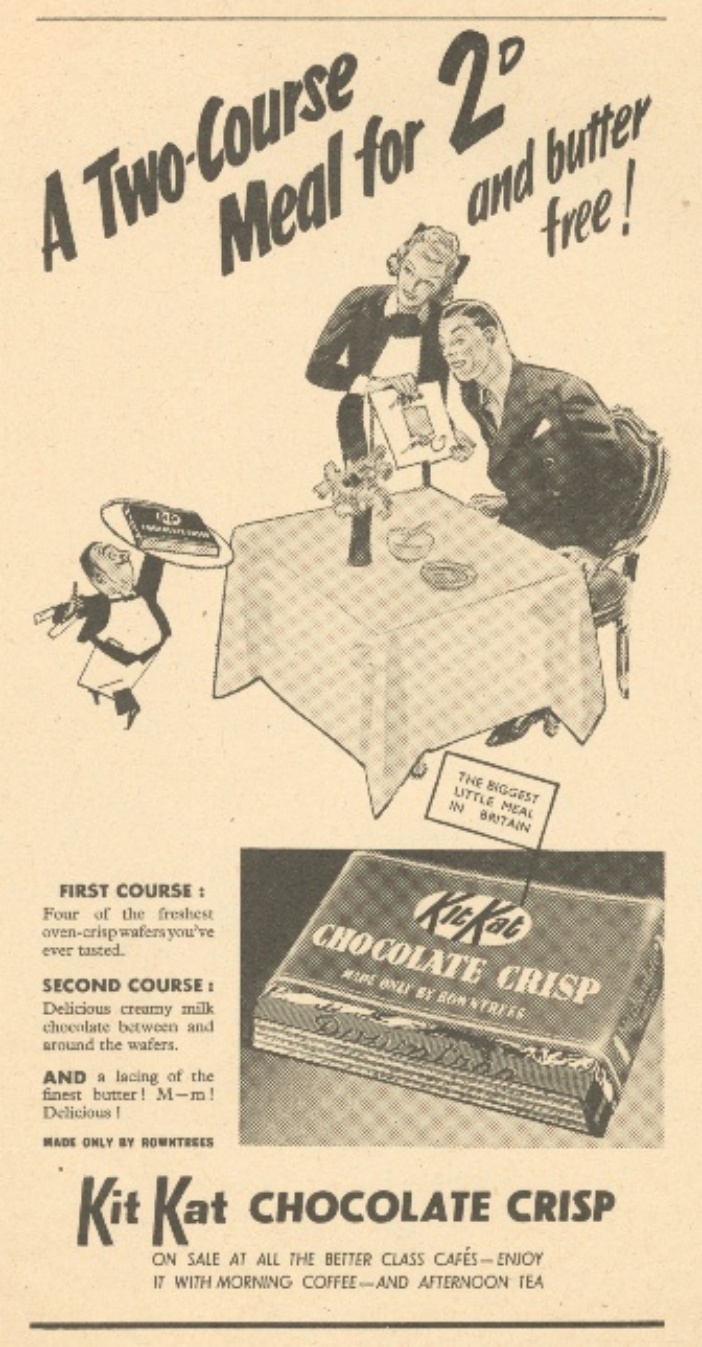
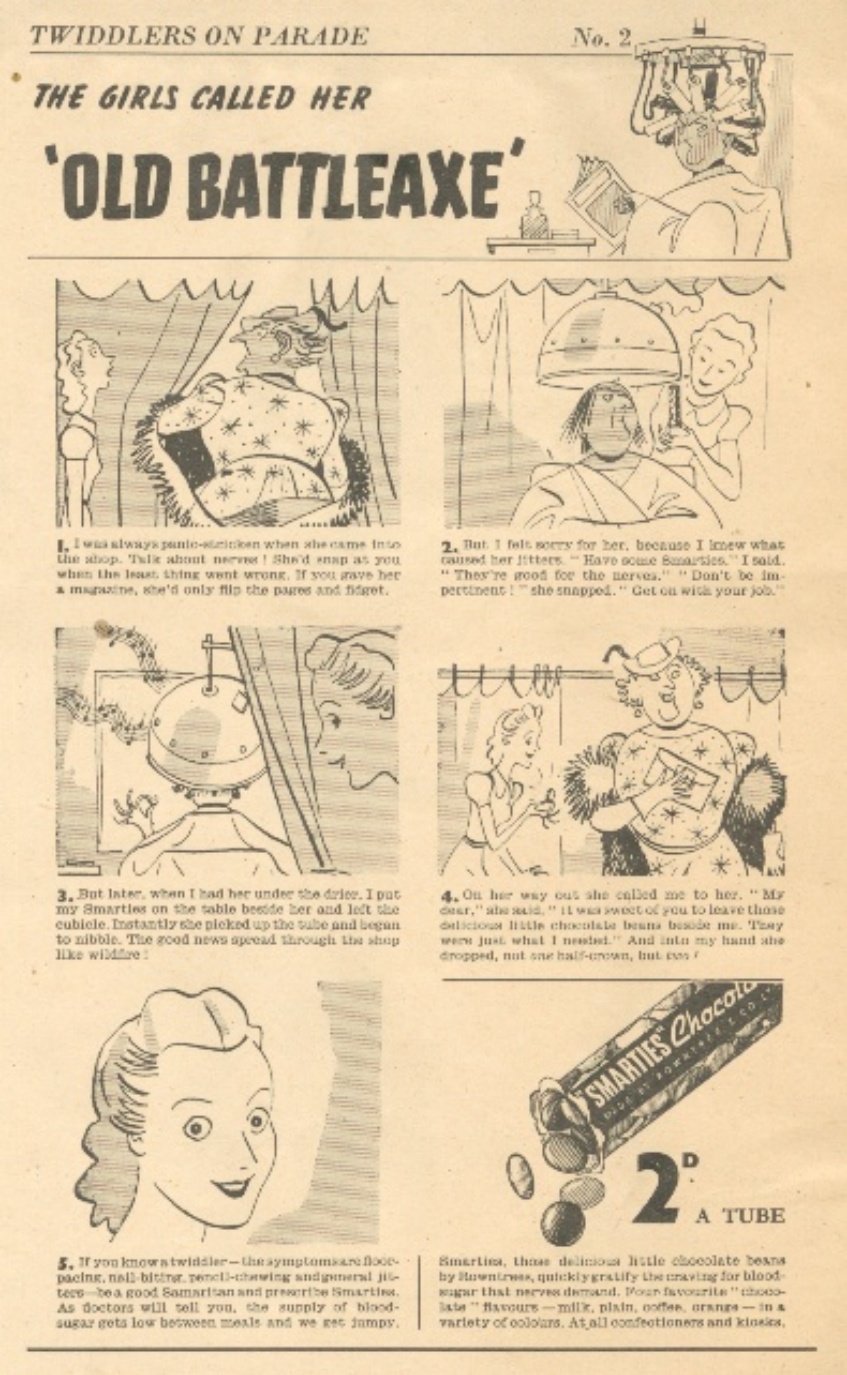
KitKat Crisp, for example, was advertised as a “Two-Course Meal for 2d”, positioning the chocolate bar as an affordable, satisfying alternative when money was tight. Mars leaned into leisure and activity, featuring characters cycling and presenting its chocolate as fuel for an active lifestyle. Meanwhile, Smarties took a more playful approach with its “Old Battleaxe” campaign, using comedy to show how even the toughest characters could be softened by a little sweetness.
Source: The History of Advertising Trust
From practical meal replacement to everyday energy and light-hearted escapism, these early campaigns reveal how brands adapted their messaging to the mood of the nation. Even in difficult times, the promise of a little chocolatey joy was a powerful selling point.
1940s: How Wartime Rationing Shaped Confectionery Innovation
In 1940, sugar became one of the first foods to be rationed in Britain as World War II took hold. With ingredients scarce and resources stretched, many beloved sweets disappeared from shelves, forcing manufacturers to adapt their products for wartime Britain.
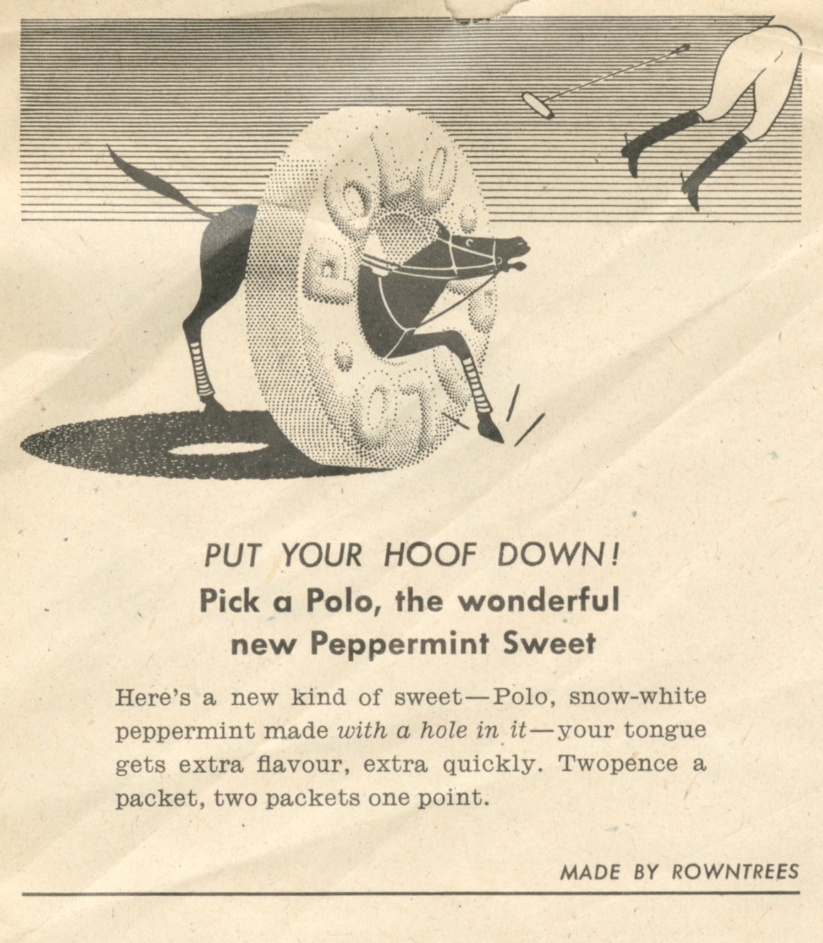
But towards the end of the decade, things began to change. George Harris, the mastermind behind KitKat, Smarties and Aero, had a refreshing new idea: the Polo Mint. Shaped like an ‘O’ and marketed as the “Mint with the Hole”, this distinctive, affordable sweet was wrapped in aluminium foil to preserve its freshness in a new post-war era.
The advertising was just as playful as the product itself. One early execution featured a horse inside the Polo, a wonderfully silly visual gag that brought the mint’s signature hole to life. After years of hardship, perhaps a little humour and lightness were exactly what consumers needed.
Source: The History of Advertising Trust
It’s also a perfect example of innovation making advertising work harder. The product’s distinctive shape handed the brand a ready-made creative idea, and that hole became a memorable brand asset that Polo still trades on today.
1950s: Post-War Prosperity and the Transformation of Chocolate Advertising
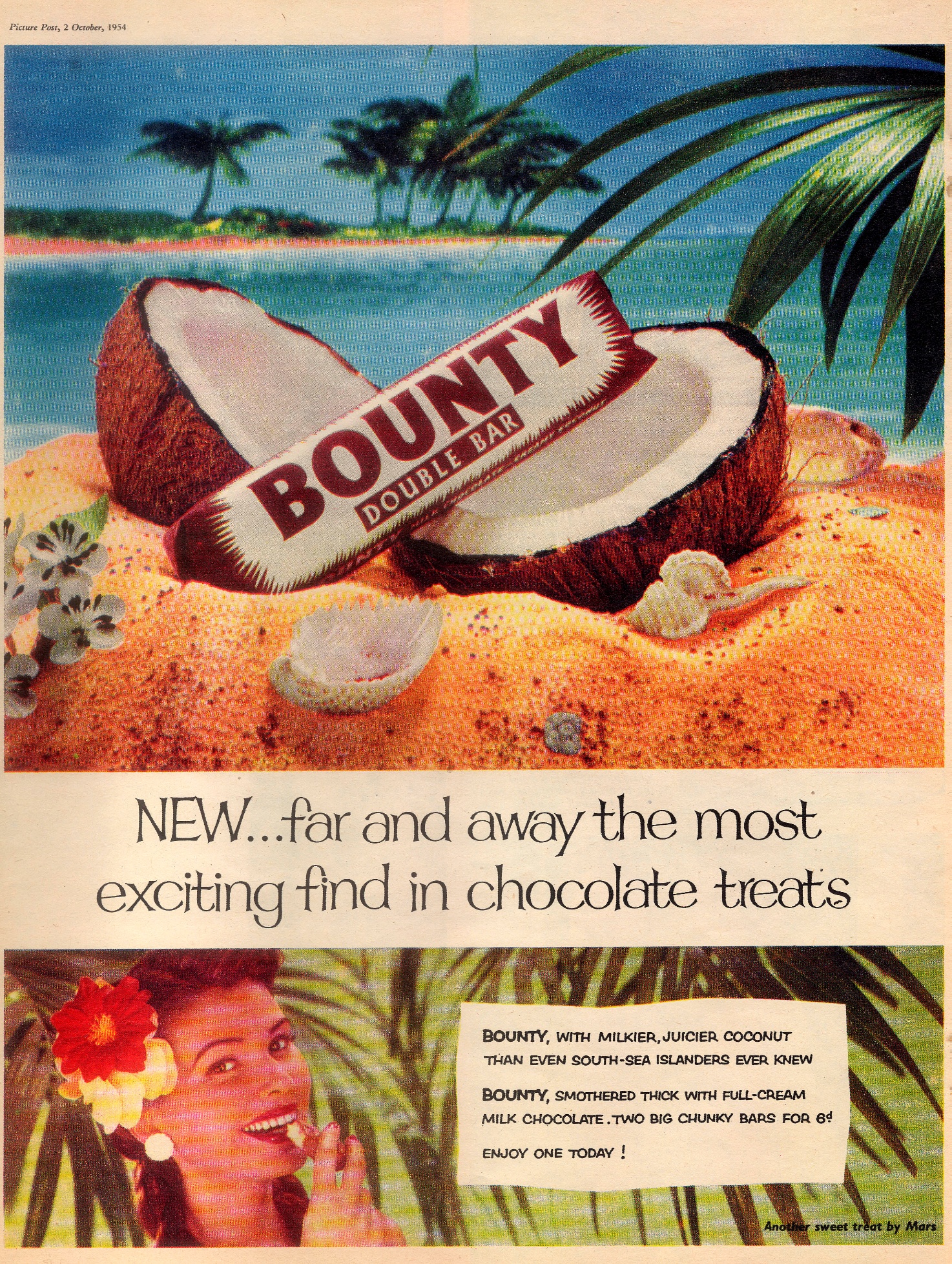
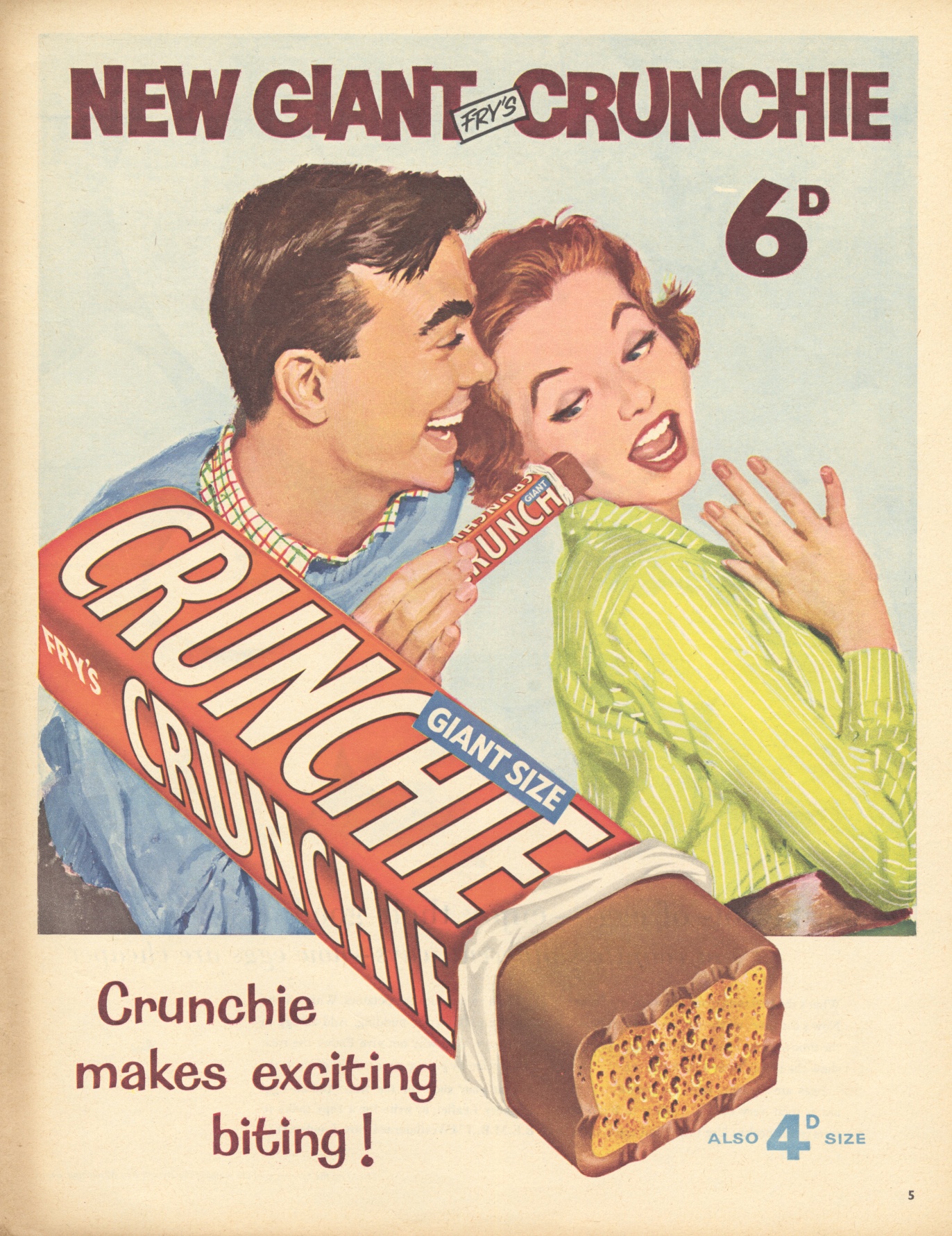
In 1953, rationing finally came to an end after 14 years, and Britain’s appetite for chocolate surged. New favourites, including Bounty and Crunchie, captured the spirit of a nation ready for a little indulgence.
Bounty was marketed as a “taste of paradise”, with Masius and Fergusson’s colourful beachside adverts transporting consumers from post-war austerity to an exotic world of coconut and chocolate. Meanwhile, Fry’s Crunchie went big with a “giant size” bar, advertised by The London Press Exchange (LPE) as a symbol of renewed abundance.
Chocolate was no longer just a rare treat or meal replacement. It was becoming an everyday pleasure, with new occasions emerging for consumers to enjoy it. In 1957, Donald Gilles of J. Walter Thompson (JWT) introduced the now-iconic “Have a Break, Have a KitKat” slogan, shifting the brand’s positioning from a meal to a moment of relaxation, complete with the satisfying snap of the bar. It’s a textbook example of strong advertising starting with the product, then enhancing it until the brand feels bigger than the product’s function alone. A KitKat was no longer just an affordable, filling snack: it was a break.
Source: The History of Advertising Trust
In just three decades, confectionery innovation had evolved from texture and durability to freshness, indulgence and everyday enjoyment, reflecting not only manufacturers’ creativity but the changing society around them.
1960s: Convenience, Indulgence and the Science of Trial
The 1960s brought a huge social shift. Growing purchasing power, the baby boom and the rise of teenagers as consumers in their own right changed who was doing the shopping and what they wanted. Advertising was going through a creative revolution of its own, too, with bolder, wittier ideas and, by the end of the decade the arrival of colour television giving brands a vivid new way to bring their products to life.
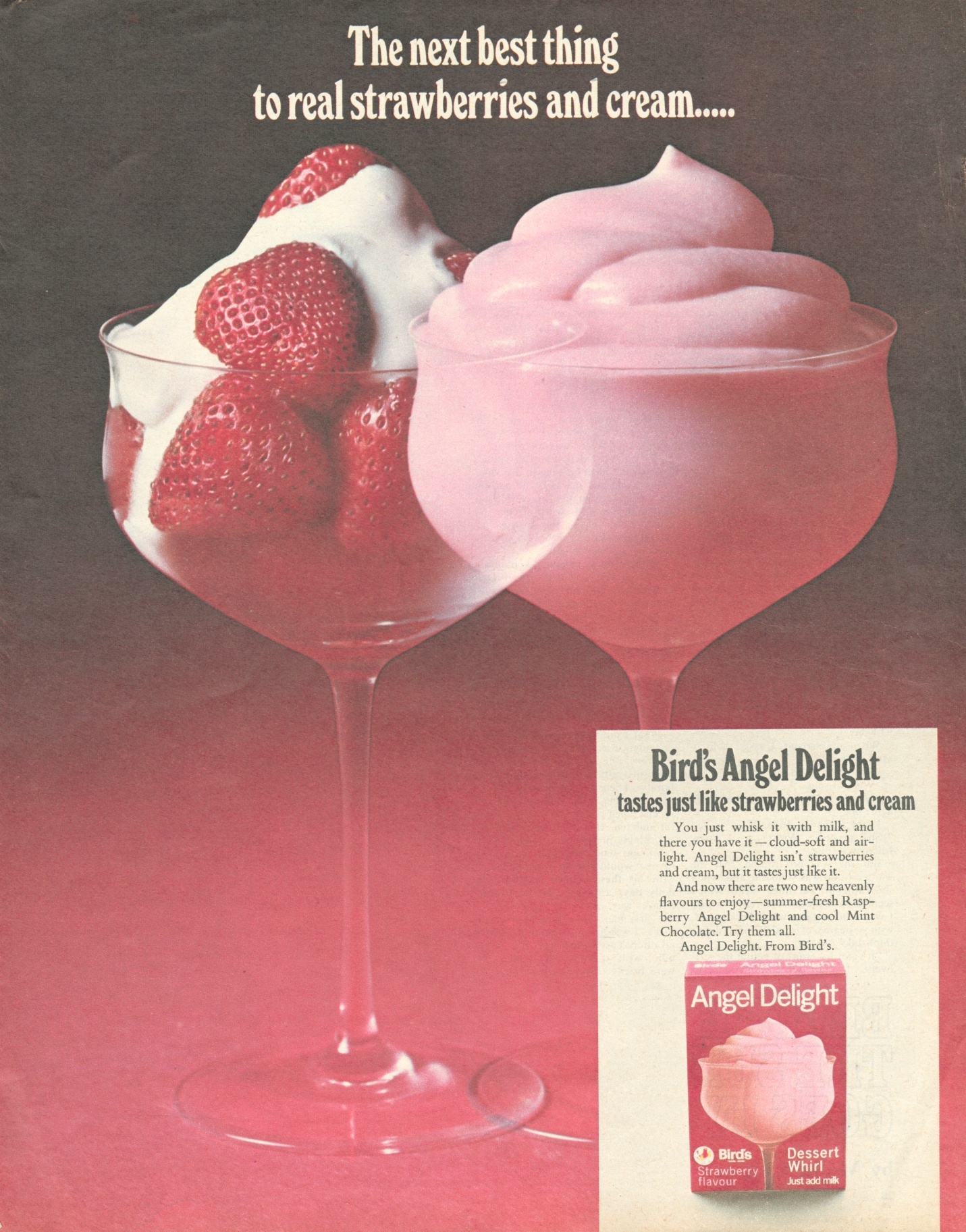
Against this backdrop, our focus shifts from chocolate to a different kind of indulgence: dessert. Launched by Bird’s, Angel Delight was an innovation in convenience, offering an instant-whip alternative to traditional homemade puddings.
While today many of us associate Angel Delight with childhood, its early advertising had a broader appeal, emphasising how quick and easy it was to prepare without compromising on the taste of fresh strawberries and cream.
Source: The History of Advertising Trust
Through a behavioural science lens, this is the EAST framework in action: make it Easy and Attractive. Angel Delight made pudding fun, fast and easy. By pairing convenience with appetising taste cues, it gave consumers two compelling reasons to try something new.
The lesson remains relevant today. Innovation might change, but the principles of driving trial endure: make your product appealing, make it easy to choose, and give consumers a reason to give it a go. Get that right, and a product doesn’t just earn trial; it earns a lasting place in people’s memories.
1970s: How Personality and Humour Made Snacks Iconic
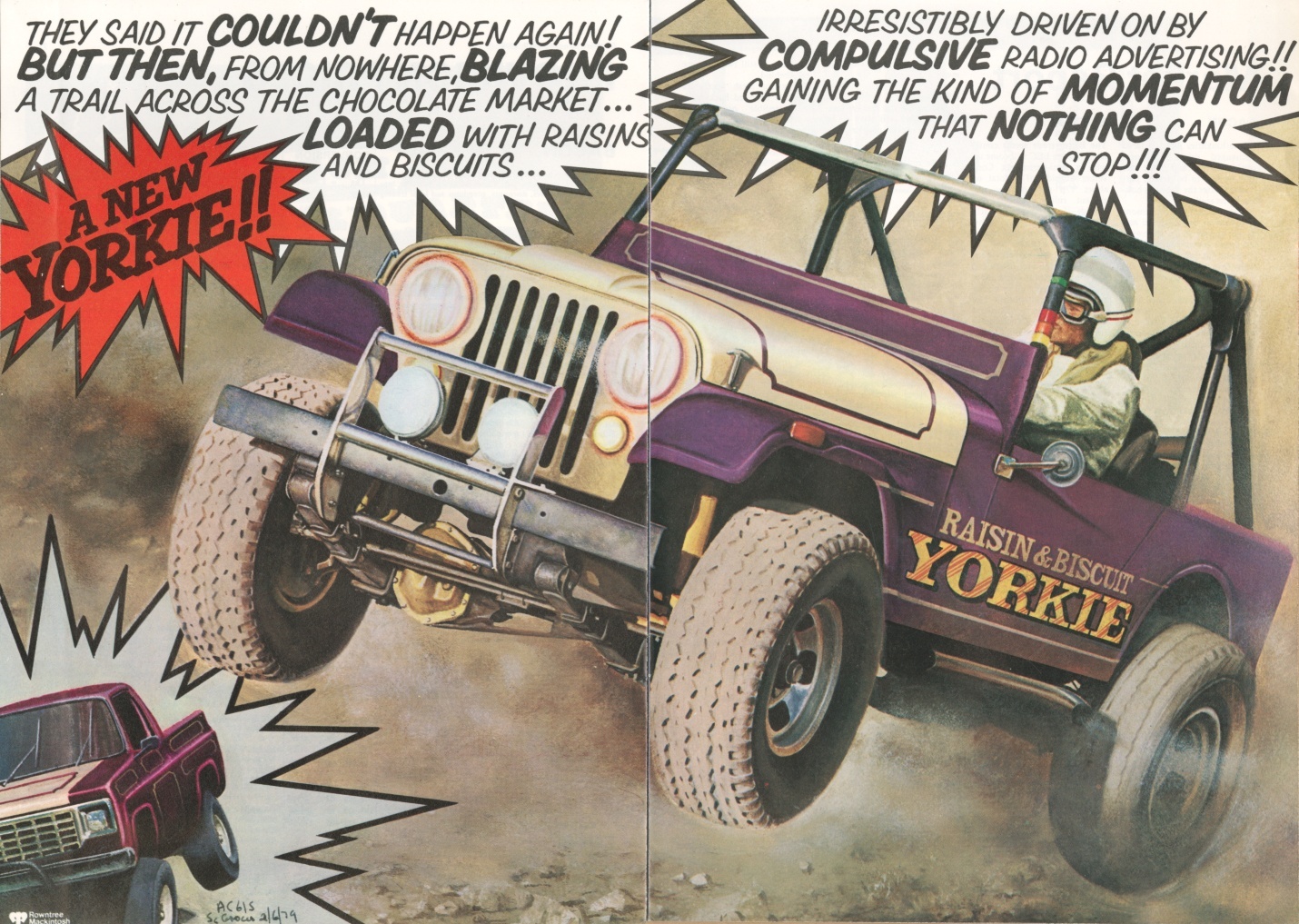
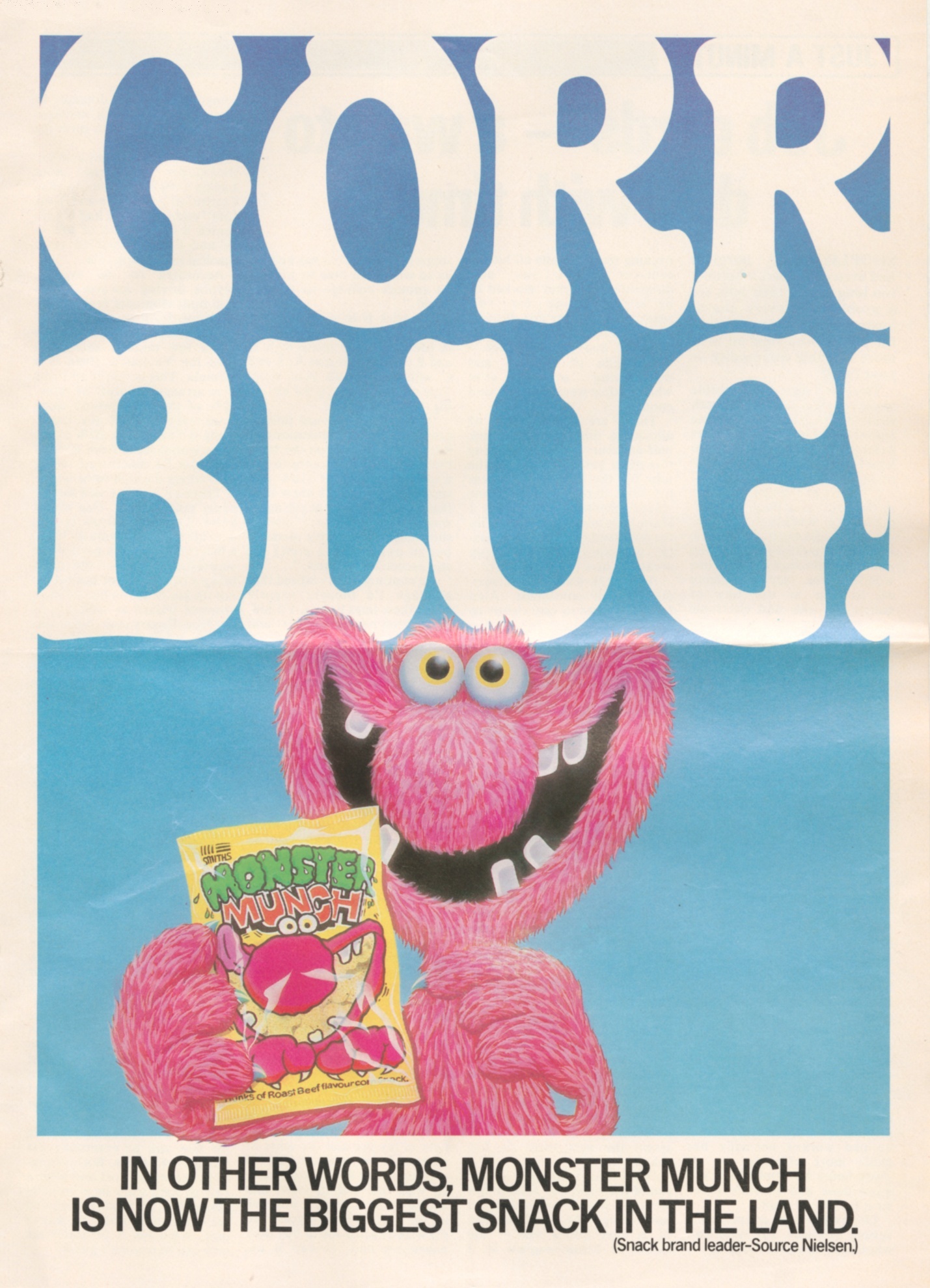
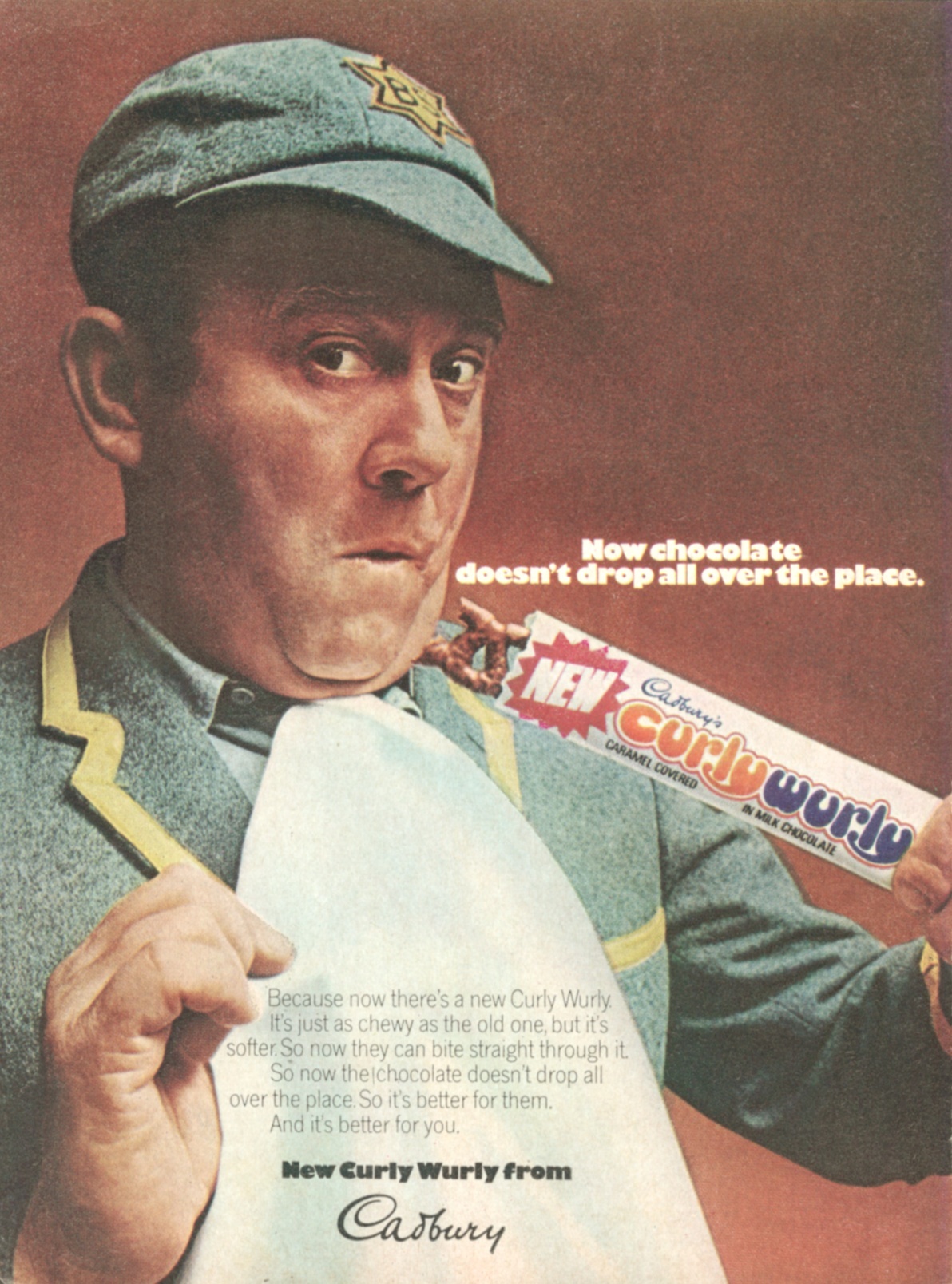
By the 1970s, chocolate and snacking had taken a decidedly more emotional turn. Brands embraced distinctive characters, humour and storytelling, from Smiths’ Monster Munch monsters to Yorkie’s rugged trucker scenarios and Curly Wurly’s playful appeal to the “big kid” in every adult. One Curly Wurly advert even featured a grown man dressed in children’s clothes, complete with a bib, enjoying his chocolate without making a mess.
Source: The History of Advertising Trust
Against a backdrop of punk rock, disco and cultural liberation, bold colours, playful names and distinctive product shapes became part of the appeal. Monster Munch’s monster-foot-shaped crisps, Cadbury’s Curly Wurly woven chocolate and Nestle’s hefty Yorkie bar all gave products a personality of their own. Snacking was no longer just about satisfying a craving; it was about enjoyment, identity and having a bit of fun. These brands weren’t just reflecting the culture around them; they were inserting themselves into it, building the kind of cultural capital that has kept all three on our shelves for decades.
Through a behavioural science lens, this reflects the ‘S’ in the EAST framework: Make it Social. Memorable characters, humour and recognisable products gave consumers something to talk about, share and enjoy together. The product itself became part of the entertainment, proving that sometimes, what makes a brand stand out is about far more than what’s inside the wrapper.
1980s: How Storytelling Turned Chocolate into Pop Culture
As our confectionery time machine reaches the 1980s, we arrive at a decade when advertising increasingly borrowed from the worlds of television, film and popular culture.
Cadbury Wispa provides a standout example. It’s advertising brought the brand name to life through sensory cues, using the idea of a whisper to create a distinctive, memorable identity. Beloved characters and famous duos from much-loved television shows, including Dad’s Army’s Arthur Lowe and John Le Mesurier, Yes Minister’s Paul Eddington and Nigel Hawthrone, Hi-de-Hi!’s Simon Cadell and Ruth Madoc, and comedy double act Mel Smith and Rhys Jones, also helped connect brands with audiences.
Against a backdrop of iconic sitcoms and blockbuster films, advertising became increasingly entertainment-led, with memorable characters and storytelling helping products stand out. Familiar faces could lend a sense of recognition and familiarity, making new products feel more approachable and encouraging consumers to give them a try. The best brands didn’t just understand culture; they were in it. And it paid off: by 1986, just three years after its national launch, Wispa had become a £70 million brand, according to an IPA Effectiveness Awards case study.
Create with Confidence®
Across five decades, confectionery innovation evolved from taste, texture and durability to convenience, distinctive packaging and powerful brand storytelling. Over time, what made a product stand out became about more than what was inside the wrapper. It was how brands presented it, the emotions they evoked and the place they earned in consumers’ lives. In other words, these products didn’t just launch; they launched brands that still live in our memories today.
One thing is clear: great advertising and great innovation cannot exist without each other. The right product needs the right advertising to drive awareness, appeal and trial, while great advertising needs a product that delivers on its promise.
Brand is the bridge between the two. Innovation creative differentiation and value, giving advertising something genuinely new to sat and making it work harder. Advertising, in turn, gives the product character and heart, building the memories that keep a brand front of mind. And the stronger a brand’s character, the further it can stretch and the less price-sensitive its fans become. Just think how many KitKat variants line the shelves today.
That matters more than ever. Brands are under pressure, with retailers increasingly taking the lead on new launches and own label. By speaking directly to consumers, advertising creates the pull that has shoppers asking for a brand by name, strengthening its hand with retailers and supporting a premium price.
So, if you’re ready for your next innovation or campaign to stand the test of time, System1 can help. Our Test Your Innovation and Test Your Ad solutions measure emotional response to predict commercial effectiveness before you launch. For innovation, that means understanding the potential to drive consumer appeal, trial and sales. For advertising, it means predicting brand recognition, long-term brand growth and short-term sales activation. Together, they help you create stronger pull through both innovation and your advertising, and build a brand with the character to reduce price sensitivity and enhance margins.
Because the next product or campaign to make history shouldn’t be left to chance. Test it before it hits the shelves or screens, and create with confidence.