
Protein’s Out. Is Fiber Really In?
Protein crisps. This is what NPD has come to. I’m clearly not the target customer. I’m tired of scrolling LinkedIn only to see another brand slap a protein claim on its pack. Protein NPD is forecast to hit $5.86bn in 2026, promising everything from satiety to anti-aging. But is this insight-led innovation, or reflexive category parity, brands matching competitors’ claims rather than following genuine consumer demand?
The data suggests the tide is turning. Datassential’s 2026 trends report calls it a “pivotal moment”: fiber is poised to overtake protein as the next big health trend, driven by rising GLP-1 medication use and growing interest in gut health. Over half of consumers (54%) now say they’re interested in high-fiber foods and drinks, rising to 60% among Gen Z, the generation driving “fibermaxxing” as a trend in its own right.
It’s not just social chatter. PepsiCo CEO Ramon Laguarta has declared that “fiber will be the next protein.” Whole Foods named fiber one of its top 2026 trends, pointing to a wave of fiber-forward packaging. GlobalData finds 40% of Gen Z and 45% of millennials are already increasing fiber intake specifically for gut health.
Is protein dying, then? Not quite. Kroger’s 2026 forecast still expects protein, fiber and cultured dairy to resonate together, not one replacing the other. But momentum is clearly shifting toward fiber as the more credible, better-substantiated claim.
At System1, we test new launches weekly through Test Your Innovation, tracking how consumers emotionally respond to new products, the strongest predictor of in-market success. Rather than take the hype at face value, we wanted to see what’s broadly resonating in market right now: where protein claims are actually working, how those winners differ from the rest of the pack, and whether fiber is genuinely landing a more positive response than protein.
Is Protein Actually Out?
In short: no. Demand for protein hasn’t disappeared, but some brands are executing it far better than others.
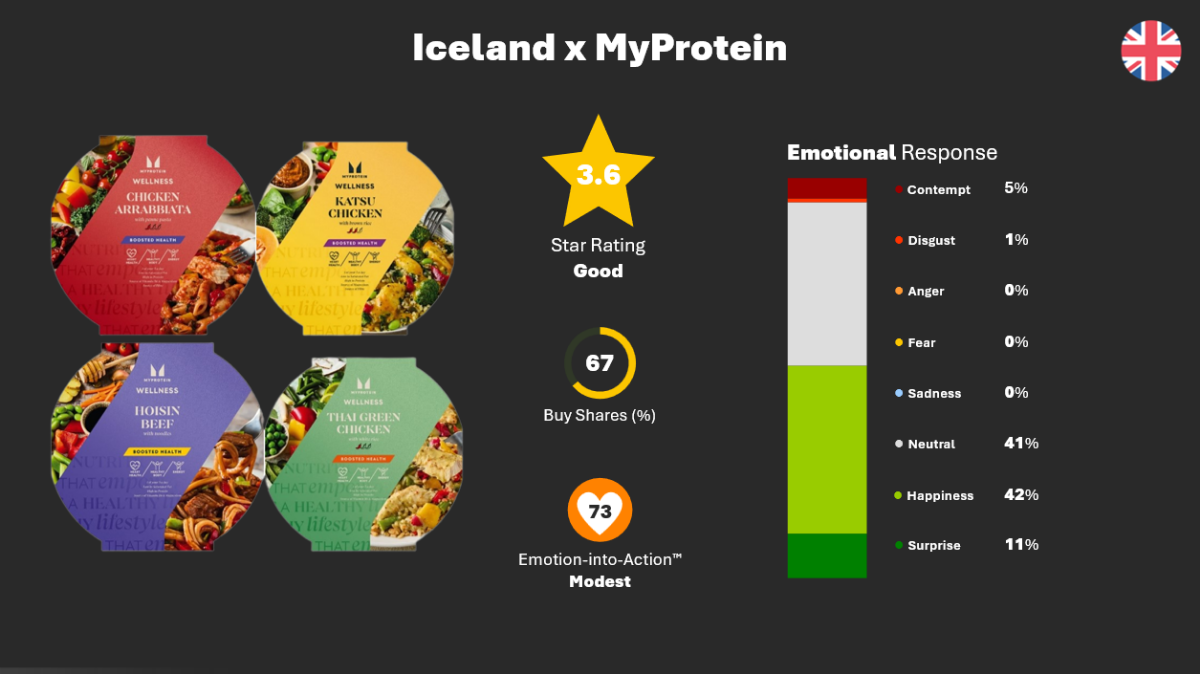
One of the strongest protein concepts we’ve tested is Iceland’s new range with MyProtein, which scored a 3.6 Star Rating. For context, 3.0 and above puts a concept in the top 25% of all ideas on our database of 60,000+. Iceland is a UK supermarket; MyProtein is the UK’s No.1 sports nutrition brand. The pairing works because it adds something beyond the protein claim itself: trust.
An Iceland own-label protein range likely wouldn’t land the same way. That’s reflected in the speed of decision-making we track through “share trading,” a gamified metric mimicking fast, intuitive shelf decisions. This range scored well here. Verbatims backed it up, with respondents noting that “MyProtein do good stuff and Iceland is usually cheap, so a good combo.” Each brand adds something distinct: affordability and access from Iceland, quality and credibility from MyProtein. Unsurprisingly, the range scored 90% on trustworthiness.
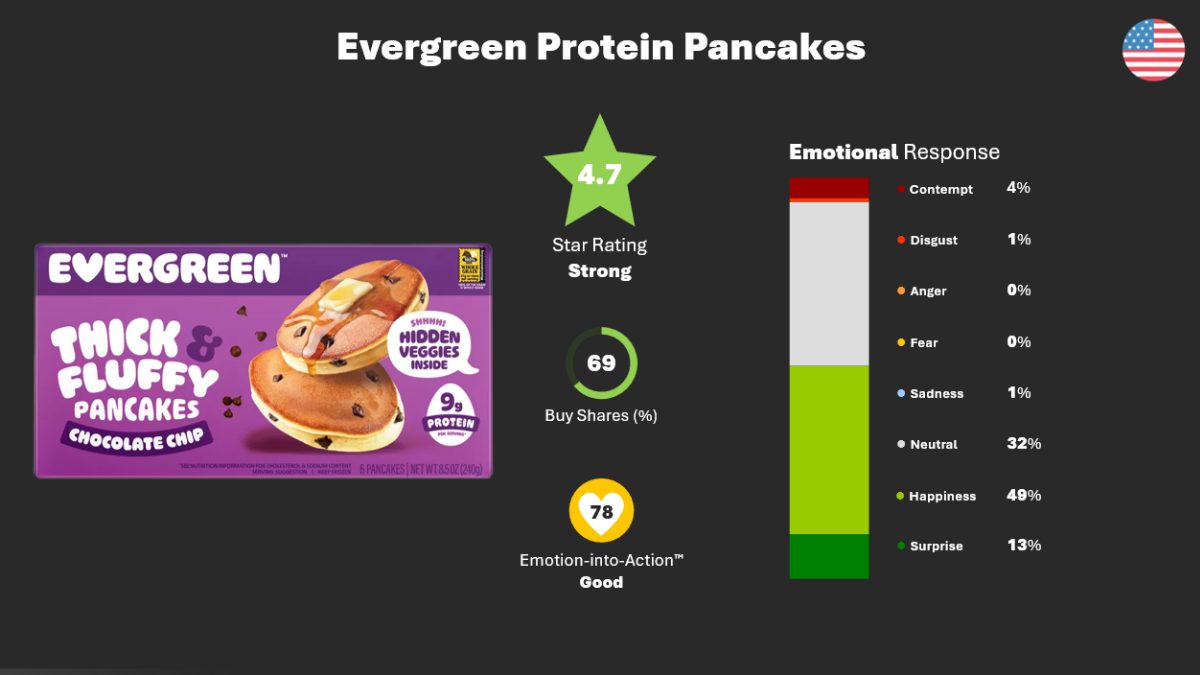
In the US, protein succeeded for a different reason. Evergreen’s Protein Pancakes scored 4.7 Stars, top 15% of our database, with strong in-market sales potential. This win follows a core behavioral science principle: the “Attractive” element of the EAST framework. Pack, flavor names and copy all lead with taste. “Thick and fluffy” takes center stage; “9g protein” sits quietly to the side. Flavors read as classic comfort food (“homestyle,” “blueberry,” “chocolate chip”), and the pack imagery looks as indulgent as any non-protein alternative. Verbatims confirm this: taste and visual appeal are cited first, with protein only surfacing once respondents are asked directly about the product’s advantages.
Where protein underperformed in both markets was when packs led purely with the functional claim: oversized “protein” callouts, minimal visual appeal, and no real product imagery. Plain packaging with no hero food shot made it harder for respondents to connect with the product emotionally. More telling, though, was the confusion around the claim itself. Several respondents said they didn’t know whether the amount of protein on offer was actually enough to make a difference, a gram count alone gave them a number, but no context for whether that number mattered. Without a clear reference point, “protein” as a callout risks reading as a buzzword rather than a genuine benefit.
Will Fiber be the Next Protein?
Our testing does point to growing demand for fiber. Activia’s new Big Pot range is one of the highest-scoring products we’ve tested for this attribute, earning a 3.7 Star Rating in the UK. It’s not the only signal, either. Across nearly every protein product we’ve tested, when asked how to improve the idea, the top requested addition is fiber.
This suggests fiber isn’t set to replace protein, but to partner with it. Protein products aren’t going anywhere. The brands that win will be the ones that build trust, visual appeal and shelf distinctiveness, and increasingly, the ones smart enough to bring fiber into the mix too.
Create with Confidence®
Protein might be the trend. Jumping on it won’t guarantee success.
The brands winning aren’t just the ones with the highest grams-per-serving, they’re the ones that pair the claim with trust, appeal and a reason to believe. And as fiber starts creeping into the conversation, the same rule will apply there too.
That’s where innovation testing comes in.
System1’s Test Your Innovation helps you understand how consumers will feel about a new idea and how they’re likely to behave in-market, before you commit to launch.
Speak to our innovation team today to understand whether your idea has the potential to success in market.