
Mike’s Hot Honey Isn’t a Condiment Anymore
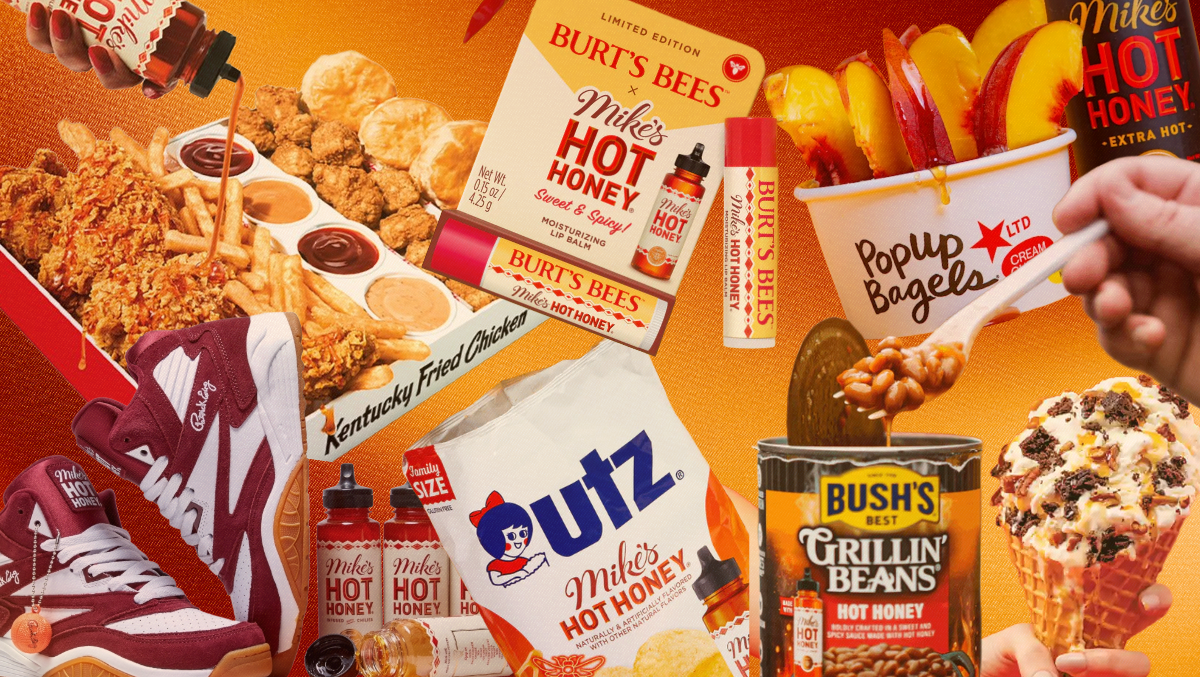
How a pizza topping became one of the most powerful collaboration platforms in CPG
The first time I noticed Mike’s Hot Honey showing up outside of pizza, it felt novel. The fifth time, it felt like a trend. Somewhere around the tenth, I realized something more interesting was happening.
Mike’s Hot Honey wasn’t just becoming popular. It was becoming a default collaborator.
Somewhere along the way, the question changed from “Have you tried Mike’s Hot Honey?” to “Who are they partnering with next?”
In some ways, it reminds me of pumpkin spice. Not because the flavors are similar, but because both transcended their original use case. They became shorthand for something consumers instantly understand. A signal. A shortcut.
Over the past year, I’ve watched Mike’s Hot Honey pop up seemingly everywhere. Garrett Popcorn launched a Mike’s Hot Honey collaboration. Pillsbury introduced Grands! Mike’s Hot Honey biscuits. Burt’s Bees dropped a limited-edition Mike’s Hot Honey lip balm, because apparently even your skincare routine isn’t safe from the swicy takeover. The Chicago Fire recently named Mike’s Hot Honey an official partner, bringing the brand into matchday activations and stadium experiences. Add in collaborations with Club Crisps, Jersey Mike’s, KFC, and Panda Express, and a clear pattern starts to emerge.
At first glance, these look like a collection of unrelated partnerships. But taken together, they tell a bigger story about modern brand building, consumer trends, and how innovation increasingly happens through collaboration.
The Condiment That Escaped the Condiment Aisle
Most food trends follow a predictable path. A chef introduces something new. Consumers discover it. Restaurants adopt it. CPG brands follow. Eventually, the trend fades as the next shiny object arrives.
Mike’s Hot Honey appears to be taking a different route.
Rather than simply becoming another flavor, it’s becoming a cultural shorthand. Consumers don’t need to taste a Mike’s Hot Honey collaboration to understand it. The brand itself communicates the idea: sweet heat, modern flavor, a little bit of discovery, and a signal that this product is more interesting than the standard version sitting next to it.
Consumers no longer need an explanation when they see Mike’s Hot Honey on a menu or package. They instantly understand the experience being promised. That’s incredibly valuable.
When Garrett Popcorn partnered with Mike’s Hot Honey, they weren’t just borrowing a flavor profile. They were borrowing a set of consumer associations around quality, modernity, and cultural relevance. The same applies to Pillsbury’s biscuit launch. The product delivers flavor, but it also signals that the brand is plugged into what consumers are craving right now.
What’s particularly unusual is that many of these partners don’t need Mike’s Hot Honey from a formulation standpoint.
Pillsbury could have launched a hot honey biscuit. Garrett could have launched a sweet-and-spicy popcorn. Consumers would have understood the flavor.
The value comes from attaching the Mike’s name to it.
That’s a sign the brand itself has become part of the product experience.
We aren’t simply seeing a flavor trend spread across categories. We’re seeing a brand become a credential.
Why This Keeps working
The answer isn’t simply hot honey itself. It’s the broader swicy movement.
Sweet and spicy flavors continue to resonate because they offer complexity without becoming polarizing. Consumers increasingly want food experiences that feel interesting and elevated, but they still want them to be approachable. Mike’s Hot Honey sits squarely in that sweet spot. (Pun very much intended.)
The brand also arrived at the intersection of several powerful trends: flavor exploration, premiumization, menu customization, and social-media-driven food culture. Most importantly, it works across occasions. Pizza. Chicken. Snacks. Breakfast. Cocktails. Stadium food. Lip balm, apparently.
Few flavor brands have that kind of flexibility.
And that’s where things get really interesting. The more occasions a brand can credibly play in, the more opportunities it creates for partnerships, extensions, and innovation. Every successful collaboration reinforces the core brand while simultaneously creating demand for the next one.
At some point, the conversation shifts from “What can Mike’s Hot Honey go on?” to “Who should Mike’s Hot Honey partner with next?”
The Innovation Question Nobody Asks
Whenever I see launches like these, I find myself asking a different question: which partnerships should happen next?
For every Garrett Popcorn success story, there are dozens of collaboration ideas that never make it out of the conference room. And for every Burt’s Bees moment that feels like a cultural event, there are concepts that would land with a thud. The challenge isn’t generating ideas. Most innovation teams have plenty of those.
The challenge is figuring out which ones deserve investment.
Would consumers embrace a Mike’s Hot Honey frozen appetizer line? Could the brand successfully move into protein snacks? Is there a breakfast platform larger than biscuits? At what point does a partnership feel exciting versus opportunistic?
Those are difficult questions to answer with intuition alone.
Where Predictive Innovation Testing Comes In
This is where I see a significant opportunity for marketers to rethink how they evaluate partnerships and product extensions.
One of the most compelling applications of System1’s Test Your Innovation platform is its ability to evaluate innovation ideas before substantial investments are made. Rather than relying solely on internal enthusiasm, trend reports, or executive instinct, marketers can understand how consumers are likely to respond emotionally to a concept before it enters development.
That becomes particularly valuable in a world where collaboration opportunities are emerging faster than ever.
Imagine evaluating concepts like Mike’s Hot Honey frozen pizza, protein snacks, breakfast sandwiches, or ready-to-drink cocktails before committing marketing dollars, production resources, retailer conversations, and launch plans. The strongest innovation organizations are increasingly treating consumer response as a leading indicator rather than a post-launch scorecard.
In a category where speed matters, knowing which ideas consumers are most likely to love can create a meaningful competitive advantage.
Of course, platform status comes with a challenge. The more partnerships a brand pursues, the harder it becomes to maintain distinctiveness. Every successful collaboration expands the brand. The wrong one can dilute it.
That’s the balancing act Mike’s Hot Honey now faces. The same ubiquity that creates opportunity can eventually create fatigue. Not every collaboration deserves to exist simply because consumers recognize the logo.
What Happens Next?
My prediction is that we’re still in the early innings of the Mike’s Hot Honey story.
The most interesting part isn’t the honey itself. It’s the brand architecture that’s been built around it. Mike’s has created something many marketers spend decades chasing: a distinctive, ownable idea that consumers immediately understand and that partners actively want to borrow.
That creates a powerful flywheel. Every successful collaboration increases visibility. Every new visibility point creates partnership opportunities. Every partnership expands usage occasions. And every new occasion strengthens the core brand.
Not bad for something that started on a slice of pizza.
Perhaps pumpkin spice is the closest historical comparison. But Mike’s Hot Honey may be evolving into something different.
Pumpkin spice became seasonal shorthand.
Mike’s Hot Honey is becoming collaborative shorthand.
One signals a time of year.
The other signals a product that’s worth paying attention to.