
From Household Names to Own-Label Challengers: Why Brands Can’t Afford to Stand Still
As we continue our journey through the history of the products that launched the brands we know and love today, in collaboration with the History of Advertising Trust, we’re turning our attention to tea, coffee and biscuits. A category that has evolved from everyday convenience to premium experiences at home, and one built on the foundations of some of Britain’s most enduring household names, from Tetley and Twinings to Nescafé.
As with our previous exploration of confectionery, we’ll be travelling decade by decade, revisiting the products, campaigns and innovations that helped shape the category. But this time, there’s a bigger question at the heart of the story: what happens when the brands that once led innovation are no longer the ones setting the pace?
The balance of power in food and drink has shifted considerably. Branded products accounted for 82% of all new food and drink launches in 2000. By 2025, that figure had fallen to just 47%, with own label now accounting for the majority at 53%.
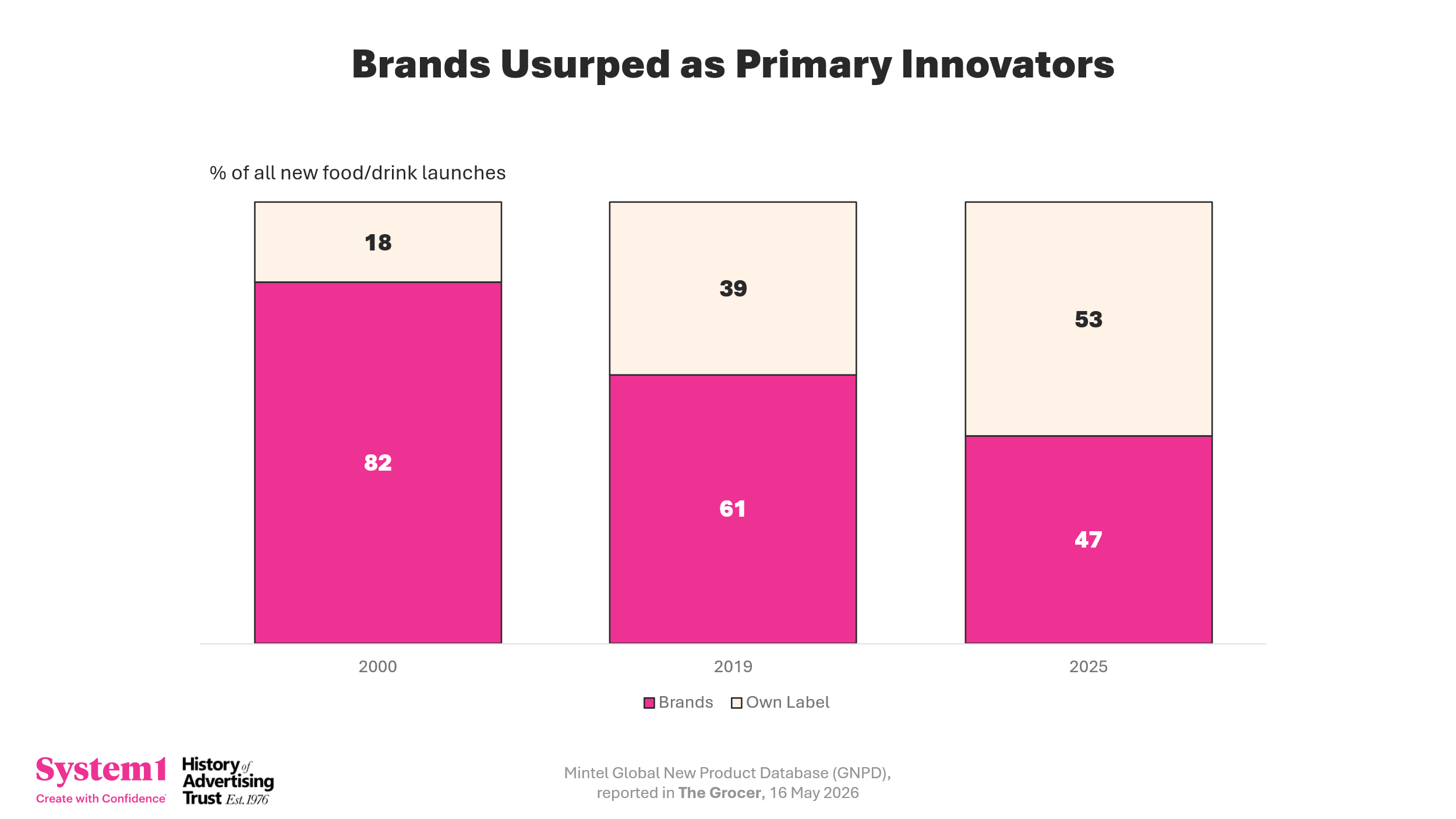
It’s a telling sign of how much the landscape has changed. Retailers are increasingly taking the lead in product innovation, giving consumers more choice and challenging established brands to work harder to earn their place on the shelf. Familiarity alone is no longer enough. Brands need to keep giving people reasons to choose them, remember them and, crucially, seek them out by name.
That’s why continuous innovation matters. It’s not simply about launching something new for the sake of it. It’s about keeping a brand distinctive, relevant and desirable, creating products that offer genuine value while building on the character and associations that make the brand worth choosing in the first place. And when paired with effective advertising, innovation becomes even more powerful: giving brands something meaningful to say, creating consumer demand and helping them command a premium beyond the product’s functional benefits.
And it’s not only consumers who notice. With own label now accounting for the majority of new launches, retailers are both a brand’s competitor and its gatekeeper. Brands that consistently bring genuinely new ideas to the category, the kind that draw shoppers in and grow the category as a whole, give retailers a reason to stock them, support them and make room for them on the shelf. Innovation sets a brand apart from its competitors in the eyes of the retailer, not just the consumer.
So, as we wind back the clock to the 1940s, we’ll explore how tea, coffee and biscuits have evolved, the innovations that changed the category and the advertising that helped turn everyday products into household names. Because if there’s one thing this history demonstrates, it’s that the brands we remember are rarely the ones that stood still.
1940s: How Nescafé made instant coffee a household name
The stereotype is true: Britain is a nation of tea lovers. A staple of everyday life, tea was the nation’s preferred hot drink throughout both World Wars. But with tea rationed for 12 years between 1940 and 1952, there was an opportunity for another drink to take centre stage: coffee.
Today, Nescafé is a household name, but in the 1940s, it was still establishing itself. Following a surplus of coffee beans in Brazil, Nestlé set out to develop a soluble coffee that could reduce waste while delivering a convenient, great-tasting product. Swiss chemist Max Morgenthaler led the product development, spending seven years perfecting a way to bring instant coffee to life. First launched in Switzerland in 1938, Nescafé had reached more than 30 countries by 1940, even becoming part of US soldiers’ emergency rations during the Second World War.
Nor was Nescafé the first attempt at making coffee quick and easy at home. Since the late 19th century, British households had been able to reach for Camp Coffee, a Glasgow-made liquid essence stirred into hot water or milk. But with sugar and chicory doing most of the work, and only a small proportion of actual coffee, its taste was, to put it kindly, an acquired one. Camp lives on today, though it’s more at home in the baking aisle than in the cup. Nescafé promised something much closer to a proper cup of coffee, with the same convenience.
But winning over Britain’s tea drinkers required more than an innovative product. Nescafé’s early advertising encouraged trial through free samples, emphasising convenience and great taste. Familiar imagery, including coffee served in traditional teacups, helped make this new product feel less unfamiliar. It was a clever way to introduce a new drinking habit without asking consumers to abandon the rituals they already loved.
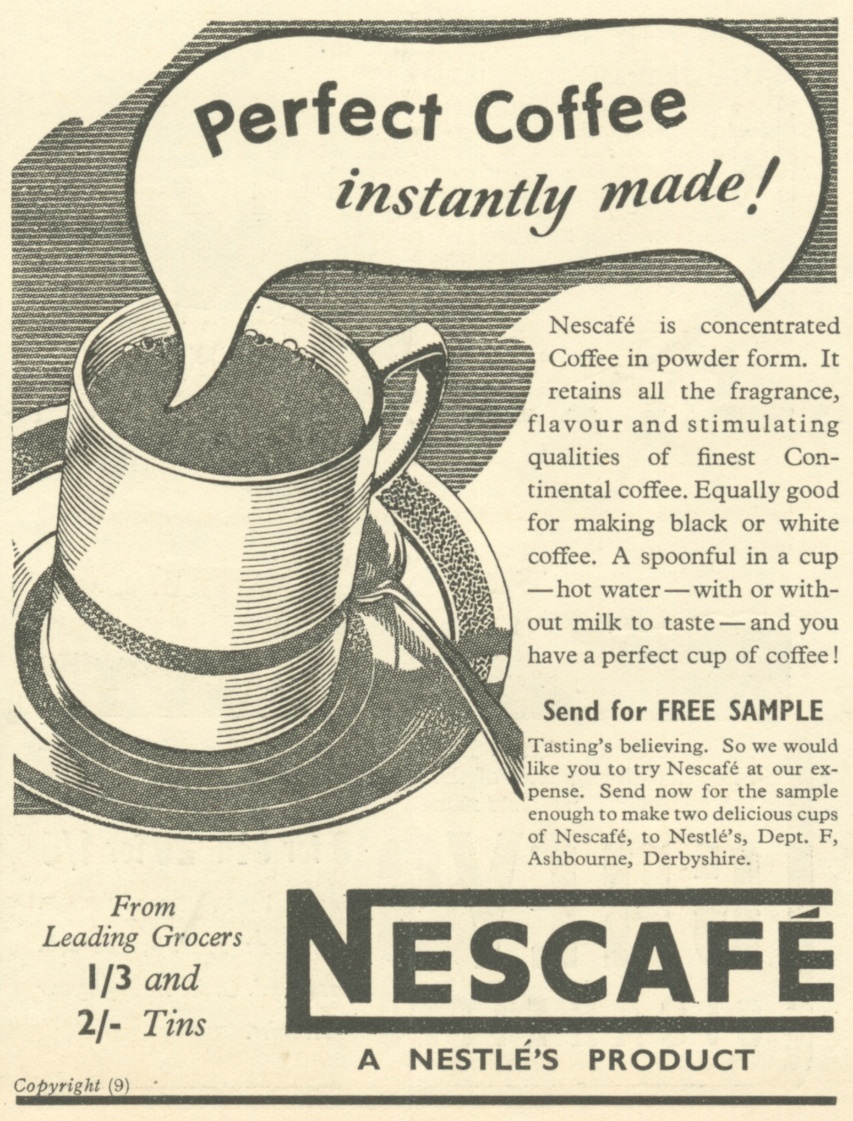
Source: The History of Advertising Trust
The takeaway? Fluent Innovation in action. Nescafé introduced a completely new product format, but surrounded it with familiar cues. By making coffee look, feel and fit into everyday life much like tea, it offered consumers something new without making the choice feel like a significant leap. This is the principle of Fluent Innovation: 80% familiar, 20% new. When innovation builds on what consumers already recognise and love, the perceived trade-off and risk of trying something different are reduced, making the decision to choose it that much easier.
1950s: Maxwell House brings a little fun to the coffee aisle
By the 1950s, the UK coffee market was attracting challengers, and Nescafé was no longer without competition. Enter Maxwell House, the Tennessee-born coffee brand setting its sights on the market leader.
Its approach? A little more fun. For its 1959 UK television launch, Maxwell House introduced a catchy jingle and showcased its coffee in jars, using entertainment and showmanship to capture attention. While Nescafé had established convenience and ease as key selling points, Maxwell House added something more: personality, distinctive branding and a reason to remember it.
Source: The History of Advertising Trust
It’s an approach that continues to work today. The strongest brands don’t just create memorable individual campaigns; they build coherent creative platforms that give consumers something recognisable to return to, year after year.
Take Yorkshire Tea, for example. Having challenged an established tea market, the brand has built a distinctive identity around its ‘Where Everything’s Done Proper’ platform. Its advertising repeatedly takes increasingly ridiculous and entertaining approaches to demonstrate just how far the brand will go to deliver the perfect cup of tea. Different campaigns, same recognisable brand character.
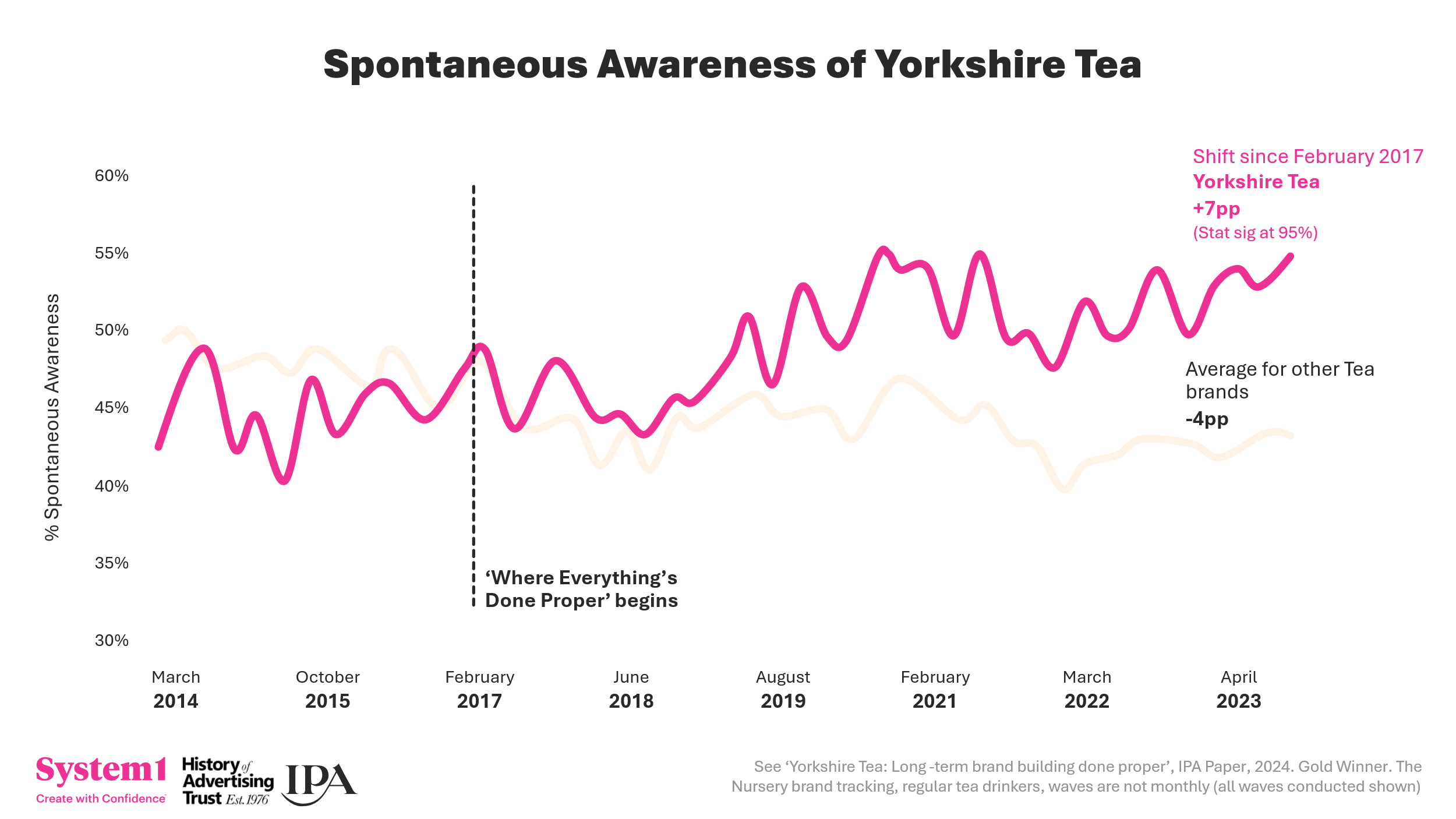
While Maxwell House’s approach was perhaps less developed, the foundations were already there. In just one decade, coffee advertising was moving beyond functional product benefits towards entertainment, brand personality and distinctive creative ideas. A shift that would come to define modern brand building.
But how did Nescafé respond to the growing competition? Let’s turn to the 1960s.
1960s: When innovation becomes the category standard
By the 1960s, Nescafé had a new challenge. Competitors weren’t just entering the market; they were beginning to outpace the brand in areas such as packaging. Maxwell House had introduced coffee in glass jars, giving its product a more premium feel, while Nescafé was still largely associated with its traditional tins. It was a reminder that innovation isn’t just about what’s inside the pack. How a product looks and feels can be just as important in shaping perceptions of quality.
Nescafé needed to respond. In 1965, it introduced Nescafé Gold Blend, bringing coffee to consumers in glass jars and positioning the product around premium quality, freshness and great taste. Its advertising reinforced this proposition through product demonstrations, highlighting the freshness and ease of preparation while building on the brand’s established reputation for great-tasting coffee.
Source: The History of Advertising Trust
But here’s where the story gets interesting. Nearly 70 years later, the coffee aisle still looks remarkably familiar. Glass jars remain a dominant format, with own-label competitors offering products that look strikingly similar to the established brands they sit alongside. An innovation that once helped Nescafé stand apart has, over time, become a category convention.
The takeaway? Innovation can give brands a competitive advantage, but that advantage doesn’t last forever. When competitors replicate your packaging, product formats or points of difference, what once made you distinctive can quickly become the norm. And as own label continues to challenge established brands, there’s a bigger question to ask: are brands still leading the category, or simply defending the position they’ve already built? Continuous innovation is what keeps brands moving forwards, rather than allowing yesterday’s breakthrough to become tomorrow’s standard.
1970s: Coffee culture evolves, but where is the innovation?
By the 1960s, coffee had become about more than what was in the jar. Britain’s espresso bar boom had brought a new social dimension to the category, with Soho’s Italian-style coffee bars becoming popular hangouts for young people, music lovers and the emerging youth culture. But by the middle of the decade, many of these independent coffee bars were beginning to disappear, giving way to more conventional cafés and restaurants.
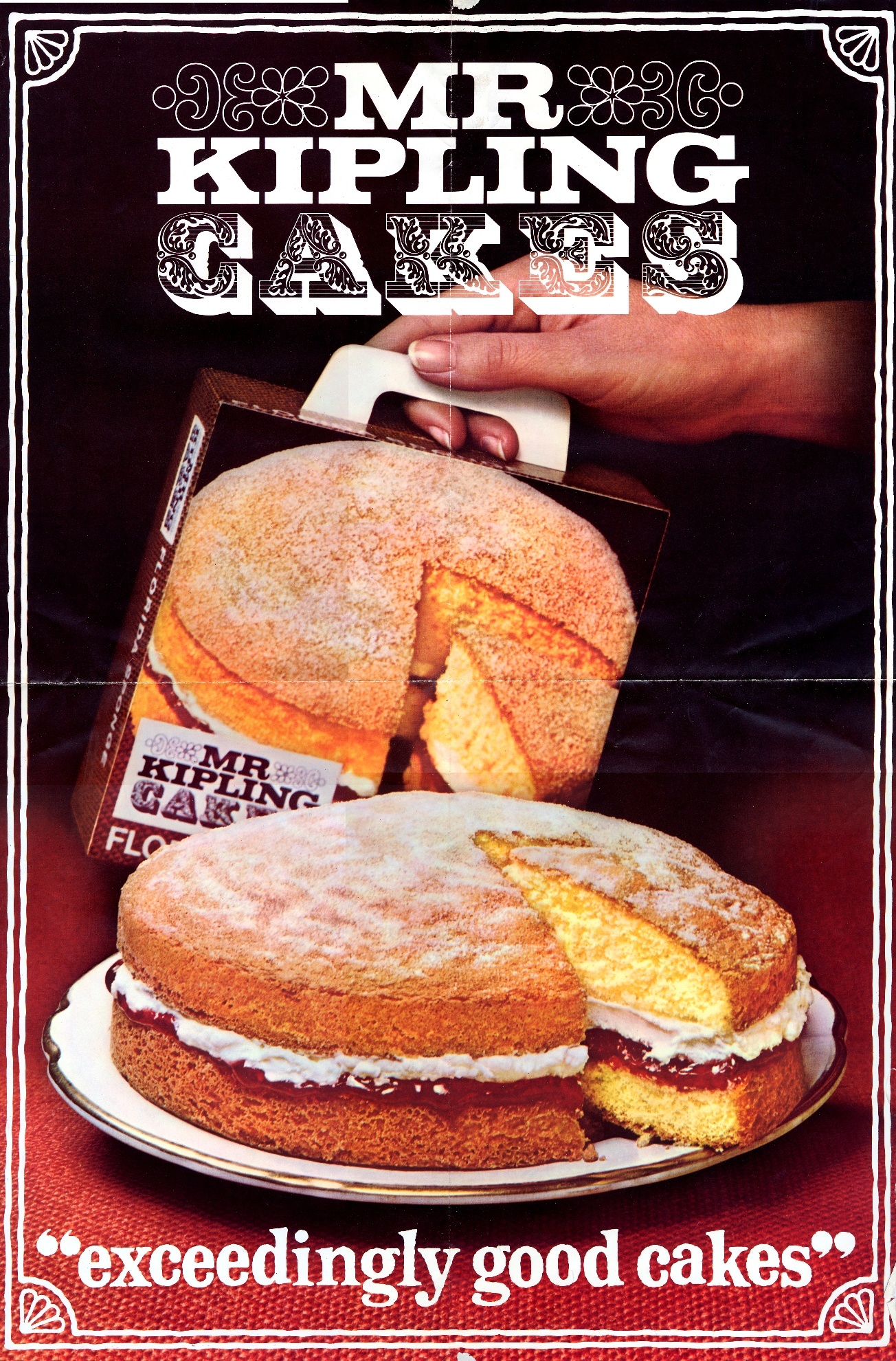
Meanwhile, at home, coffee was becoming an increasingly familiar part of everyday life. The market was also seeing the emergence of new branded products beyond coffee itself. In 1967, Mr Kipling launched its range of packaged cakes, bringing branded indulgence into the everyday tea and coffee occasion. By the end of the 1970s, it had become the UK’s number one cake brand.
Source: The History of Advertising Trust
Then came another name that would go on to reshape Britain’s coffee culture. In 1971, Italian brothers Sergio and Bruno Costa established a London coffee roastery, developing their now-famous Mocha Italia blend. Initially supplying coffee to hotels and other establishments, the business wouldn’t open its first coffee shop until 1981.
Yet, despite these cultural shifts, the packaged coffee market was beginning to look somewhat familiar. Instant coffee remained a convenient household staple, while the excitement around coffee was increasingly moving towards the experience of drinking it out of home. Brands were no longer simply competing with one another on the supermarket shelf; they were competing with the atmosphere, authenticity and experience of independent coffee houses.
Consumer habits don’t stand still, and neither should brands. As coffee moved from the kitchen cupboard into cafés and social spaces, the occasions, expectations and experiences surrounding the category changed. The challenge for established brands was to keep pace with those changes, finding new ways to remain relevant rather than relying on the familiarity of products consumers already knew.
1980s: One nibble and you’re nobbled
While coffee brands were navigating changing consumption habits, the 1980s brought us back to another familiar British ritual: tea and biscuits. And it was here that McVitie’s spotted an opportunity to innovate without asking consumers to change their habits.
In 1985, McVitie’s launched Hobnobs, an oaty, crunchy alternative to the traditional digestive, designed with dunking firmly in mind. Its television launch introduced the now-iconic line, “One Nibble and You’re Nobbled”, using humour and a memorable name to give this new biscuit an identity of its own.
Source: The History of Advertising Trust
The advertising cleverly balanced familiarity with novelty. McVitie’s drew on the trust and heritage of its established biscuit range, including Digestives and Rich Teas, while introducing something a little different. The familiar tea-time occasion remained, but the product offered a new texture, taste and personality. Consumers didn’t have to rethink their biscuit habits; they simply had another reason to reach for the packet.
And the innovation didn’t stop there. Following the success of the original, McVitie’s introduced milk and dark chocolate varieties in 1987, extending the range while building on a product consumers already loved.
Hobnobs are a brilliant example of Fluent Innovation: 80% familiar, 20% new. A trusted brand, a familiar biscuit format and an established tea-time ritual, with just enough novelty to spark interest and encourage trial. By making the new feel recognisable, McVitie’s reduced the perceived risk of trying something different, while distinctive naming and entertaining advertising gave consumers something memorable to associate with the brand.
And unlike the coffee aisle, where some of the same product formats and packaging have endured for decades, the biscuit category continued to demonstrate how established brands could find fresh ways to innovate around familiar favourites.
1990s: Have we reached the limits of instant coffee innovation?
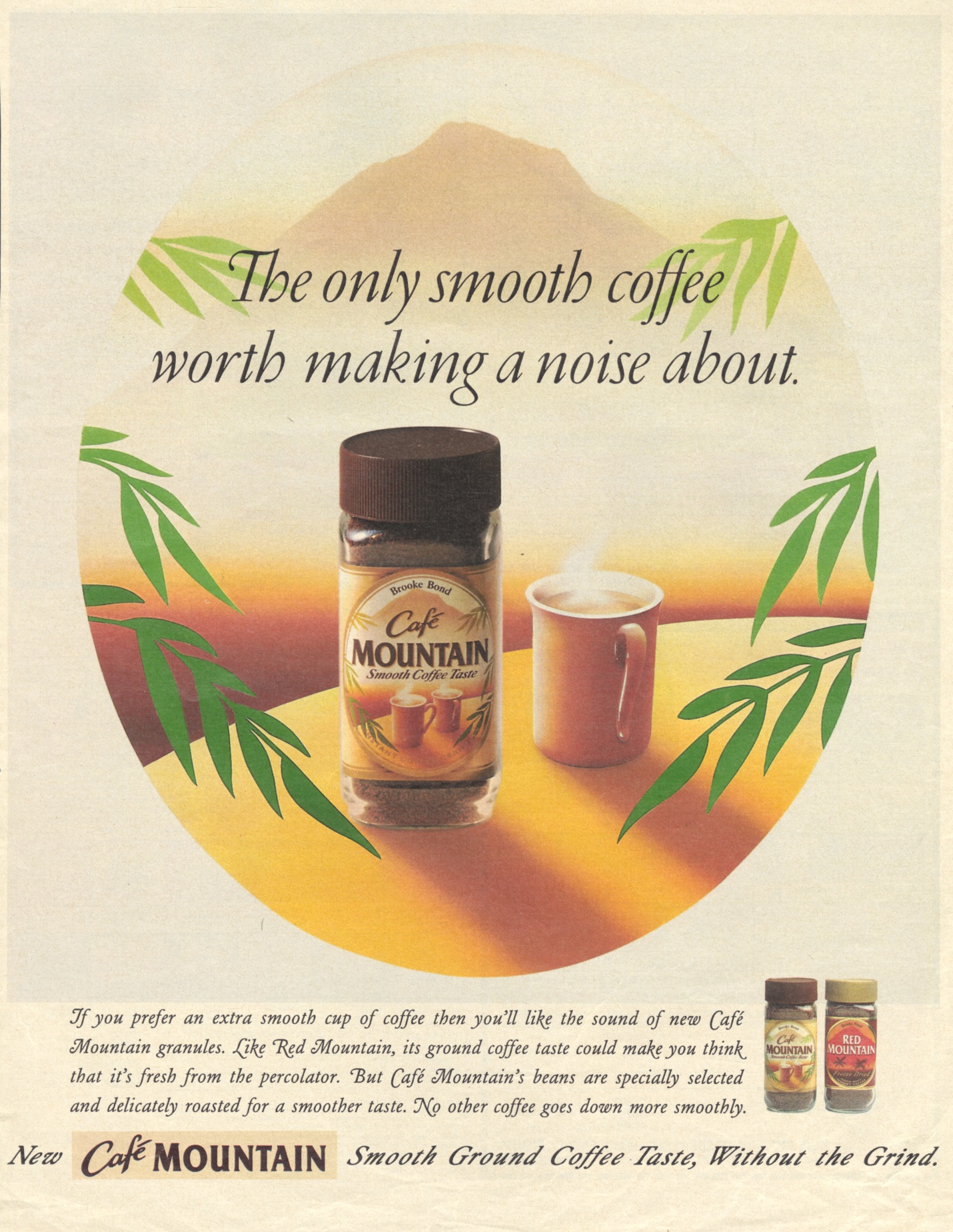
Our final stop on this journey through the tea, coffee and biscuit products that helped build the brands we know and love takes us to the 1990s, and the launch of Brooke Bond’s Café Mountain. The same Brooke Bond behind PG Tips, which had helped shape Britain’s tea-drinking habits since the 1930s.
Café Mountain arrived with a distinctive advertising campaign and a fresh positioning, but the product itself felt remarkably familiar. The packaging, format and overall proposition followed conventions that had been established decades earlier. The brand had found a new way to market coffee, but had it really found a new way to innovate?
Source: The History of Advertising Trust
Fast forward to today, and instant coffee is available in all shapes and forms, from flavoured varieties to ready-made cappuccino sachets. Some more recent launches have certainly pushed the boundaries, including M&S’s flavoured instant coffee offerings, with popcorn and caramel among the more unusual flavour combinations. But when it comes to the fundamentals of instant coffee, how much has really changed since Nescafé first brought it to market in the 1930s?
Perhaps that’s the bigger question for established brands. The products, packaging and positioning that once made them distinctive have become familiar category conventions. And as own label continues to grow, retailers can draw on many of those same conventions to create products that look and feel remarkably similar, often competing on price.
Even the category’s biggest revolution hasn’t been immune. In 1986, Nestlé, the company behind Nescafé, looked beyond the jar altogether and launched Nespresso: a capsule system that brought café-style espresso into the home and turned coffee from an everyday convenience into a premium experience. Backed by glossy advertising fronted by George Clooney, it showed that consumers would happily pay more for coffee that felt genuinely new. But when Nespresso’s patents began to expire in 2012, compatible capsules soon followed, including supermarket own-label versions sitting on the very same shelves. Innovation can redefine a category, but it takes continuous innovation to keep leading it.
Create with Confidence®
The history of tea, coffee and biscuits shows us just how powerful innovation can be in building brands, creating new habits and establishing products that stand the test of time. But it also highlights the danger of standing still. The very products and conventions that helped build today’s household names have also shaped the own-label ranges now challenging them on supermarket shelves.
From Nescafé making instant coffee familiar in the 1940s, to Maxwell House bringing entertainment into coffee advertising, Gold Blend creating a premium proposition, Hobnobs reinventing the familiar biscuit occasion and Nespresso bringing the coffee shop home, one thing is clear: brands need both advertising and innovation to keep moving forwards.
So, if you’re ready to create the next product or campaign that stands the test of time, System1 can help. Our Test Your Innovation and Test Your Ad solutions measure emotional response to predict commercial effectiveness before you launch.
For innovation, that means understanding the potential to drive consumer appeal, trial and sales. For advertising, it means predicting brand recognition, long-term brand growth and short-term sales activation. Together, they help you create stronger consumer demand, build distinctive brands and give shoppers, and retailers more reasons to choose you over the competition.
Because the next product or campaign to make history shouldn’t be left to chance. Test it before it hits the shelves or screens, and create with confidence.