
The World Cup Hasn’t Even Started but the Brands Have Been All Over It
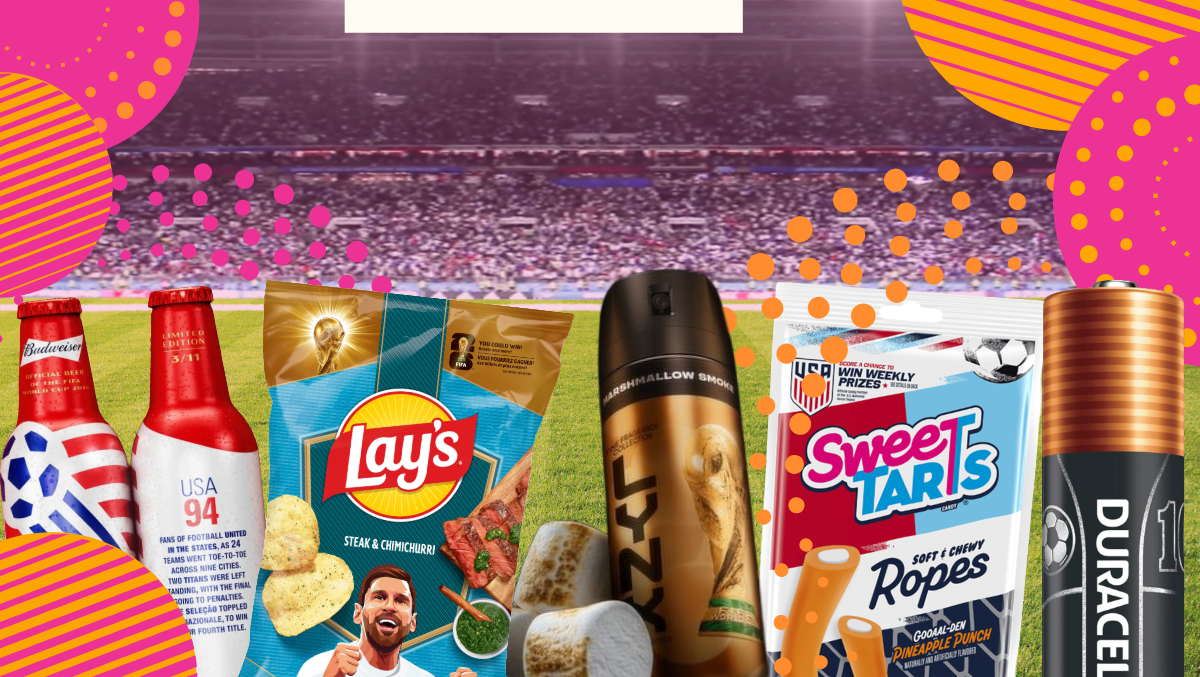
If you thought the road to the World Cup was about tactics, squad depth, and obsessing over the group stage draw — think again.
It’s also about crisps. Deodorant. Batteries. Beer. And the increasingly sacred art of slapping a tournament logo on literally anything that can survive a supermarket shelf.
With 48 teams, 104 matches, over £400M in projected UK consumer spend, and $1.8B in FIFA sponsorship revenue on the table, World Cup 2026 isn’t just a football tournament. It’s a full-blown consumer brand stampede. And honestly? The product innovation is doing the absolute most.
So, What’s Actually Driving This? This Is No Longer Sponsorship. This Is Shelf Warfare.
The old playbook was simple: buy the rights, run a TV ad, wheel out a football legend, call it a day. Done. Collect your impressions.
Not anymore.
Now the World Cup is being fought on far stranger terrain — limited-edition aerosol cans, collectible aluminum beer bottles, TikTok Shop snack drops, pineapple-punch candy, and body wash positioning itself as essential matchday kit. The match might last 90 minutes, but the branding campaign starts months earlier and follows you from the fridge to the bathroom cabinet.
That’s the real innovation story here. Brands aren’t just sponsoring the tournament anymore. They’re redesigning familiar products to make themselves feel culturally essential to it.
Which raises a sharper question — one System1 has been banging the drum on in The Cost of Dull: are these innovations actually distinctive, or just more noise in a very crowded aisle?
Because visibility isn’t the same as memorability. And in a World Cup retail environment, dull doesn’t just underperform. It actively wastes your sponsorship investment.
Lay’s Understands the Assignment: Make Snack Time Feel Intentional
As FIFA’s Official Snack Partner, Lay’s is going big with its “No Lay’s, No Game” campaign — complete with Messi, Beckham, Thierry Henry, and (for maximum chaos) Steve Carell in a WhatsApp Watch Party group chat.
But the clever bit isn’t just celebrity sparkle. It’s the 40 limited-edition flavors inspired by regional dishes from around the world. Argentinian-Style Steak with Chimichurri. Brazilian-Style Garlic Sauce. Wavy French Onion Soup.
Fan culture, translated directly into snack aisle world-building.
It’s a smart move because it turns a passive sponsorship into something people can literally taste. Instead of just saying “we support football,” Lay’s is saying: would you like to emotionally prepare for the tournament by eating your way through it?
That’s product innovation doing actual work. And crucially, it avoids what System1 would call the “sea of sameness.” These flavors aren’t just new — they’re talkable. Which is exactly what The Cure for Dull argues brands need to break through.
Budweiser Is Selling Nostalgia in Aluminum Form
Budweiser, marking 40 years as Official Beer of the FIFA World Cup, has gone full collector mode with an 11-piece Anniversary Pack of aluminum bottles, each honoring a tournament since Mexico ’86.
This is more than packaging. It’s memory merch.
Each bottle includes a QR code unlocking digital content from its era — match footage, prizes, fan experiences. The bottle isn’t just a bottle; it’s a portal to football nostalgia. A lot of tournament branding tries to feel premium. This actually feels archival.
And right next to it on the bar? Coors Light is playing a completely different game. Their “The Coooors Call” campaign takes the iconic long “O” of “GOOOOAL” and transposes it directly into the Coors Light name — featuring legendary soccer announcer Andrés Cantor, the man basically responsible for that sound existing in American sports culture. It’s wordplay. It’s talkable. It’s the kind of thing people repeat at the pub.
Two beer brands, two totally different creative strategies. One is betting on memory, the other on the moment. Both are doing something a gold can with a football graphic simply cannot: making you feel something specific.
And here’s where things get commercially real. Before rolling something like this out at scale, brands increasingly need to answer one critical question: does this create genuine emotional pull, or does it just sit there looking “quite nice”? This is exactly where System1’s Test Your Innovation comes in — helping brands predict whether an idea will genuinely cut through, or quietly blend into the fridge.
Even Candy and Batteries Want a Piece of the Fooball Pie
Ferrara has swooped in with soccer-themed variants across SweeTarts, Nerds, and Trolli — including the magnificently unsubtle SweeTarts Ropes GOOAAL-DEN Pineapple Punch. We tried it over the weekend – YUM! And then there’s Duracell, who has partnered with Messi for limited-edition packaging featuring his tattoos. Batteries. With Messi’s tattoos on them. For the World Cup. You know I’m finding some!
This is where World Cup innovation gets beautifully, gloriously weird — and also kind of brilliant. Neither candy nor batteries have an obvious functional role in football culture, but both are using themed packaging and cultural gravity to force entirely new categories into the tournament ritual. If there’s a global sporting event with enough eyeballs on it, every aisle becomes a sports aisle.
The catch? A great packaging concept in a brief doesn’t always land the same way on a shelf. That’s exactly what System1’s Test Your Pack is designed to uncover — measuring whether consumers actually feel something when they see it (curiosity, delight, the urge to grab it) or whether it just disappears into the tournament wallpaper. In a World Cup aisle where everyone is shouting in the same football font, that distinction is worth its weight in gold. Or, you know, in Messi tattoos.
Deodorant (and Its Friends) Have Decided This Is Their Moment
Perhaps no category has embraced this tournament with more unhinged commitment than personal care. (And we mean that as the highest possible compliment.)
In the US, Degree is pushing “Here for Sweat” with Christian Pulisic, limited-edition cans, and a Tunnel Walk Bag inspired by cleats. In the UK, Sure is releasing three collectible World Cup can designs and launching a cooling range for the “sweaty emotional rollercoaster” of summer football. Lynx is spending £5.4 million on a campaign featuring a new Marshmallow Smoke fragrance in gold World Cup packaging. And Dove and Radox are in the mix too — Dove with limited-edition Dragon Fruit Body Wash and content around women and girls in sport, Radox with a Feel Energized World Cup shower gel that stretches its sports credentials into football.
This is absurd. It is also excellent strategy.
The World Cup is one of the few moments where everyday physicality becomes emotionally charged. Nerves. Heat. Crowds. Anticipation. Personal care brands can slide in and say: this isn’t just hygiene, this is matchday readiness. And smart brands like Dove are using the platform to broaden the audience entirely, not just sell a special edition.
But the risk is obvious. A gold can is not automatically distinctive. A football graphic is not automatically memorable. This is the exact trap described in The Cost of Dull — when everyone codes themselves to the same moment in the same way, distinctiveness collapses. Testing variants of packaging, formats, or fragrance concepts before launch helps brands identify which executions actually spark emotion, and which are just… there.
Because “World Cup-themed” is not a strategy. It’s a starting point.
And Then There’s Beer, Patiently Waiting to Win the Obvious Battle
AB InBev’s portfolio is activating across pub and off-trade channels, which is perhaps the least surprising sentence ever written about tournament marketing.
But the simplest truth is often the right one: the brands that win at the World Cup are usually the ones attached to what people already do while watching it. Drink. Snack. Gather. Stress. Repeat.
That’s why the smartest product innovation here doesn’t feel bolted on. It amplifies habits that already exist. It earns its place in the ritual rather than crashing it.
The Real Lesson: Product Innovation Makes Sponsorship Tangible
The best World Cup campaigns don’t stop at awareness. They materialize the sponsorship.
They make it edible, collectible, giftable, wearable, sprayable, scannable, and shelf-ready.
But System1’s broader point is worth underlining: it’s not enough to show up differently. You have to make people feel something when you do. That’s the real cure for dull — because in a retail environment this saturated, indifference is the most expensive outcome of all.
Final Whistle
The 2026 World Cup may be hosted across the US, Mexico, and Canada, but in retail terms it’s already happening in supermarkets, corner shops, pub fridges, Amazon listings, and TikTok carts.
And if current form holds, the winners won’t just be the brands with the biggest media spend. They’ll be the ones who understand the modern truth of tournament marketing:
It’s not enough to be seen near the game.
You have to become part of the ritual.
Preferably in a way that people actually feel.
Even if that means doing it with steak-and-chimichurri crisps, a can of Marshmallow Smoke, and a Duracell battery with Messi’s tattoos on it.